
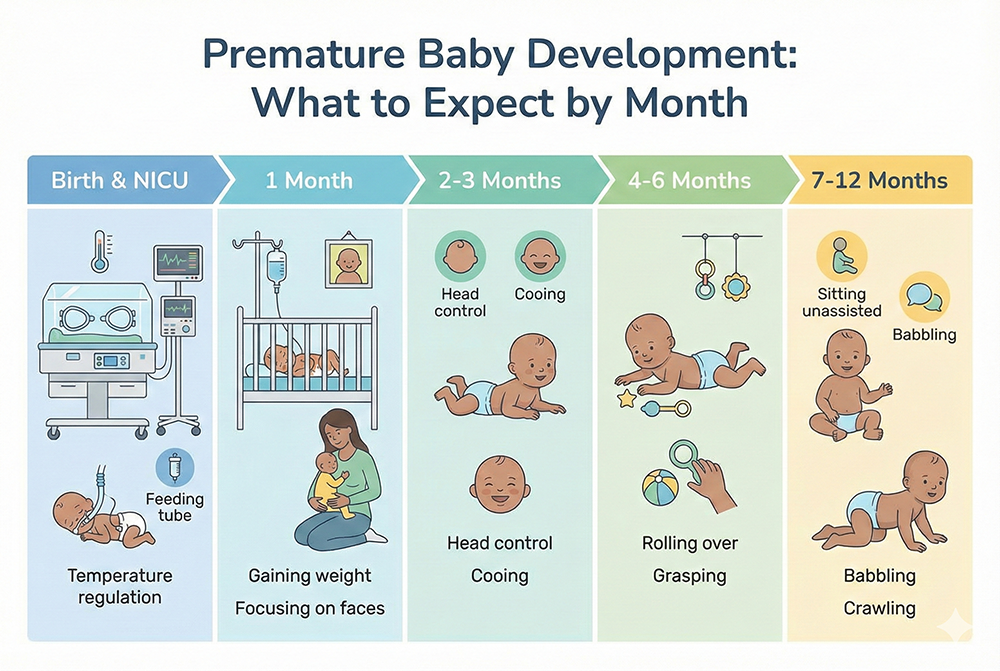
Having a premature baby can bring both joy and uncertainty. Parents often wonder how premature baby development compares to full-term milestones and what to expect as the months pass. Because preterm babies are born before 37 weeks of pregnancy, their growth and developmental timeline may look slightly different. Understanding corrected age, typical milestones, and month-by-month expectations can provide clarity and reassurance.
Understanding Corrected Age in Premature Babies
One of the most important concepts in tracking development is corrected age (also called adjusted age). This is calculated by subtracting the number of weeks born early from the baby’s actual age.
Why Corrected Age Matters
Developmental milestones should generally be evaluated based on corrected age, not chronological age. For example, if a baby was born 8 weeks early and is now 4 months old, their corrected age would be 2 months.
Premature Baby Development: First Month
In the first month after birth, especially for very early preemies, much of development focuses on stabilizing breathing, feeding, and temperature regulation.
What to Expect
- Sleep-dominant behavior
- Limited muscle control
- Sensitivity to light and sound
Month 2 (Corrected Age)
Around two months corrected age, premature babies may begin showing early social and physical signs of growth.
Common Milestones
- Brief eye contact
- Small social smiles
- Improved head control
Month 3–4
As preemies approach three to four months corrected age, motor development becomes more noticeable.
Developmental Progress
- Lifting head during tummy time
- Following moving objects
- Beginning to coo and vocalize
Month 5–6
During this stage, premature babies often show significant gains in strength and coordination.
Milestones to Watch
- Rolling over
- Responding to familiar voices
- Exploring hands and toys
Month 7–8
By seven to eight months corrected age, many premature babies demonstrate increased curiosity and movement.
Expected Skills
- Sitting with support or independently
- Babbling repetitive sounds
- Reaching and grasping objects
Month 9–10
Around nine to ten months corrected age, gross motor skills continue strengthening.
Possible Milestones
- Crawling or scooting
- Pulling to stand
- Understanding simple words
Month 11–12
By one year corrected age, many premature babies catch up significantly to their peers.
Development at One Year
- Standing with support
- First words
- Improved fine motor skills
Do Premature Babies Catch Up?
Most premature babies catch up to full-term peers by age two, especially if born after 32 weeks. However, each child develops at their own pace.
Factors That Influence Catch-Up Growth
- Gestational age at birth
- Birth weight
- Access to early intervention services
- Nutrition and medical support
When to Seek Support
Early intervention programs can provide valuable assistance if developmental delays are identified. Pediatricians monitor growth closely to ensure milestones are progressing appropriately.
Supporting Premature Baby Development at Home
Parents play a powerful role in supporting growth through responsive caregiving.
Helpful Strategies
- Skin-to-skin contact
- Regular tummy time
- Talking and reading daily
- Following pediatric guidance
Every Premature Baby Has a Unique Journey
While milestone timelines may vary, steady progress is what matters most. Tracking development using corrected age and maintaining close communication with healthcare providers ensures that premature baby development stays on a healthy path.