
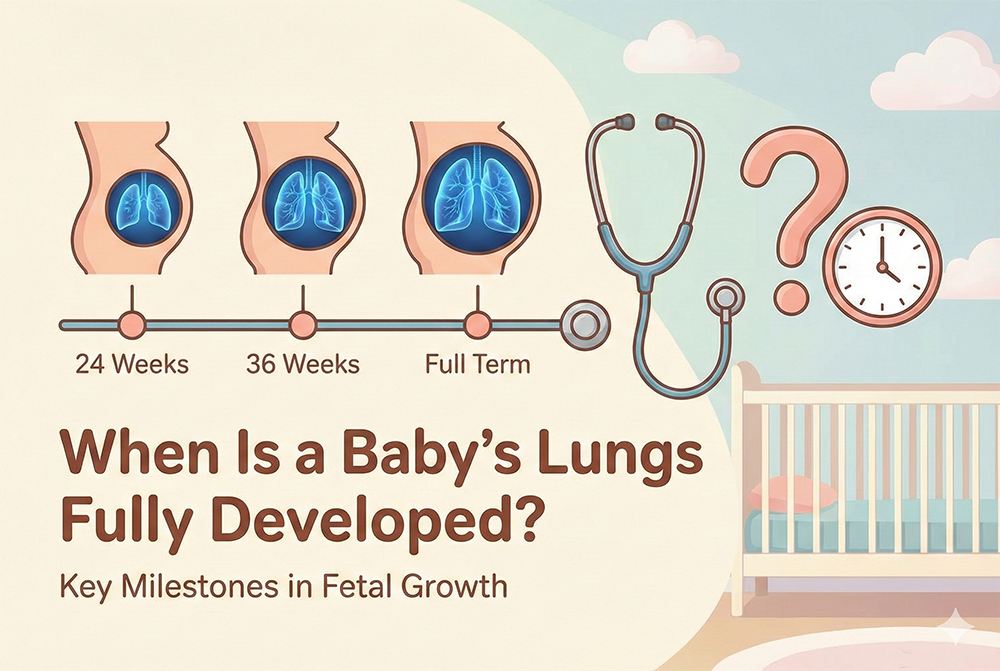
One of the most important milestones in pregnancy is lung maturity. Many expectant parents ask, when is a baby’s lungs fully developed and at what point the baby can safely breathe without assistance after birth. Lung development is a gradual and complex process that begins early in pregnancy but completes much later than many other organs. Understanding the stages of fetal lung development helps clarify why full-term pregnancy is so important for respiratory health.
When Do Baby Lungs Start Developing?
Lung development begins very early—around 4 weeks of gestation. At this stage, a small structure called the lung bud forms from the embryonic foregut. While this structure is far from functional, it marks the beginning of the respiratory system.
Early Structural Formation
Between weeks 5 and 7, the trachea and two primary bronchial tubes begin forming. These early airways lay the foundation for the intricate branching system that will later support breathing.
The Five Stages of Fetal Lung Development
Lung growth occurs in five overlapping stages. Each stage builds on the previous one, gradually preparing the baby for independent breathing.
1. Embryonic Stage (Weeks 4–7)
The major airways begin forming, but there are no structures capable of gas exchange yet.
2. Pseudoglandular Stage (Weeks 5–17)
The bronchial tree branches extensively. However, the lungs are still not ready to support breathing outside the womb.
3. Canalicular Stage (Weeks 16–25)
This is a critical stage. The airways widen, blood vessels develop, and primitive air sacs begin forming. Around 24 weeks, limited gas exchange may become possible with advanced medical care.
4. Saccular Stage (Weeks 24–36)
During this stage, more defined air sacs (alveoli) form. The production of surfactant increases significantly. Surfactant is essential because it prevents the air sacs from collapsing after each breath.
5. Alveolar Stage (36 Weeks to Early Childhood)
By 36 to 37 weeks, the lungs are typically mature enough for independent breathing. However, alveoli continue multiplying after birth and into early childhood.
When Are Baby Lungs Considered Fully Developed?
In most pregnancies, a baby’s lungs are considered fully developed between 36 and 37 weeks of gestation. At this point, surfactant levels are usually sufficient, and the lungs can inflate properly after delivery.
Why 39 Weeks Is Often Recommended
Although lungs may be mature by 37 weeks, doctors often prefer delivery at 39 weeks for non-medical reasons. The extra time allows for continued refinement of lung function and overall organ maturity.
The Importance of Surfactant
Surfactant plays a crucial role in determining lung readiness. Without enough surfactant, the alveoli collapse, leading to breathing difficulties.
Surfactant Production Timeline
- Begins: Around 24 weeks
- Increases significantly: 32–36 weeks
- Usually adequate: 36+ weeks
What Happens If a Baby Is Born Too Early?
Premature babies, especially those born before 34 weeks, may not have enough surfactant. This can lead to Respiratory Distress Syndrome (RDS).
Medical Interventions for Immature Lungs
- Artificial surfactant therapy
- Oxygen supplementation
- Ventilator support
Thanks to advances in neonatal medicine, survival rates for premature babies have improved significantly.
Can Doctors Test Lung Maturity Before Birth?
In special circumstances, doctors may assess fetal lung maturity if early delivery is being considered. However, routine testing is less common today because modern neonatal care can effectively manage many respiratory issues.
Does Lung Development Continue After Birth?
Yes, lung development does not stop at birth. While a baby may be able to breathe independently, the number of alveoli continues to increase during infancy and early childhood, improving lung capacity over time.
Factors That Influence Lung Development
Several factors can affect how well a baby’s lungs mature, including maternal health, nutrition, and environmental exposures.
Maternal Health and Lifestyle
Smoking, uncontrolled diabetes, and certain infections during pregnancy can impact fetal lung development. Consistent prenatal care significantly reduces these risks.
Why Lung Maturity Is One of the Last Milestones
Lung development is complex because it requires both structural growth and biochemical preparation. The formation of millions of air sacs and adequate surfactant production takes time, which is why the final weeks of pregnancy are crucial.
Understanding the Timeline Brings Reassurance
Knowing when a baby’s lungs are fully developed helps parents appreciate the importance of full-term pregnancy. While medical technology can support premature infants, reaching at least 36 to 37 weeks significantly increases the likelihood of smooth respiratory transition after birth.