Why Baby Poop Color Matters
Baby poop can be surprisingly variable—especially in the first year. Color changes are often linked to feeding (breast milk vs. formula), new solids, mild stomach bugs, or even iron supplements. Still, there are a few stool colors that deserve prompt attention because they can reflect how well your baby’s digestive system, liver, and bile ducts are working.
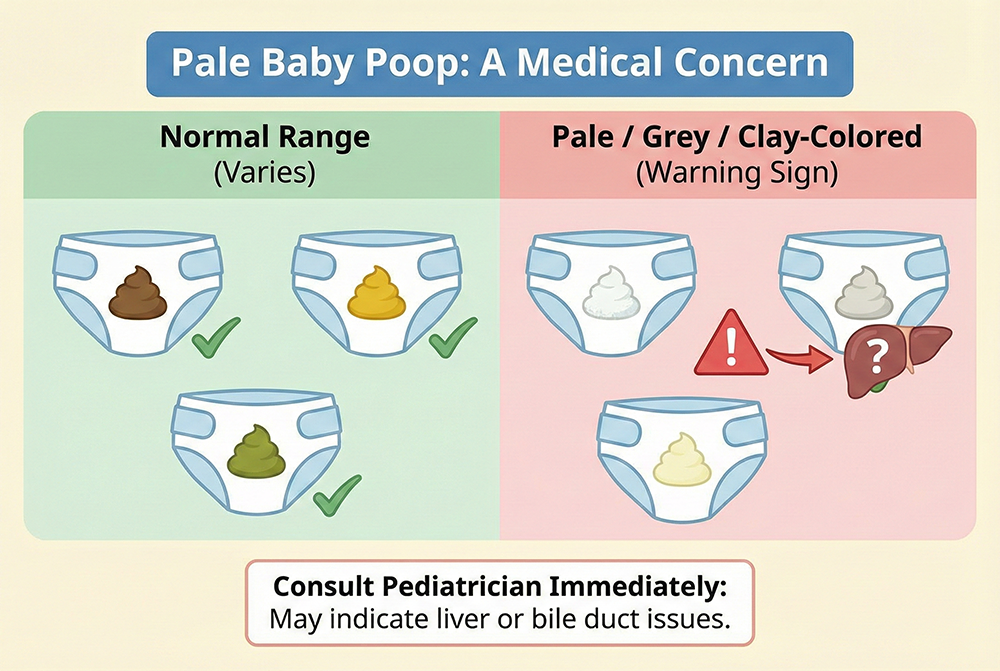
Pale baby poop is one of those colors parents notice quickly. Sometimes “pale” simply means a lighter yellow or tan stool that is still within normal range. But very pale, white, gray, or clay-colored poop can be a red flag for problems with bile flow, which helps color stool and digest fats.
This guide will help you understand what pale stools can mean at different ages, how to tell harmless variation from warning signs, and what practical steps to take.
What Counts as “Pale” Baby Poop?
Because babies’ stools naturally vary, it helps to describe color more precisely.
Often normal (especially if baby seems well)
- Light yellow (common in breastfed babies)
- Mustard yellow with seedy texture (classic breastfed stool)
- Tan to light brown (common with formula and solids)
- Yellow-green (can happen with faster digestion or some formulas)
More concerning: call your pediatrician promptly
- White or “chalky”
- Gray
- Clay-colored (pale putty-like color)
Key idea: Stool gets its typical brown/yellow/green color from bile pigments. If little to no bile reaches the intestines, poop can look white, gray, or clay-colored.
How Bile Affects Poop Color (Simple Science)
Bile is made by the liver and stored in the gallbladder. It travels through bile ducts into the small intestine, where it helps break down fats. As bile pigments move through the digestive tract, they contribute to the normal yellow-brown color of stool.
If bile can’t reach the intestine (because of a blockage or liver problem), stool may become very pale. This is why persistent white/gray/clay stools deserve urgent medical evaluation in babies, especially newborns.
Common, Less Concerning Reasons for Light or Pale Poop
Many parents see a lighter stool once in a while—often without any serious cause. These are some common explanations.
1) Diet and feeding changes
What goes in influences what comes out.
- Breastfed babies: Stools are often yellow and may look lighter at times, especially if baby is feeding frequently or digestion is fast.
- Formula-fed babies: Stools are typically tan to brown. Switching formulas can temporarily change color and texture.
- Starting solids: Foods like bananas, rice cereal, potatoes, and some cereals can lighten stool color. Large amounts of dairy (in older babies/toddlers) can sometimes contribute to lighter stools.
2) Mild stomach bug or faster digestion
During or after a viral illness, stool can become lighter or more yellow because food moves through the gut more quickly, leaving less time for bile pigments to darken.
3) Medications and supplements
- Antacids containing aluminum hydroxide (less common in infants) may lighten stool.
- Antibiotics can change gut bacteria and stool appearance.
- Iron supplements more often darken stool (green/black), but any supplement changes can shift color patterns.
4) Normal day-to-day variation
Even with the same diet, a baby’s stool can look lighter some days. If your baby is otherwise acting well, feeding normally, and peeing regularly, a single pale-ish diaper is often not an emergency.
When Pale Baby Poop Can Signal a Medical Problem
While many light stools are harmless, white, gray, or clay-colored poop can indicate reduced bile flow or liver disease. Early recognition matters, particularly in newborns.
1) Cholestasis (reduced bile flow)
Cholestasis is a condition where bile flow from the liver slows or becomes blocked. It can occur for various reasons, including infections, genetic or metabolic conditions, or structural issues.
Possible clues:
- Stools that are consistently very pale (white/gray/clay)
- Jaundice (yellow skin/eyes) lasting beyond the first couple of weeks of life
- Dark urine (tea-colored or unusually deep yellow)
- Poor weight gain, sleepiness, or feeding difficulties
2) Biliary atresia (urgent condition in early infancy)
Biliary atresia is a serious condition where bile ducts are blocked or absent. It usually shows up in the first weeks of life. Early diagnosis is crucial because timely treatment improves outcomes.
Common signs parents may notice:
- Persistent pale, chalky, or clay-colored stools
- Jaundice that does not improve or worsens after 2 weeks of age
- Dark urine
- Possible enlarged belly or poor growth over time
If you suspect stools are truly white/gray/clay and your baby is under 2–3 months, contact a clinician the same day.
3) Hepatitis or other liver inflammation
Viral infections and other causes of liver inflammation can affect bile production or flow. Symptoms may include jaundice, pale stools, dark urine, and decreased appetite.
4) Pancreatic or gallbladder issues (less common in infants)
These are less common in young babies but can affect digestion and stool color, especially if stool becomes greasy, very smelly, or baby has poor weight gain.
Pale Poop by Age: What’s Typical?
Newborns (first days)
In the first 24–48 hours, babies pass meconium, which is dark green-black and sticky. As milk intake increases, stools transition to greenish and then yellow.
Not typical: persistent white/gray/clay stools in the newborn period.
2 weeks to 2 months
This is a key window because persistent jaundice and pale stools can indicate cholestasis or biliary atresia. If you notice repeated white/gray/clay diapers, do not wait for a routine checkup.
3–12 months
As solids begin, stool color can vary widely. Tan and light brown are common. Some light yellow stools can also be normal. Still, true white/gray/clay stools are never normal at any age.
Toddlers
Diet plays a bigger role. High dairy intake, picky eating, or GI bugs can cause lighter stools. Even so, persistent pale stools or pale stools with symptoms (jaundice, dark urine, belly pain, poor growth) need evaluation.
How to Tell If It’s “Clay-Colored” vs. Just Light
Parents often describe stools as pale when they are simply light yellow or tan. Here are practical ways to judge.
- Look in natural light. Bathroom lighting can distort color.
- Check for any yellow/green/brown pigment. Clay/white stools often look flat, dull, and putty-like with very little color.
- Notice consistency. Some liver/bile issues can be associated with paler, sometimes bulky stools.
- Track pattern. One odd diaper is less concerning than repeated pale stools over 24–48 hours.
- Use a photo. If you’re unsure, taking a picture to show your pediatrician can be very helpful.
Red Flags: When to Call the Doctor (and When to Seek Urgent Care)
Trust your instincts—if something looks off, it’s appropriate to reach out.
Call your pediatrician the same day if:
- Your baby has white, gray, or clay-colored poop (especially more than once)
- You notice jaundice (yellow eyes/skin), especially after 2 weeks of age
- Your baby has dark urine along with pale stools
- There is poor feeding, unusual sleepiness, or poor weight gain
- Light stools persist for more than 24–48 hours without a clear dietary reason
Seek urgent care now if:
- Your baby is difficult to wake, has trouble breathing, or seems very unwell
- There are signs of dehydration: very dry mouth, no tears when crying, sunken soft spot, or significantly fewer wet diapers
- Your baby has persistent vomiting, a swollen belly, or severe abdominal pain
What Your Pediatrician May Do
It can feel stressful to bring poop concerns to a visit, but clinicians take stool color seriously because it can provide meaningful clues.
Questions you may be asked
- When did the color change start? Is it every diaper or occasional?
- Breast milk, formula, solids—any recent changes?
- Any fever, vomiting, diarrhea, or illness exposure?
- Wet diapers and feeding patterns?
- Any jaundice or dark urine?
Possible evaluation
- Physical exam (looking for jaundice, growth patterns, belly/liver size)
- Blood tests to check liver function and bilirubin levels
- Urine tests if needed
- Imaging (such as ultrasound) if bile duct obstruction is a concern
- Referral to a pediatric gastroenterologist/hepatologist when indicated
What You Can Do at Home (Practical, Actionable Steps)
If your baby seems well but you notice pale poop, these steps can help you respond calmly and effectively.
1) Keep a short “poop log” for 2–3 days
- Color (use simple words: light yellow, tan, gray, white)
- Frequency
- Consistency (soft, watery, formed, greasy)
- Any symptoms (fever, vomiting, fussiness, jaundice)
2) Take a clear photo in daylight
This can prevent confusion and helps your clinician decide whether it’s truly clay-colored.
3) Review recent diet changes
- New formula brand or type
- New solids (especially pale foods like rice cereal, bananas, potatoes)
- Unusual amounts of dairy in older babies/toddlers
Tip: Don’t restrict breast milk or formula intake to “fix” stool color. If you suspect a particular solid food is contributing and your baby is otherwise well, you can pause that food and discuss it at the next visit.
4) Focus on hydration and comfort if illness is present
If pale-ish stool occurs with a minor stomach bug, prioritize normal feeding, watch wet diapers, and contact your clinician if symptoms worsen or dehydration signs appear.
5) Don’t wait if the stool looks truly white/gray
If stools are white, gray, or clay-colored, especially if repeated, call promptly even if your baby seems okay. Some bile-flow issues can progress quietly at first.
Other Poop Colors Parents Ask About (Quick Context)
Because parents often see multiple colors over time, here’s a quick reference.
- Green: common; can be normal with formula, iron, fast digestion, or mild illness.
- Yellow: common; especially in breastfed babies.
- Brown: typical as solids increase.
- Black: normal in the first days (meconium). Later black stools can indicate digested blood or iron; discuss with your clinician.
- Red: could be food dyes, but also blood from diaper rash, anal fissure, or allergy; call your pediatrician.
Prevention and Peace of Mind: Supporting Baby’s Digestive Health
You can’t prevent every poop surprise, but you can support healthy digestion and make it easier to spot true concerns.
- Keep regular wellness visits. Growth checks and newborn jaundice follow-ups matter.
- Introduce solids gradually. Offer a variety of foods over time, watching tolerance.
- Use medications only as directed. If a new medication coincides with stool changes, mention it.
- Know your baby’s “normal.” Frequency and color can be unique—patterns matter more than a single diaper.
The Bottom Line
Many cases of light-colored baby poop are harmless and related to diet or minor illness. However, true white, gray, or clay-colored stools are not normal and can indicate problems with bile flow or liver function, especially in young infants.
If you’re unsure, it’s always appropriate to call your pediatrician, share a photo, and ask whether your baby needs to be seen. You’re not overreacting—stool color can be an important early clue, and getting reassurance (or timely care) is a good step for your baby’s health.