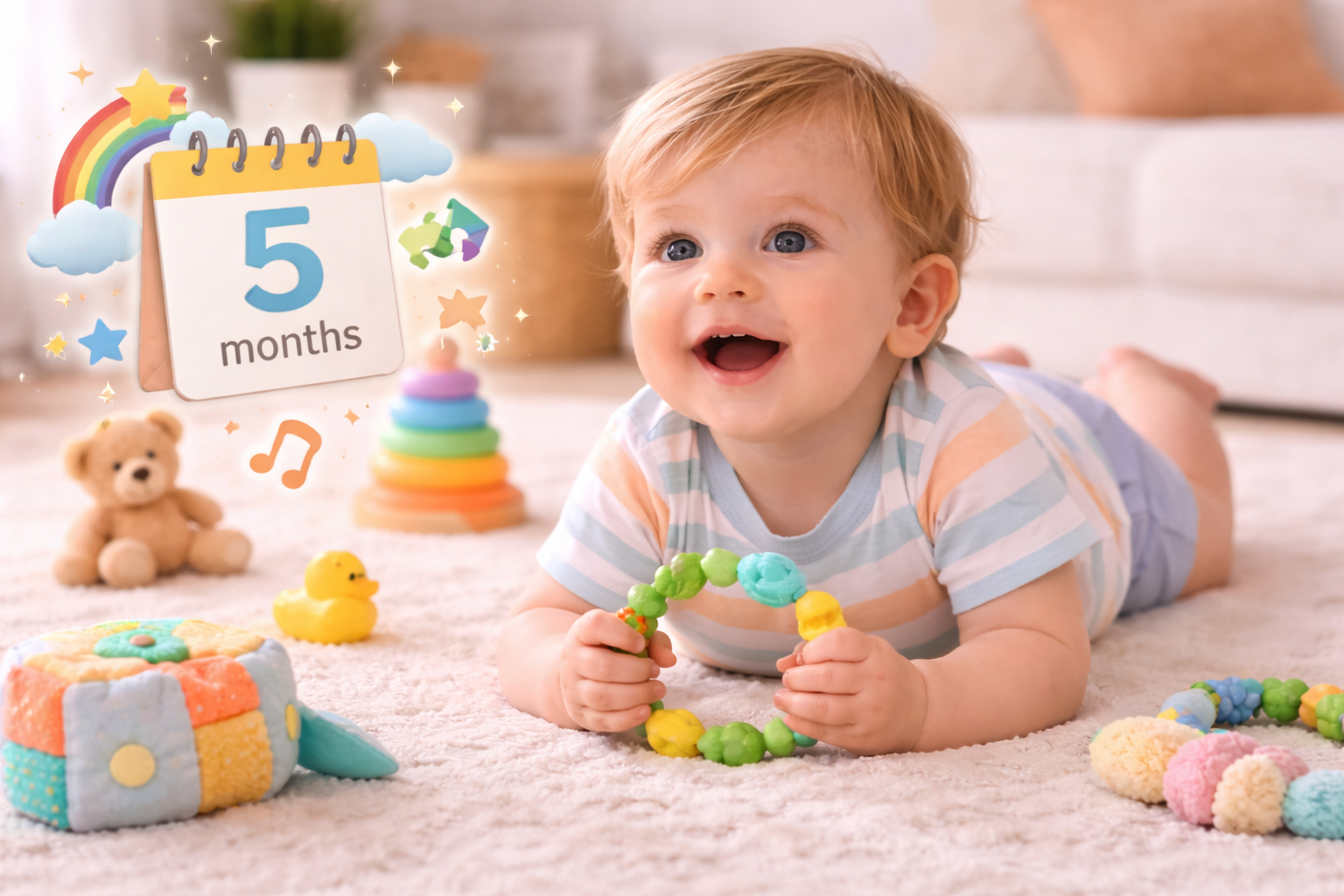
5-month-old baby development is a stage when your baby becomes physically more active, reaches for toys, and communicates more through sounds and facial expressions. During this period, babies begin exploring their environment more intentionally, and sensory, motor, and social development noticeably accelerates. Month five is a fun and exciting time for both parents and babies.
Physical Development in a 5-Month-Old Baby
Muscle Strength and Movement Skills
A 5-month-old baby can hold their head fully upright and control their upper body more steadily. They can spend longer periods on their tummy and push up with their arms to lift their chest. Rolling attempts become more obvious; some babies may roll from back to tummy during this month.
- They may clap or bring their hands together intentionally.
- They reach for objects, grasp them, and bring them to their mouth.
- They can lift their legs up and play with their feet.
- Tummy time can be increased to strengthen the neck and back muscles.
Growth Indicators
On average, a 5-month-old baby gains about 500–800 grams (1–1.7 lbs) per month and grows 1–2 cm (0.4–0.8 inches). Pediatric checkups should continue, and the doctor will monitor weight, length, and head circumference. Healthy weight gain is supported by consistent feeding and a good sleep routine.
Sensory Development in a 5-Month-Old Baby
Visual Development
Babies now have a wider field of vision. Their ability to distinguish colors improves, and bright, high-contrast colors are especially engaging. They can track objects more smoothly with their eyes. In front of a mirror, they may react to their own movements.
Hearing and Sound Responses
A 5-month-old baby responds to sounds more intentionally. They may turn their head when they hear their name or track where sounds come from. Babbling increases, and babies may begin making sounds like “ba-ba,” “da-da,” or “ma-ma.” This is an important turning point in early language development.
Social and Emotional Development in a 5-Month-Old Baby
Interaction and Smiles
Babies become more social during this month. They may imitate facial expressions, respond to smiles, and reach out their arms toward loved ones. They start noticing unfamiliar people, although stronger stranger anxiety typically appears around 7–8 months.
Interactions with parents strengthen a baby’s emotional bond. Frequent eye contact and talking help reinforce a sense of trust and security.
Cognitive Development in a 5-Month-Old Baby
Cognitive development speeds up significantly during this month. Babies become curious about the source of sounds, examine toys more closely, and explore objects with their hands. They begin understanding early cause-and-effect patterns:
- They notice that hitting a toy makes a sound.
- They may experiment with shaking or dropping objects.
- They recognize routines and may sense feeding, play, or sleep times.
Feeding Routine of a 5-Month-Old Baby
For 5-month-old babies, breast milk or formula remains the main source of nutrition. Most babies feed 5–7 times per day. Many experts recommend waiting until 6 months to begin solid foods, although in certain cases an earlier start may be advised by a doctor.
Signs of Readiness for Solid Foods
Although solids are not typically recommended at 5 months, some readiness signs may appear:
- Sitting upright in a high chair with support,
- Very steady head control,
- Reaching toward the spoon and showing interest in food,
- Grasping objects easily and bringing them to the mouth.
Sleep Patterns of a 5-Month-Old Baby
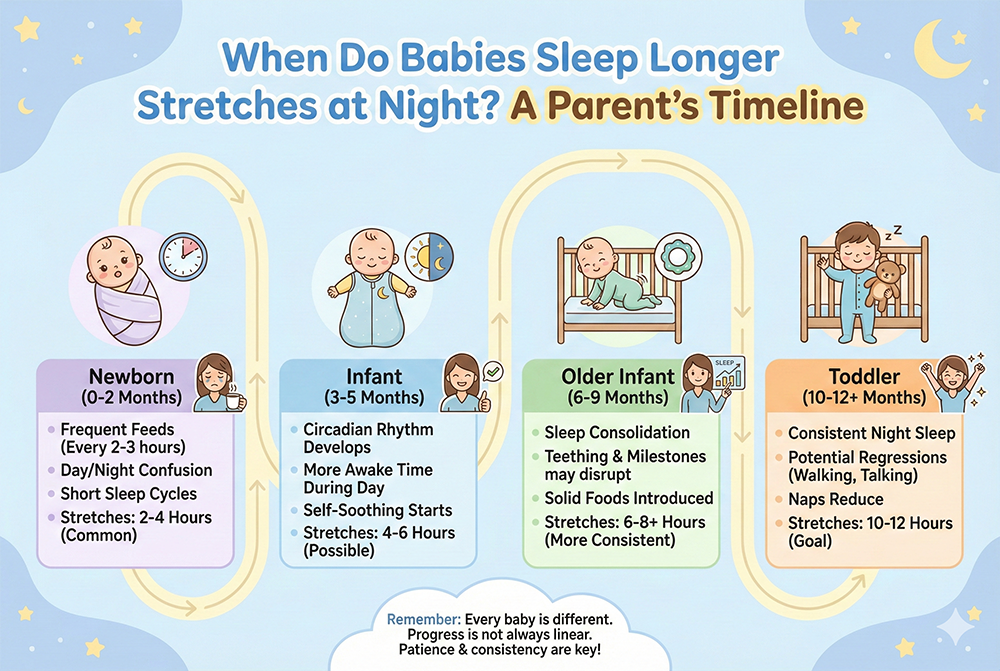
A 5-month-old baby sleeps about 14–15 hours per day. Daytime naps typically occur 3 times (morning, midday, and afternoon). Night sleep becomes longer and more consistent, and some babies may sleep 8–10 hours uninterrupted.
- Always place your baby on their back to sleep.
- Dim lighting and a calm environment before bedtime are important.
- Creating an evening routine improves sleep quality.
Activities for a 5-Month-Old Baby
1. Colorful and Sound-Producing Toys
Babies enjoy playing with rattles, soft balls, and moving toys during this month. These toys support both fine motor skills and cognitive development.
2. Mirror Time
Looking in a mirror helps babies notice faces and expressions. They may try to imitate your facial movements after watching you.
3. Talking and Songs
Talking to your baby and singing songs strengthens early language development. Different tones of voice, rhythms, and repeated words capture their attention.
When Should You See a Doctor?
- If the baby does not reach for objects,
- If there is no response to sounds,
- If head control is still weak,
- If feeding or weight gain seems inadequate,
- If there is intense fussiness or prolonged crying,
consult a pediatrician.
Tips for Parents
The 5-month-old baby development stage is a joyful period when your baby explores the world more actively. Engage often, play together, and provide a safe space for exploration. Remember, every baby develops at their own pace—each small progress step is meaningful.