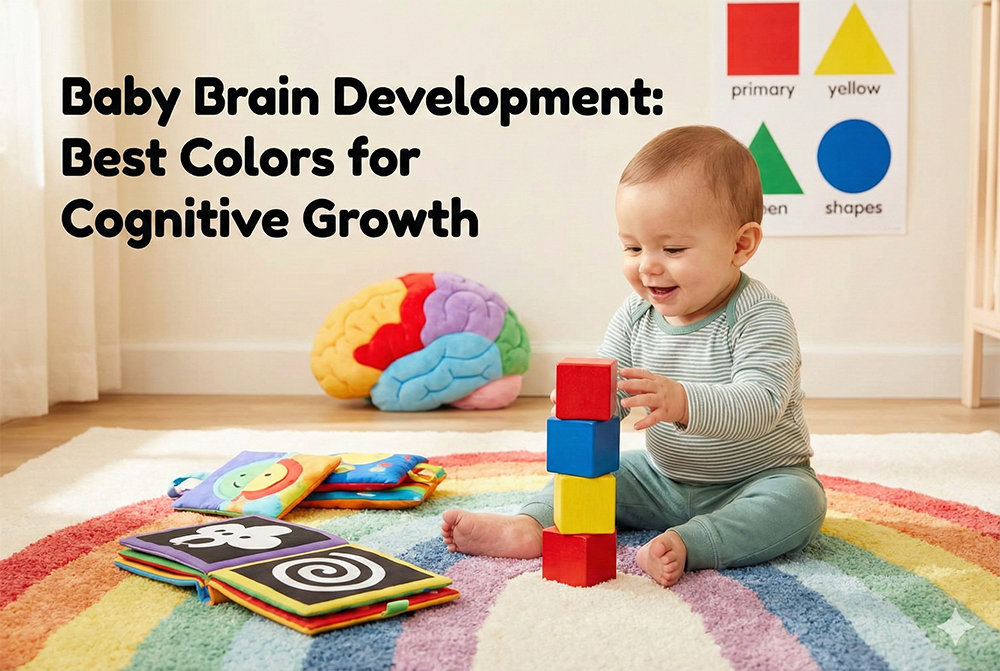
From the moment they are born, babies begin absorbing information from their surroundings. One of the most powerful and often overlooked influences on early learning is visual stimulation, especially color. This leads many parents to ask how baby brain development is affected by color and which shades best support cognitive growth. Research in early childhood development suggests that color plays a meaningful role in attention, memory, and sensory processing during infancy.
How Baby Brain Development Works
A baby’s brain develops at an extraordinary pace during the first years of life. By age three, the brain reaches nearly 80% of its adult size. During this period, neural connections are rapidly formed based on sensory experiences, including sight, sound, touch, and movement.
The Role of Visual Stimulation
Vision is one of the key senses driving early learning. Although newborns do not see the world as clearly as adults, visual input helps shape neural pathways responsible for recognition, focus, and problem-solving.
When Do Babies Start Seeing Colors?
Newborns primarily see in shades of black, white, and gray. Color perception develops gradually as the visual system matures.
Color Vision Development Timeline
- 0–2 months: High-contrast black and white visuals are easiest to see
- 2–4 months: Red becomes the first color babies can distinguish
- 4–6 months: Babies begin seeing blue, green, and yellow
- 6+ months: Color vision continues improving in clarity and depth
Why Color Matters for Cognitive Growth
Color helps babies organize visual information. Exposure to certain colors can improve attention span, encourage curiosity, and support memory formation. These early visual experiences directly influence cognitive development by strengthening brain connections.
Color and Neural Pathways
When babies observe contrasting or vibrant colors, their brains work harder to process differences in shape, brightness, and movement. This strengthens neural pathways related to learning and visual reasoning.
Best Colors for Baby Brain Development
Not all colors stimulate the brain in the same way. Some colors are especially effective in supporting early cognitive growth and sensory engagement.
Black and White: The Foundation
Black and white are the most important colors for newborns. High-contrast patterns are easy for immature eyes to detect and help strengthen visual focus and tracking skills.
Red: The First True Color
Red is typically the first color babies can see clearly. Its strong wavelength makes it highly stimulating, supporting attention and early visual recognition.
Blue and Green: Calm and Focused Learning
Blue and green tones are associated with calmness and concentration. As babies grow, these colors can help maintain focus and reduce visual overstimulation.
Yellow: Curiosity and Energy
Yellow attracts attention and encourages alertness. When used in moderation, it can stimulate curiosity and engagement without overwhelming the senses.
Colors to Use With Caution
While bright colors can be beneficial, excessive exposure to very intense or neon colors may lead to overstimulation. Balance is key when designing a baby’s visual environment.
Overstimulation and Brain Development
Too many bright visuals at once can make it harder for babies to focus. Simple, clear color choices support learning more effectively than overly busy patterns.
Using Color in Everyday Baby Environments
Parents can easily incorporate brain-supportive colors into daily life through toys, books, and room design.
Toys and Play Mats
High-contrast toys, especially those featuring black, white, and red, are ideal during early months. As babies grow, introducing more colors helps expand visual learning.
Nursery and Living Spaces
Soft blues, greens, and neutral tones create a calming environment, while colorful accents provide visual interest without overwhelming the brain.
Color, Learning, and Emotional Development
Visual experiences are closely connected to emotional regulation. Calm colors support relaxation, while stimulating colors encourage engagement and exploration.
Balanced Color Exposure
A combination of stimulating and calming colors allows babies to explore their environment while feeling secure and focused.
Scientific Perspective on Color and Brain Growth
Studies in early childhood development show that controlled visual stimulation supports attention, memory, and problem-solving skills. While color alone does not determine intelligence, it contributes to a supportive learning environment.
Supporting Cognitive Growth Through Simple Choices
Choosing the right colors is a simple yet effective way to support baby brain development. When combined with interaction, play, and emotional connection, color becomes a powerful tool in nurturing early cognitive growth.