Baby development education begins at birth, and the first 12 months represent the fastest period of brain growth. During this stage, babies learn by observing, touching, listening, and imitating. Providing the right early educational stimulation builds the foundation for cognitive, social, emotional, and motor development. In this article, we explore how education should be approached in infancy and suggest supportive activities for each developmental stage.
Why Is Early Education Important for Babies?
Early Brain Development
From the moment they are born, babies form millions of neural connections. The first year is the most natural and rapid period of learning. Providing appropriate educational stimulation during this time enhances cognitive skills, problem-solving ability, and overall learning capacity.
Bonding and Emotional Security
Education is not only academic; in babies, it also includes emotional and social development. A secure attachment between parent and baby is central to the learning process. Loving touch, eye contact, and a warm tone of voice help babies feel safe and curious about the world.
Educational Approaches for Babies
1. Play-Based Learning
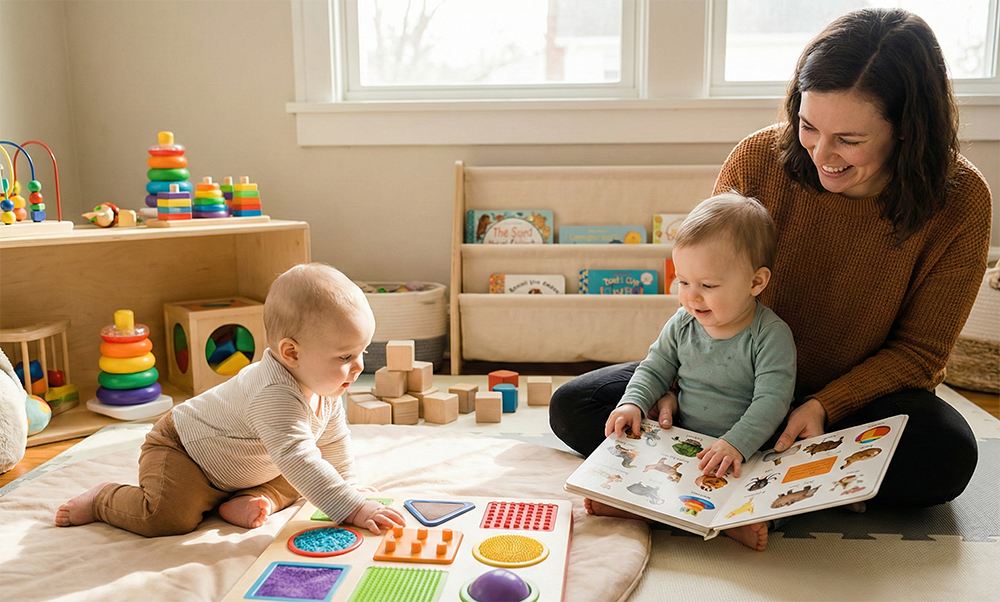
The most effective way babies learn is through play. Play strengthens motor skills, sensory awareness, and social communication. Planning short daily play sessions turns learning into a natural experience.
2. Sensory Learning
Sensory education includes activities that stimulate touch, sight, hearing, smell, and taste. Texture cards, soft toys, sound-making objects, and even safe household items can enhance sensory curiosity.
3. Language-Based Learning
Conversations, songs, and reading books lay the foundation for language development. Describing daily routines, using simple words, and repeating phrases enrich a baby’s vocabulary.
Educational Activities for Babies 0–12 Months
0–3 Months: Sensory Introduction Stage
During this stage, babies explore the world through their senses. The goal: security and recognition.
- Communicate through facial expressions.
- Provide soft toys for tactile experiences.
- Show high-contrast black-and-white cards.
- Sing short songs with varied tones.
3–6 Months: Exploration and Interaction Stage
Babies become more active during this stage. The goal: movement, curiosity, and early communication.
- Use colorful rattles, teethers, and soft balls.
- Introduce mirror activities so babies can observe themselves.
- Increase tummy time to support muscle development.
- Play sound imitation games.
6–9 Months: Fine Motor and Problem-Solving Stage
Babies begin mastering grasping, releasing, and rolling objects. The goal: hand-eye coordination and cause-and-effect awareness.
- Play object in-and-out box games.
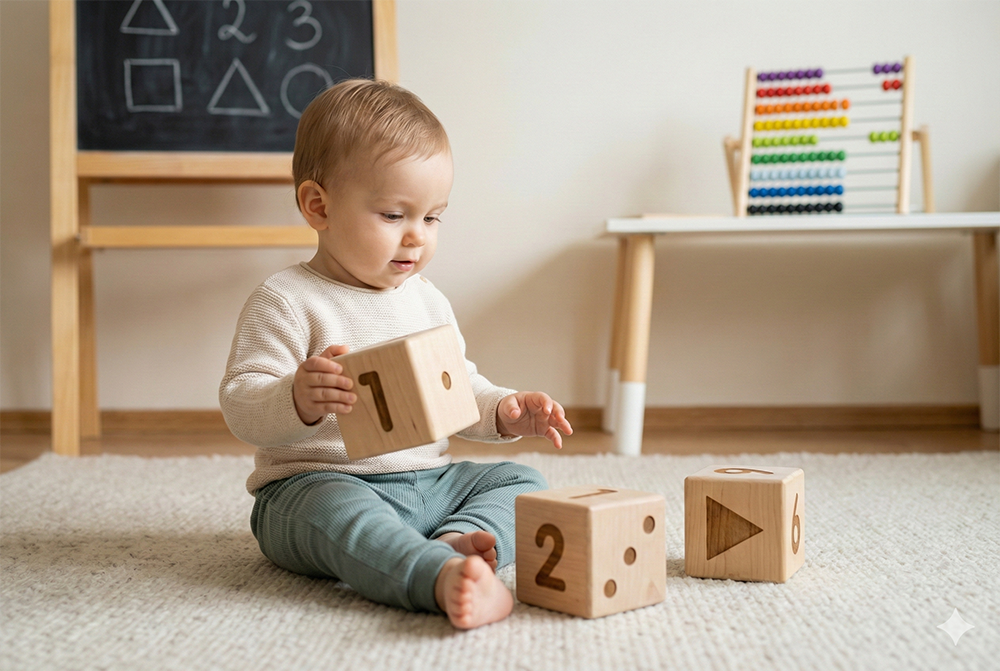
- Use wooden blocks and simple stacking toys.
- Allow babies to touch and turn book pages.
- Play peekaboo and object-hiding games.
9–12 Months: Imitation, Language, and Independence Stage
Babies learn through imitation and begin moving independently. The goal: language foundations, social adaptation, and physical independence.
- Use simple instructions like “Give me the ball.”
- Read picture books and name objects.
- Offer stacking boxes and lid-opening games.
- Create a safe walking area without using walkers.
Tools to Support Baby Education
Toy Selection
Toys should be age-appropriate and match the baby’s developmental level. Soft, sound-based toys are ideal for 0–6 months, while motor-skill-building toys are better suited for 6–12 months.
Books
Thick, textured, and colorful baby books strengthen early learning. Reading is one of the most powerful tools for language development.
Daily Routines
Feeding, bathing, playing, and sleeping routines create natural learning environments. Consistent routines help babies develop a sense of security.
When Should You Seek Professional Support?
- If the baby does not make eye contact,
- If there is no response to sounds,
- If significant motor delays are observed,
- If language development progresses very slowly,
It may be helpful to consult a child development specialist or pediatrician.
Advice for Parents
A baby development education approach requires love, patience, and consistency. Babies are naturally curious learners; providing a safe environment, engaging in conversation, and playing together supports learning in the most natural way. Remember, the most effective educational tool is the quality time you spend with your baby.