Babies are often thought of as passive learners, but research in early childhood development shows that even in the first years of life, the brain is actively processing patterns, quantities, and symbols. This raises an important question about baby cognitive development: how and when do infants begin learning mathematics and symbols? While babies do not solve equations, the foundations of mathematical thinking and symbolic understanding begin much earlier than formal education.
Understanding Cognitive Development in Babies
Cognitive development refers to how babies think, learn, remember, and problem-solve. During infancy, the brain forms millions of neural connections every second, driven by sensory input and interaction with the environment.
Early Brain Growth and Learning Capacity
From birth, babies are wired to detect patterns and relationships. These early abilities form the groundwork for later skills such as counting, reading, and abstract reasoning.
Can Babies Understand Mathematics?
While babies cannot understand mathematics in the traditional sense, they are born with an innate ability to perceive quantity. This is often referred to as number sense.
Innate Number Sense
Studies show that even newborns can distinguish between small quantities, such as one object versus two. This ability allows babies to recognize changes in amount, laying the foundation for future mathematical learning.
When Do Babies Start Learning Mathematical Concepts?
Mathematical learning in babies happens gradually through everyday experiences rather than structured lessons. Different aspects of math emerge at different developmental stages.
Quantity Awareness (0–6 Months)
In the first months of life, babies begin to notice differences in quantity. They may show surprise when the number of objects changes unexpectedly, indicating early numerical awareness.
Pattern Recognition (6–12 Months)
Between six and twelve months, babies become more skilled at recognizing patterns. This includes visual patterns, rhythmic sounds, and repeated actions, all of which are essential for mathematical thinking.
Cause and Effect (12–24 Months)
Toddlers start understanding that actions lead to outcomes. Pressing a button to make a sound or stacking blocks and watching them fall introduces basic logic and problem-solving skills.
How Babies Learn Symbols
Symbols represent objects, ideas, or actions. Learning symbols is a major milestone in cognitive development and is closely linked to language and mathematical thinking.
From Objects to Meaning
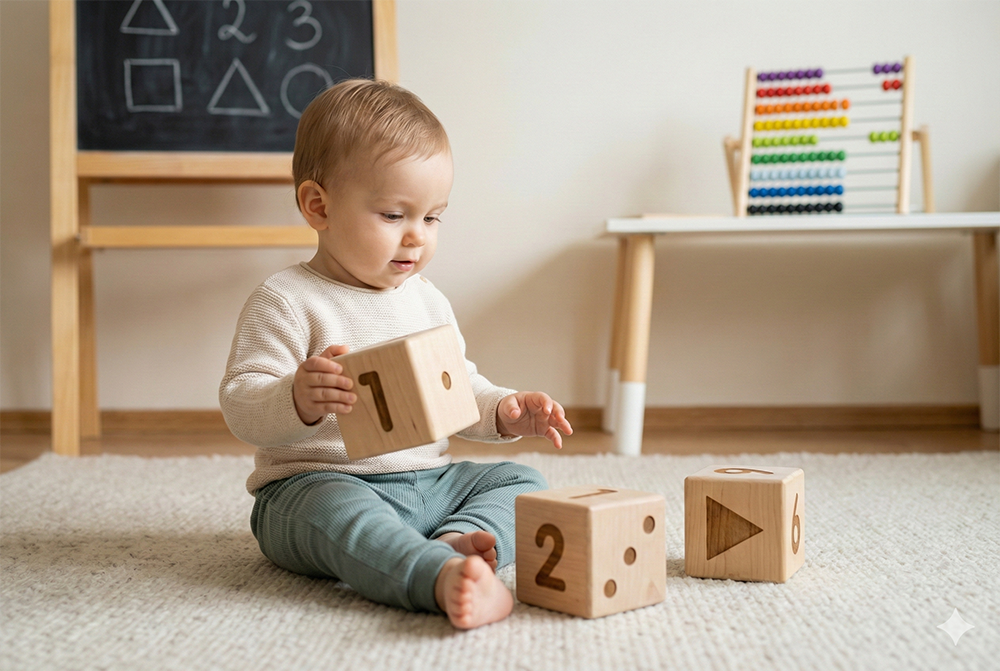
Babies first learn that objects stand for something tangible. For example, a picture of a ball represents a real ball. This symbolic understanding eventually extends to numbers, letters, and shapes.
The Role of Language in Symbol Learning
Language helps babies attach meaning to symbols. Hearing words repeatedly while seeing objects strengthens the brain’s ability to connect symbols with real-world concepts.
When Do Babies Recognize Numbers and Symbols?
Recognition does not mean comprehension. Babies may recognize visual forms of numbers or symbols long before understanding their meaning.
Early Recognition Stages
- 6–9 months: Interest in shapes, patterns, and images
- 9–12 months: Recognition of familiar symbols and pictures
- 12–24 months: Beginning association between symbols and meaning
Everyday Activities That Support Math Learning
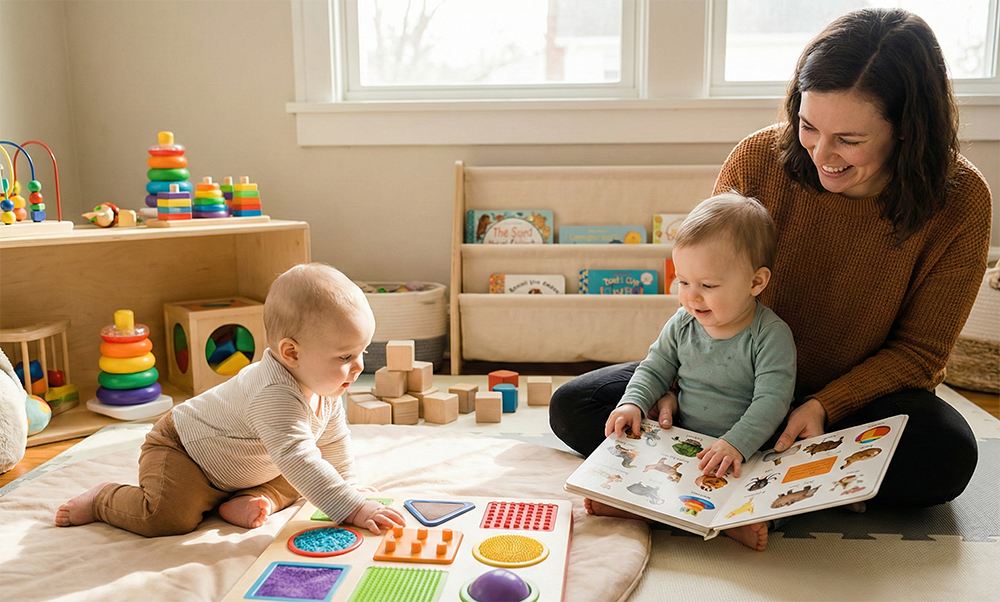
Babies learn best through play and daily interaction. Simple activities can strongly support early mathematical and symbolic thinking.
Counting Through Interaction
Counting toys, steps, or bites during meals introduces numerical language naturally, even before babies understand exact quantities.
Sorting and Stacking
Activities like stacking blocks or sorting objects by size or color help babies explore concepts such as order, comparison, and balance.
The Importance of Repetition and Routine
Repetition strengthens neural connections. When babies experience repeated patterns—such as songs, clapping, or daily routines—they reinforce early mathematical thinking.
Predictability and Learning
Predictable routines help babies anticipate outcomes, supporting logic and memory development.
Technology, Screens, and Symbol Exposure
While digital content may expose babies to numbers and symbols, real-world interaction is far more effective for cognitive growth. Passive screen exposure offers limited benefits compared to hands-on experiences.
Supporting Healthy Cognitive Development
Parents do not need to “teach” mathematics formally during infancy. Providing a rich environment with language, play, and exploration naturally supports the development of mathematical and symbolic thinking.
Early Foundations Shape Future Learning
The roots of mathematical understanding and symbol recognition begin in the first year of life. Through everyday interactions, babies build the cognitive foundations that will later support reading, math, and problem-solving skills.