
The first year of life is the period when baby development progresses most rapidly. Every baby develops at their own pace; the information below provides a general framework. If you have any concerns, always seek professional advice.
Core Areas of Development
Motor Development
Gross motor skills include head control, rolling, sitting, crawling, and standing. Fine motor skills involve grasping objects, exploring with fingers, and coordinating both hands.
Cognitive and Language Development
Key milestones in this area include object permanence, understanding cause-and-effect relationships, and imitating sounds. Babbling usually begins in the early months and may progress toward first words between 9 and 12 months.
Social and Emotional Development
Eye contact, smiling, separation anxiety, and reactions to familiar faces are important indicators in this domain. Responsive caregiving is essential for emotional security.
Month-by-Month General Milestones
0–3 Months
- Reflexes dominate; head control is just beginning to develop.
- Cooing sounds and turning toward voices may be observed.
- Tummy time should be practiced frequently in short sessions.
4–6 Months
- Sitting with support, rolling in both directions, and reaching for toys increase.
- Laughter, syllable-like sounds, and interest in mirrors become noticeable.
- Readiness for solid foods (good head control, reduced tongue-thrust reflex) should be monitored.
7–9 Months
- The onset of crawling and the development of the pincer grasp (thumb and index finger).
- Understanding simple instructions such as “give” or “take” begins.
- Separation anxiety may appear; consistent routines support secure attachment.
10–12 Months
- Standing without support, side steps, and early independent walking may occur.
- First words (such as “mama” or “dada”), gestures, and pointing increase.
- Symbolic play (e.g., pretending to talk on a phone) begins.
Supporting Development Through Daily Routines
Touch, Movement, and Play
Tactile stimulation (gentle massage), movement-based play, and safe free time on the floor support motor development. Placing toys at different heights increases motivation and exploration.
Language and Communication
- Describe daily activities aloud (“I’m changing your diaper now”).
- High-contrast books and songs enrich language input.
- Model gestures and pointing; reinforce when your baby imitates.
Emotional Security and Attachment
Practice responsive caregiving: calm and prompt responses to crying, consistent routines, and skin-to-skin contact help build trust and emotional safety.
Nutrition and Sleep
Feeding Tips
- Exclusive breastfeeding is recommended for the first 6 months when possible. If formula is used, consult a pediatrician.
- After 6 months, introduce complementary foods gradually, moving from purees to finger foods.
- Allergenic foods should be introduced safely and at the appropriate time under professional guidance.
Sleep Routine
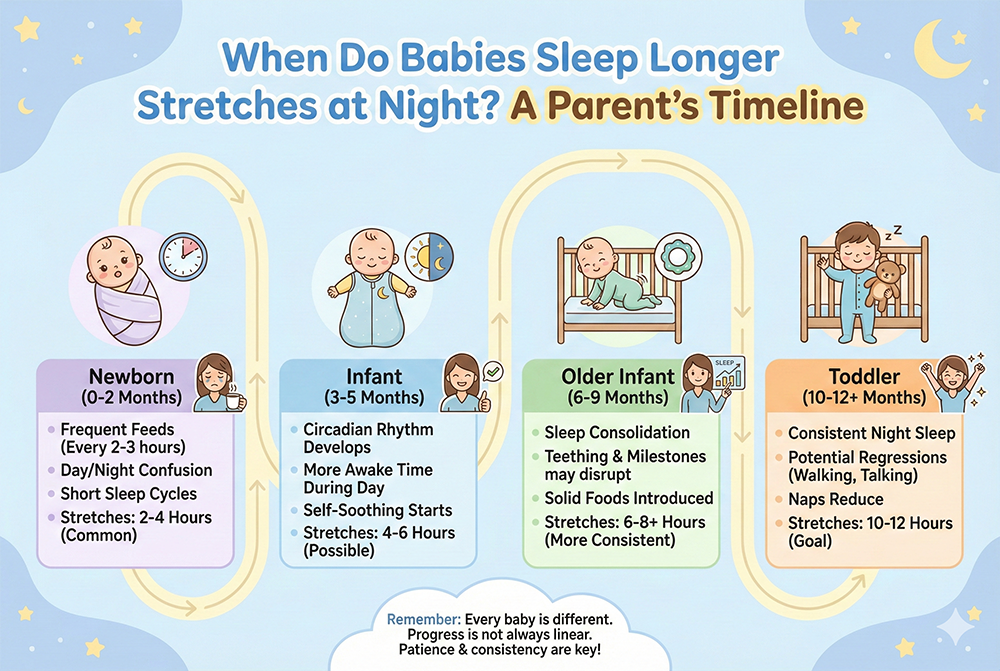
Short and frequent sleep periods are normal in the early months. After 4 months, a bedtime routine (bath, book, lullaby) and a suitable sleep environment support healthy sleep habits. Always place your baby on their back and use a safe crib.
Simple Activities to Try at Home
For 0–6 Months
- High-contrast cards and facial expression imitation games.
- Encouraging head and neck control during tummy time with a rattle.
- Rhythm-based, gentle, and safe movement games.
For 6–12 Months
- Object hiding games (peek-a-boo) and container play.
- Sensory exploration using different textures (felt, sponge, wood).
- Imitation games with simple instructions (clapping, waving goodbye).
When Should You Seek Professional Advice?
Warning Signs
- By 3 months: no head lifting or no response to sounds.
- By 6 months: not rolling in either direction or not reaching for toys.
- By 9 months: inability to sit without support or very limited social interaction.
- By 12 months: minimal response to sounds, no pointing, or no attempts at syllables or words.
Consulting a pediatrician, child development specialist, or audiologist can help identify developmental delays early.
Quick Reminders for Parents
Safe Environment and Routine
Safety measures (outlet covers, corner guards), regular developmental monitoring, and loving interaction are the foundations of the first year. Every baby develops differently; instead of comparison, focus on small, consistent progress.