
1-month-old baby development is an exciting discovery period for parents. During the first four weeks after birth, babies gradually adapt to the outside world. In this phase, feeding, sleep patterns, and sensory development play a crucial role. Every baby grows at their own pace, so this article serves as a general guide.
How Does a 1-Month-Old Baby Develop?
Physical and Motor Development
In the first month, babies move primarily through newborn reflexes. Sucking, grasping, and the Moro reflex are actively present. When placed on their tummy, babies may briefly lift their head, but full head control has not yet developed. Muscles remain in the newborn posture, with arms and legs typically slightly flexed.
During this period, tummy time exercises are essential for strengthening neck muscles. These activities can be done for a few minutes several times a day while the baby is awake and supervised. Tummy time supports overall motor development.
Sensory Development
A 1-month-old baby can recognize their mother’s voice and often turns toward familiar sounds. Babies can briefly focus on objects at a distance of about 20–25 cm. Making eye contact marks the early stages of social bonding. High-contrast black-and-white toys help strengthen visual perception.
Social and Emotional Development
Making eye contact and speaking gently with your baby lay the foundation for emotional security. Babies do not smile intentionally yet, but may respond with facial expressions when relaxed. Skin-to-skin contact increases oxytocin release, helping babies feel calm and secure.
Feeding Routine of a 1-Month-Old Baby
During this stage, breast milk is the primary source of nutrition. Breast milk is easy to digest and contains antibodies that support immunity. On average, babies may want to feed 8–12 times per day. Feeding intervals may vary depending on the baby’s stomach capacity.
Formula Feeding
In cases where breastfeeding is not possible, formula milk should be used under medical guidance. Bottle hygiene, formula measurements, and water temperature must follow instructions carefully. Overfeeding can cause digestive discomfort, so allow the baby to stop feeding when full.
Sleep Patterns of a 1-Month-Old Baby
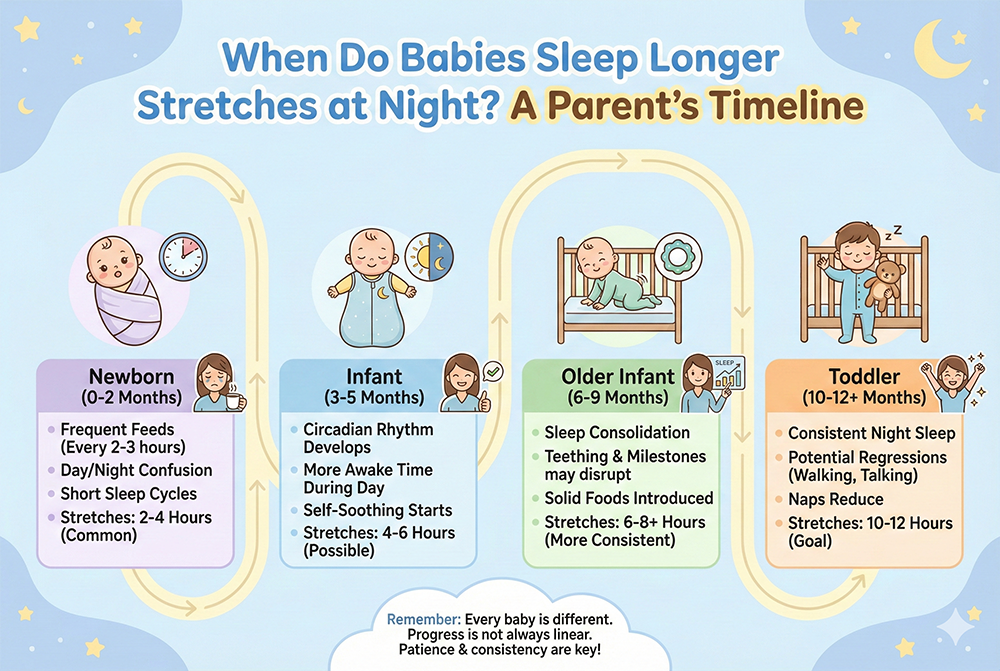
A 1-month-old baby typically sleeps about 16–18 hours a day. Sleep occurs in short intervals, and cycles of 2–4 hours are normal. Babies have not yet developed a day–night rhythm, so frequent waking is expected.
- Always follow the back-to-sleep rule.
- The crib should be simple, without pillows, blankets, or toys.
- Reducing light and noise in the evening helps establish an early sleep routine.
Sensory Interaction for a 1-Month-Old Baby
Talking, singing, and communicating with facial expressions are especially important during this month. Use a soft tone of voice and interact at eye level. Babies respond to rhythm and tone, which helps build a sense of security.
Visual and Auditory Stimulation
- Black-and-white cards help improve visual focus.
- Position your face about 25 cm away during interaction.
- A mother’s voice is one of the most soothing stimuli for a baby.
Common Situations in 1-Month-Old Babies
Gas and Colic
Since the digestive system is still developing, gas discomfort is common. Holding the baby upright after feeding and gentle tummy massage may help. Persistent or intense crying should be evaluated by a pediatrician.
Skin and Physical Changes
During the first weeks after birth, conditions such as skin rashes, newborn acne, and peeling may occur. These are usually temporary. Choose natural, fragrance-free moisturizers designed for baby skin.
Daily Routine Tips for a 1-Month-Old Baby
- Bath time should be short and with lukewarm water.
- Short outdoor walks help babies get fresh air.
- Baby massage supports circulation and strengthens bonding.
When Should You See a Doctor?
Routine health checkups for a 1-month-old baby should not be skipped. Seek medical attention immediately if any of the following occur:
- The baby is excessively sleepy and difficult to wake,
- Refuses feeding or feeds very little,
- Has a fever above 38°C (100.4°F),
- Shows bluish skin, breathing difficulties, or worsening jaundice.
Gentle Reminders for Parents
The first month is an adjustment period for both baby and parents. Be patient, maintain close contact, and reinforce your baby’s sense of safety. Every small step forward is part of their developmental journey.