
The 3-month-old baby development stage is a phase when your baby clearly recognizes you, responds to your voice, and begins exploring the world with growing curiosity. The first three months are among the most special periods in which both physical and emotional bonding become stronger. In this article, you will find everything you need to know to support your 3-month-old baby’s development.
Physical Development in a 3-Month-Old Baby
Muscle Strength and Movement Skills
A 3-month-old baby can hold their head upright for longer periods and lift their chest off the floor while lying on their tummy. This indicates strengthening of the neck and back muscles. Babies begin using their hands more intentionally, reaching for toys and sucking on their fingers.
- Tummy time duration can be increased and practiced several times a day in short sessions.
- Bringing hands to the mouth marks the beginning of self-discovery.
- Leg movements increase as leg muscles continue to strengthen.
Growth Indicators
On average, a 3-month-old baby reaches nearly twice their birth weight. Length increases by about 2–3 cm (0.8–1.2 inches), and head circumference continues to grow. If weight gain is steady, development is generally healthy. Pediatric checkups should not be skipped, and measurements should be closely monitored.
Sensory Development in a 3-Month-Old Baby
Vision Development
At 3 months, babies see more clearly and begin to distinguish colors. They can follow moving objects more smoothly with their eyes. Bright-colored toys, high-contrast patterns, and facial expressions capture their attention. Maintaining eye contact is essential for both visual and emotional development.
Hearing and Sound Responses
Babies respond more strongly to sounds during this month. They can easily recognize their parents’ voices and turn their head toward the sound source. Early vocalizations known as cooing become more frequent. Talking often, varying your tone of voice, and singing songs greatly support language development.
Social and Emotional Development in a 3-Month-Old Baby
Smiles and Interaction
A 3-month-old baby begins behaving like a social individual. They smile, giggle, and express happiness in response to sounds and familiar faces. When they see their parents, they clearly show recognition. This period is extremely valuable for emotional bonding.
Babies may now vocalize not only to express needs but also to attract attention. By maintaining eye contact, they attempt to “communicate” with you. These interactions help babies feel safe and emotionally secure.
Cognitive Development in a 3-Month-Old Baby
Cognitive development progresses rapidly at this stage. Babies begin storing faces and voices in memory and recognizing daily routines. For example, they may sense when feeding or bath time is approaching. Cause-and-effect awareness slowly starts to take shape.
- Colorful and sound-producing toys help extend attention span.
- Babies may begin noticing their reflection in a mirror.
- Consistent repetition strengthens learning and recognition.
Feeding Routine of a 3-Month-Old Baby
At this stage, breast milk remains the most valuable source of nutrition. Babies typically feed 6–8 times per day. Feeding sessions may last longer, as babies now suck more efficiently and strongly. A sufficient number of wet diapers and steady weight gain indicate adequate nutrition.
Formula Feeding
If breast milk is insufficient, formula may be used with a doctor’s recommendation. The amount should be adjusted based on the baby’s weight and satiety. Overfeeding may cause digestive discomfort. Burping after each feeding should not be neglected.
Sleep Patterns of a 3-Month-Old Baby
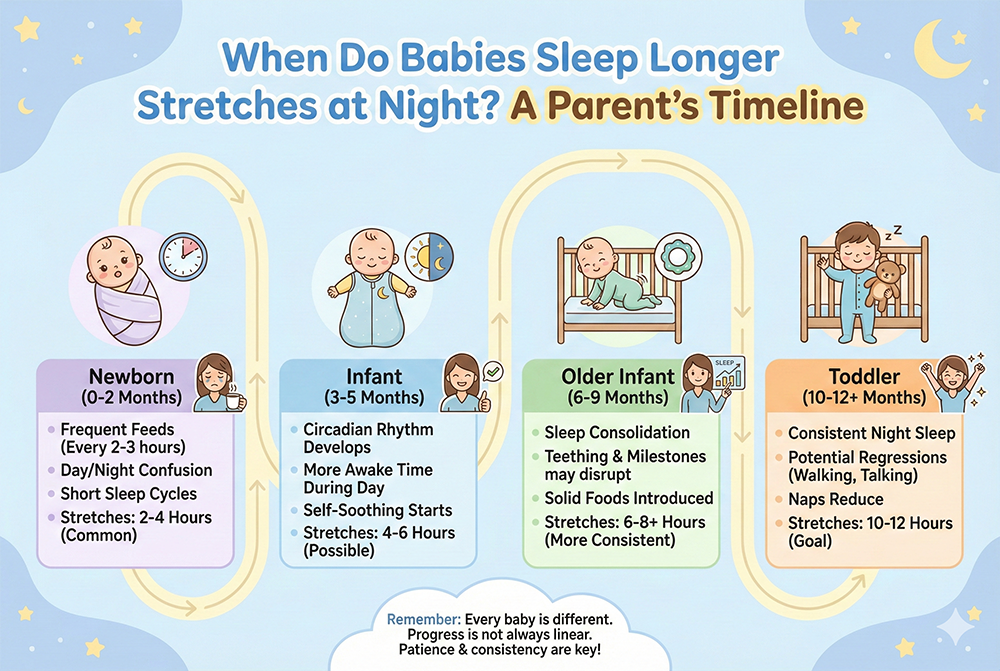
A 3-month-old baby sleeps an average of 14–16 hours per day. Sleep becomes more organized, and babies may sleep uninterrupted for 5–6 hours at night. Calming bedtime routines such as lullabies, dim lighting, and a quiet environment improve sleep quality.
- Babies should always be placed on their back to sleep, without pillows in the crib.
- Daytime naps may still be short, which is normal.
- The distinction between night and day gradually begins to develop.
Activities You Can Do with a 3-Month-Old Baby
1. Vocal and Musical Interaction
Talk to your baby often, vary your tone of voice, and sing lullabies. These activities support language development and strengthen emotional bonding.
2. Toy and Visual Tracking Games
Encourage eye tracking using colorful rattles or hanging toys. Move objects from side to side and up and down to help strengthen eye muscles.
3. Mirror Play
Hold your baby in front of a mirror. Although they cannot recognize themselves yet, they respond to reflections, which helps develop cognitive awareness.
When Should You See a Doctor?
- If the baby does not respond to sounds,
- If they cannot lift their head at all or muscles seem very weak,
- If there is no eye contact,
- If feeding is refused or weight gain is inadequate,
- If there is constant irritability or excessive crying,
consultation with a pediatrician is strongly recommended. Developmental delays identified early can often be resolved with appropriate support.
Tips for Parents
During the 3-month-old baby development stage, patience and love are key. Every reaction from your baby is a sign of growth. Maintain eye contact, talk frequently, and offer plenty of cuddles. These small moments lay the foundation for long-term emotional security.