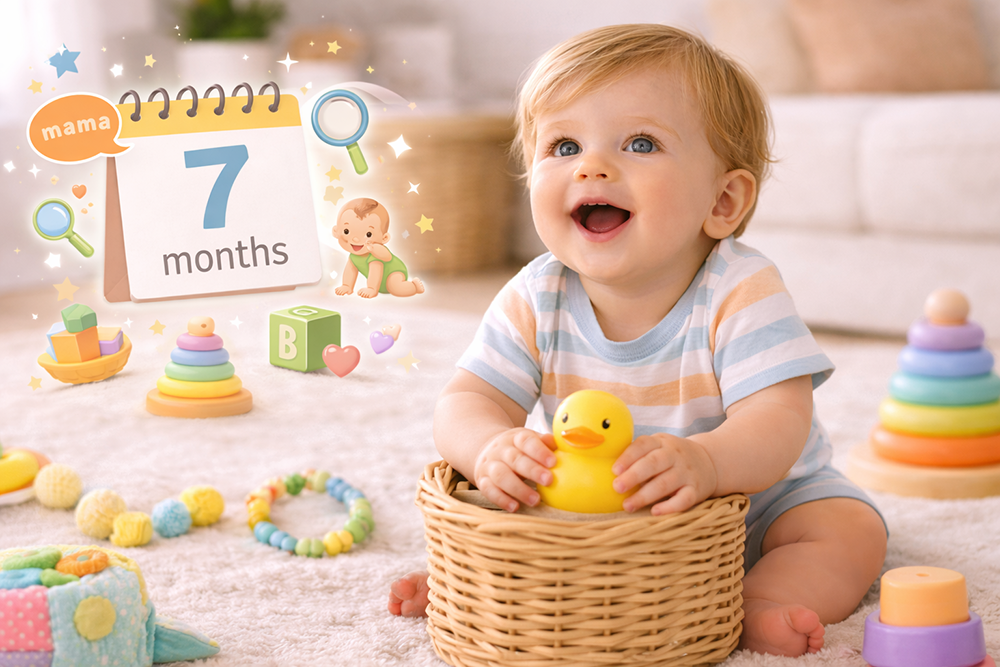
The 7-month-old baby development stage is a period when babies explore the world more actively, become more mobile, and develop stronger social communication skills. During this month, many babies begin crawling, sitting improves significantly, and hand–eye coordination becomes more advanced. Month seven is an exciting time marked by rapid physical, cognitive, and emotional growth.
Physical Development in a 7-Month-Old Baby
Sitting and Crawling Attempts
A 7-month-old baby can usually sit without support or remain upright for long periods with minimal assistance. Many babies begin making crawling attempts during this month. Some may crawl forward, while others move backward at first. Delayed crawling is normal—every baby develops at their own pace.
- Independent sitting is largely established.
- Babies can reach forward to grab toys.
- They may rock back and forth in the crawling position.
- Leg strength continues to increase.
Growth Indicators
By month seven, weight gain may slow slightly, which is completely normal due to increased mobility. Height, weight, and head circumference should be monitored during pediatric checkups. Many babies reach approximately 2.5 times their birth weight at this stage.
Sensory Development in a 7-Month-Old Baby
Vision and Fine Motor Skills
Babies can now notice smaller objects, distinguish colors more clearly, and examine toys in greater detail. Growing curiosity contributes to rapid improvement in hand–eye coordination.
- Finger grasping (early pincer movement) begins.
- Babies move toys from side to side and up and down while exploring.
- Reactions to their reflection in the mirror become more frequent.
Hearing and Sound Responses
A 7-month-old baby responds to their name and turns toward the source of sounds. Babbling becomes more complex, with repeated syllables such as “mamama,” “bababa,” and “dadada.” Sound imitation is an important stage of early language development.
Social and Emotional Development in a 7-Month-Old Baby
Attachment and Communication
Babies build stronger connections with familiar caregivers. They may show excitement when seeing parents, enjoy interactive play, and respond with smiles. Mild shyness toward unfamiliar people (early stranger anxiety) may begin.
Babies easily imitate facial expressions, tone of voice, and emotional cues. These imitations are a natural part of developing social skills.
Cognitive Development in a 7-Month-Old Baby
At 7 months, babies gain a clearer understanding of cause-and-effect relationships. Dropping, banging, and moving objects are all part of active experimentation. Babies recognize routines and may begin anticipating familiar events.
- Object permanence improves, and babies start searching for hidden objects.
- They may hold toys tightly and bang them together to create sounds.
- They attempt simple problem-solving, such as changing position to reach a toy.
Feeding Routine of a 7-Month-Old Baby
Solid Food Schedule
Month seven is when solid foods usually become more consistent. Breast milk or formula remains the main source of nutrition, but babies typically try solid foods during 2–3 meals per day.
Recommended Solid Foods
- Vegetable purees (zucchini, carrot, sweet potato),
- Fruits (banana, pear, apple),
- Egg yolk (with pediatric approval),
- Grain cereals (rice, oats),
- Yogurt or soft cheese (with professional guidance),
- Boiled vegetable sticks for BLW.
Babies are generally open to new tastes at this stage. To monitor for allergies, introduce new foods several days apart.
Sleep Patterns of a 7-Month-Old Baby
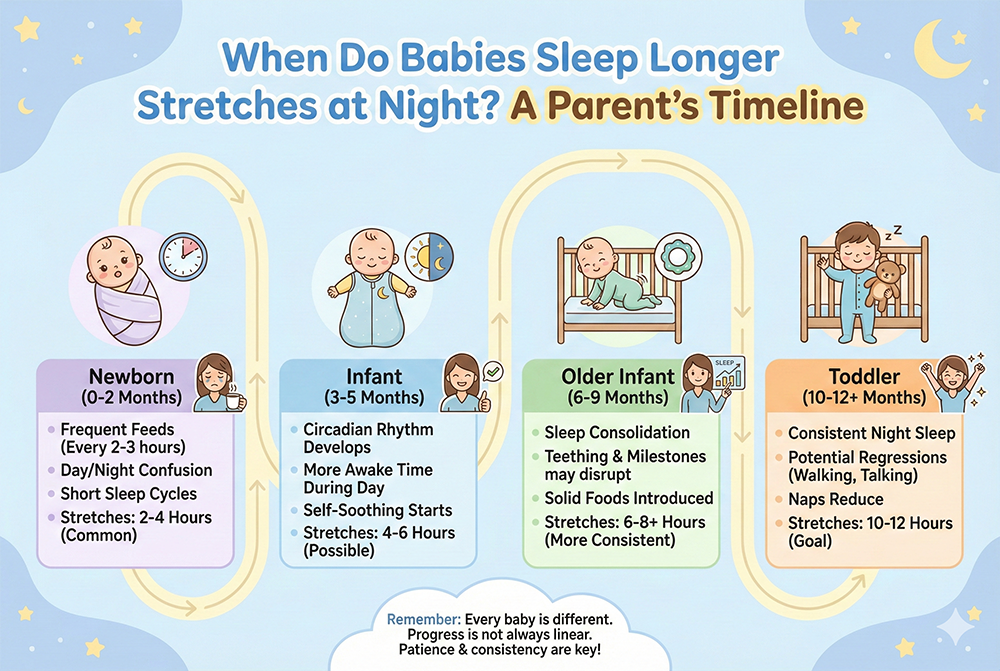
A 7-month-old baby sleeps an average of 13–15 hours per day. Daytime naps usually occur twice (morning and afternoon). Nighttime sleep becomes more consistent, and some babies wake only once during the night.
- A consistent bedtime routine (bath, music, dim lighting) should be maintained.
- Babies should always be placed on their back to sleep.
- The sleep environment should be calm, cool, and dark.
Activities for a 7-Month-Old Baby
1. Block and Ring Games
Colorful blocks and rings help develop fine motor skills. Stacking, dropping, and repeating actions make learning enjoyable.
2. Object Hiding Games
Peek-a-boo games are ideal for 7-month-old babies. They strengthen object permanence and encourage interactive play.
3. Sound Toys and Music
Rattles, bell balls, and musical toys increase attention span. Clapping, rhythm games, and listening to songs support auditory development.
4. Crawling Games
On a soft surface, motivating babies with toys can encourage crawling practice. These activities strengthen muscles and coordination.
When Should You See a Doctor?
- If there are no rolling movements by month seven,
- If the baby does not respond to sounds or their name,
- If they do not reach for objects,
- If independent sitting has not developed,
- If feeding or weight gain appears insufficient,
consultation with a pediatrician is recommended.
Tips for Parents
The 7-month-old baby development stage is a time of rapid physical and mental growth. Play often, talk frequently, and engage in tactile and auditory activities. Every baby develops at a unique pace—support even small milestones with encouragement and patience.