A baby’s spine plays a vital role in movement, posture, and overall physical development. From the earliest weeks of pregnancy through infancy and toddlerhood, the spine undergoes remarkable transformation. Understanding baby spine development helps parents recognize normal growth patterns and identify important key milestones along the way.
When Does Baby Spine Development Begin?
Spine development begins very early in pregnancy. Around 3 to 4 weeks of gestation, the neural tube forms. This structure eventually develops into the brain and spinal cord. Proper closure of the neural tube is critical for healthy spinal development.
The Role of the Neural Tube
The neural tube forms the foundation of the central nervous system. Adequate levels of folic acid during early pregnancy significantly reduce the risk of neural tube defects such as spina bifida.
Fetal Spine Development Stages
The spine develops in carefully coordinated stages during pregnancy, gradually forming the vertebrae and protective structures around the spinal cord.
First Trimester: Basic Structure Formation
During the first trimester, the vertebrae begin forming from mesodermal tissue. By the end of this stage, the basic spinal column structure is present.
Second Trimester: Ossification Begins
In the second trimester, the vertebrae start hardening through a process called ossification. The bones gradually strengthen while remaining flexible enough to support continued growth.
Third Trimester: Refinement and Alignment
During the final trimester, spinal alignment improves, and the vertebral bodies continue maturing. By birth, the spine is structurally complete but still highly flexible.
How the Baby Spine Looks at Birth
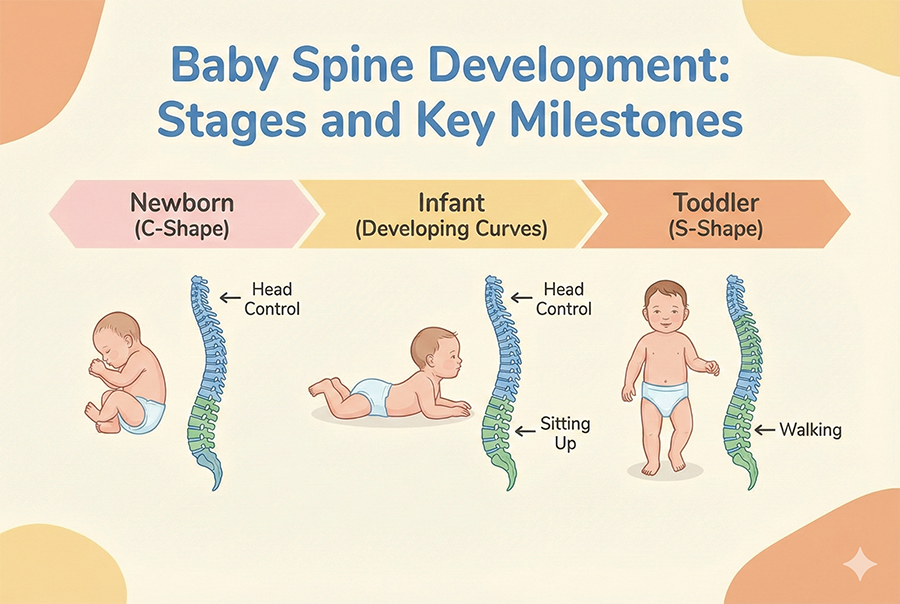
At birth, a baby’s spine has a gentle C-shaped curve. This curve reflects the curled position maintained in the womb. Unlike adults, newborns do not yet have the typical S-shaped spinal curvature.
Why the Spine Is So Flexible
Newborn vertebrae contain more cartilage than bone. This flexibility helps during delivery and supports rapid growth in early life.
Key Milestones in Baby Spine Development
After birth, spinal development continues as babies gain strength and mobility. Each physical milestone contributes to shaping the spine’s natural curves.
1. Lifting the Head (Around 2–4 Months)
When babies begin lifting and holding their heads up, the first spinal curve—called the cervical lordosis—starts to develop in the neck area.
2. Sitting Up (Around 6 Months)
As babies learn to sit independently, muscles along the spine strengthen. This supports improved posture and spinal stability.
3. Crawling (Around 7–10 Months)
Crawling enhances coordination and further strengthens back muscles. It prepares the spine for upright posture.
4. Standing and Walking (9–18 Months)
When babies begin standing and walking, the lower back curve—known as lumbar lordosis—develops. This transforms the spine into its characteristic S-shape.
When Is the Spine Fully Developed?
Although major curves form within the first two years of life, spinal development continues into adolescence. Growth plates in the vertebrae remain active throughout childhood.
Factors That Influence Healthy Spine Development
Several factors can affect how well a baby’s spine grows and strengthens.
Proper Nutrition
Nutrients such as calcium, vitamin D, and protein support bone growth and strength.
Tummy Time
Supervised tummy time is crucial in early months. It strengthens neck and back muscles, supporting natural spinal curves.
Safe Movement and Positioning
Allowing babies to move freely on safe surfaces promotes muscle development. Prolonged use of restrictive devices may limit natural strengthening.
Common Concerns About Baby Spine Development
Parents sometimes worry about posture, flat spots, or asymmetry. Most variations are normal, but persistent concerns should be evaluated by a healthcare provider.
Signs to Monitor
- Persistent asymmetry in movement
- Delayed motor milestones
- Visible spinal curvature abnormalities
Spine Development and Motor Skills
Strong spinal muscles support gross motor skills such as rolling, crawling, and walking. Healthy spine alignment enables balance and coordination.
Supporting Long-Term Spinal Health
Encouraging active play, providing balanced nutrition, and attending regular pediatric checkups all contribute to healthy spinal growth.
Understanding the Journey of Growth
From a simple C-shaped curve at birth to a stable S-shaped spine in toddlerhood, baby spine development is a dynamic and gradual process. Recognizing the stages and milestones allows parents to support healthy growth with confidence.