BLW (Baby-Led Weaning) is a feeding approach that allows babies to feed themselves during the transition to solid foods. Instead of being spoon-fed purees, babies explore appropriately sized foods on their own. BLW supports motor development, sensory awareness, self-confidence, and independent eating skills in a natural way.
What Is BLW? How Is It Practiced?
The Philosophy Behind BLW
BLW allows babies to choose, hold, and explore food according to their own needs. Purees are not spoon-fed, and there is no pressure. The baby sits at the table and eats at their own pace by reaching for food independently.
Signs of Readiness for Solid Foods
Before starting BLW, make sure your baby is ready for solids. This usually happens around 6 months of age. Signs of readiness include:
- Ability to sit independently or with minimal support,
- Full head and neck control,
- Ability to grasp objects and bring them to the mouth,
- Interest in food (watching, reaching),
- Reduced tongue-thrust reflex.
Benefits of BLW for Babies
Supports Motor Development
During BLW, babies grasp food with their hands, which helps develop fine motor skills. Hand-eye coordination improves, and exposure to different textures enhances sensory development.
Builds Confidence and Independence
As babies successfully feed themselves, their self-confidence grows. Participating actively at the family table also supports social development.
Encourages Healthy Eating Habits
With BLW, babies experience the natural texture, taste, and smell of foods. This may reduce picky eating behaviors later in life.
Teaches Hunger and Fullness Cues
Since babies control their own feeding process, they learn to recognize when they are full. This supports healthy long-term eating habits.
First Foods for BLW
Safe and Appropriate Sizes
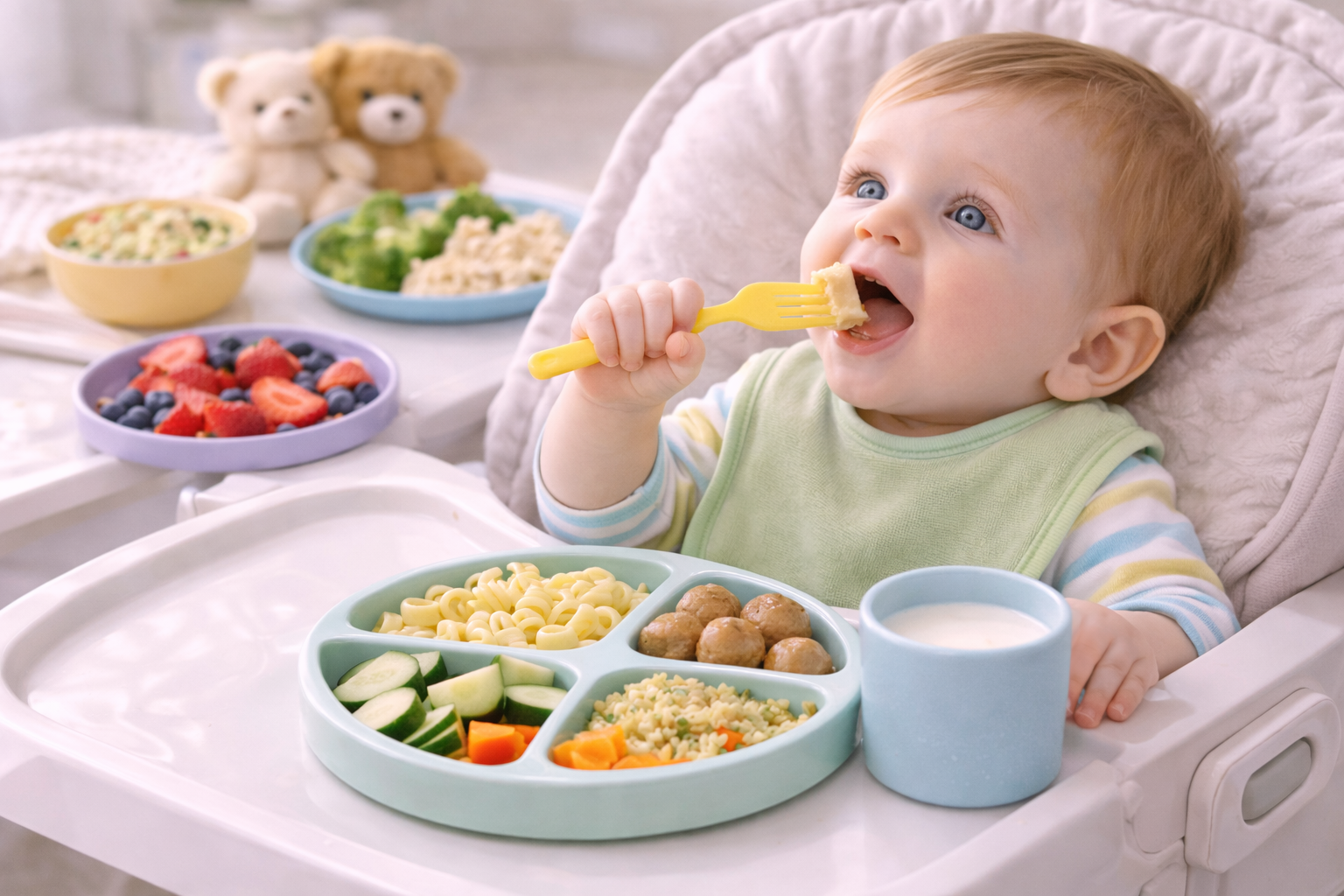
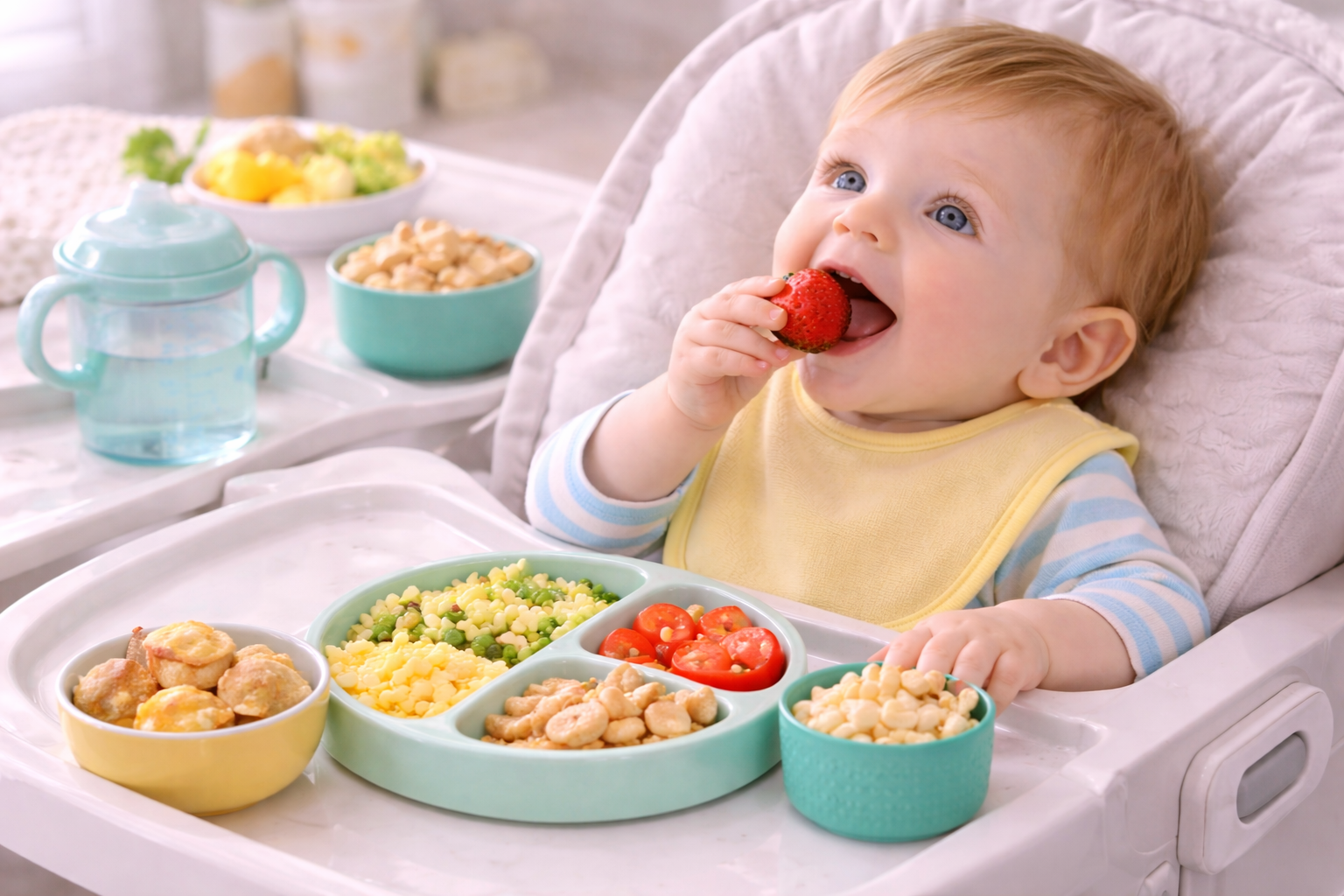
In BLW, foods are typically prepared in finger-length, baton-shaped pieces. Since babies initially use a palmar grasp, this size is ideal.
Recommended First Foods
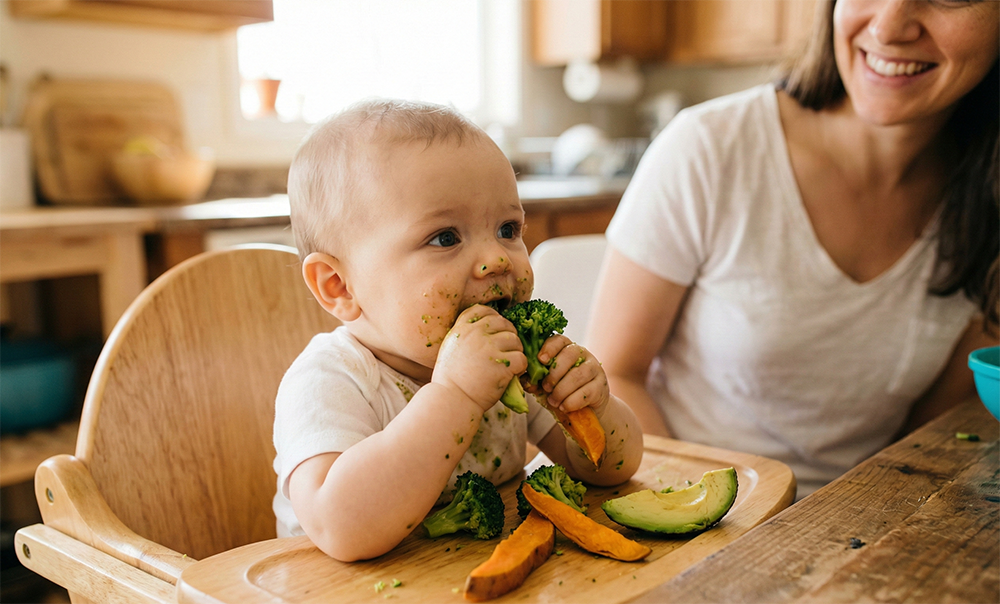
- Boiled potato or sweet potato sticks,
- Steamed broccoli and cauliflower,
- Well-cooked carrot sticks,
- Avocado slices,
- Soft pear or banana slices,
- Salt-free omelet strips.
All foods must be soft and easily mashable with fingers.
Can BLW and Purees Be Combined?
A popular approach in recent years is Combined Feeding. In this model, BLW and spoon-fed purees can be offered together. Babies gain both spoon experience and independent feeding skills. Many experts support this flexible approach depending on the baby's developmental needs.
Safety Rules in BLW
Tips to Reduce Choking Risk
- Always seat the baby upright.
- Never leave the baby unattended while eating.
- Avoid high-risk foods such as nuts, whole grapes, raw carrots, and popcorn.
- Ensure foods are soft and easily mashable.
- Use a secure high chair during meals.
Important Daily Considerations
Food should not be given simply to distract the baby. A calm and focused eating environment is essential. BLW focuses more on the experience than the quantity eaten. Breast milk or formula should remain the primary source of nutrition.
Common Mistakes in BLW
- Starting before the baby is ready,
- Preparing foods too hard or in inappropriate sizes,
- Forcing the baby to eat,
- Using screens as distractions during meals,
- Introducing too many new foods in one day.
When Should You Consult a Doctor?
- If there is noticeable weakness in hand use,
- If swallowing difficulties are observed,
- If there is a history of neurological developmental concerns,
- If allergic reactions occur,
- If the baby shows extreme indifference to food.
In such cases, consult a pediatrician.
Advice for Parents
The BLW method requires patience and time. Messy meals and food on clothes are completely normal. Trust your baby, maintain eye contact, and view mealtime as a learning opportunity. BLW supports your baby’s development and creates an enjoyable family feeding routine.