
When babies reach 9 months, their mobility increases, their sense of taste develops, and their adjustment to solid foods becomes much more noticeable. During this period, one of the questions parents wonder about most is how often should a 9-month-old baby be fed. By the 9th month, babies’ meal frequency, solid food amounts, and milk intake usually become more structured and consistent.
How Often Should a 9-Month-Old Baby Be Fed?
On average, a 9-month-old baby is fed every 3–4 hours. At this stage, both solid meals and milk feedings should be distributed evenly throughout the day.
- Breastfed 9-month-old baby: about every 3 hours
- Mixed-fed baby: every 3–4 hours
- Formula-fed baby: every 3–4 hours
By 9 months, babies usually chew better, eat a wider variety of foods, and have a more established solid-food routine.
How Many Solid Food Meals Should a 9-Month-Old Baby Have Per Day?
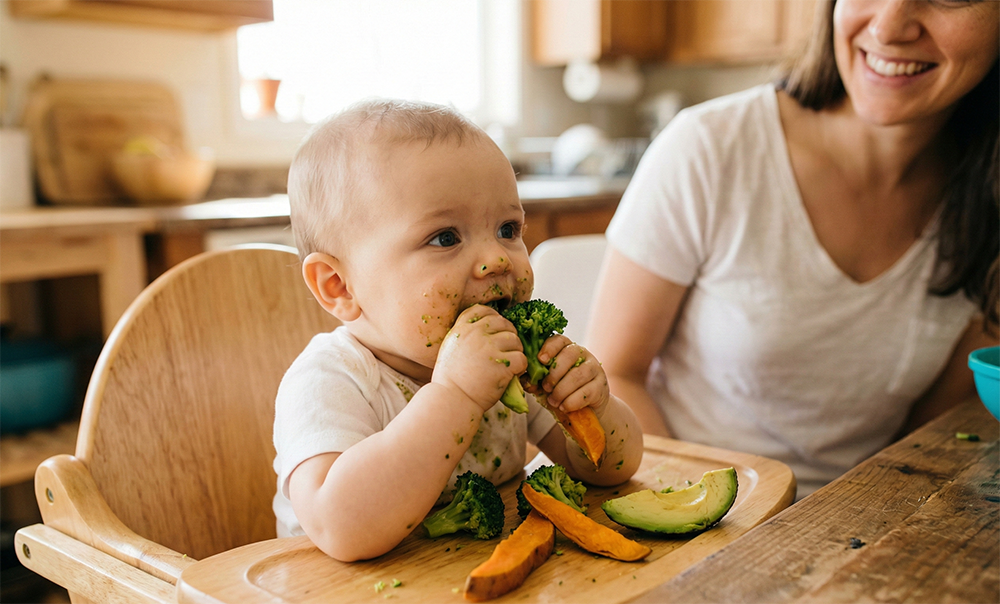
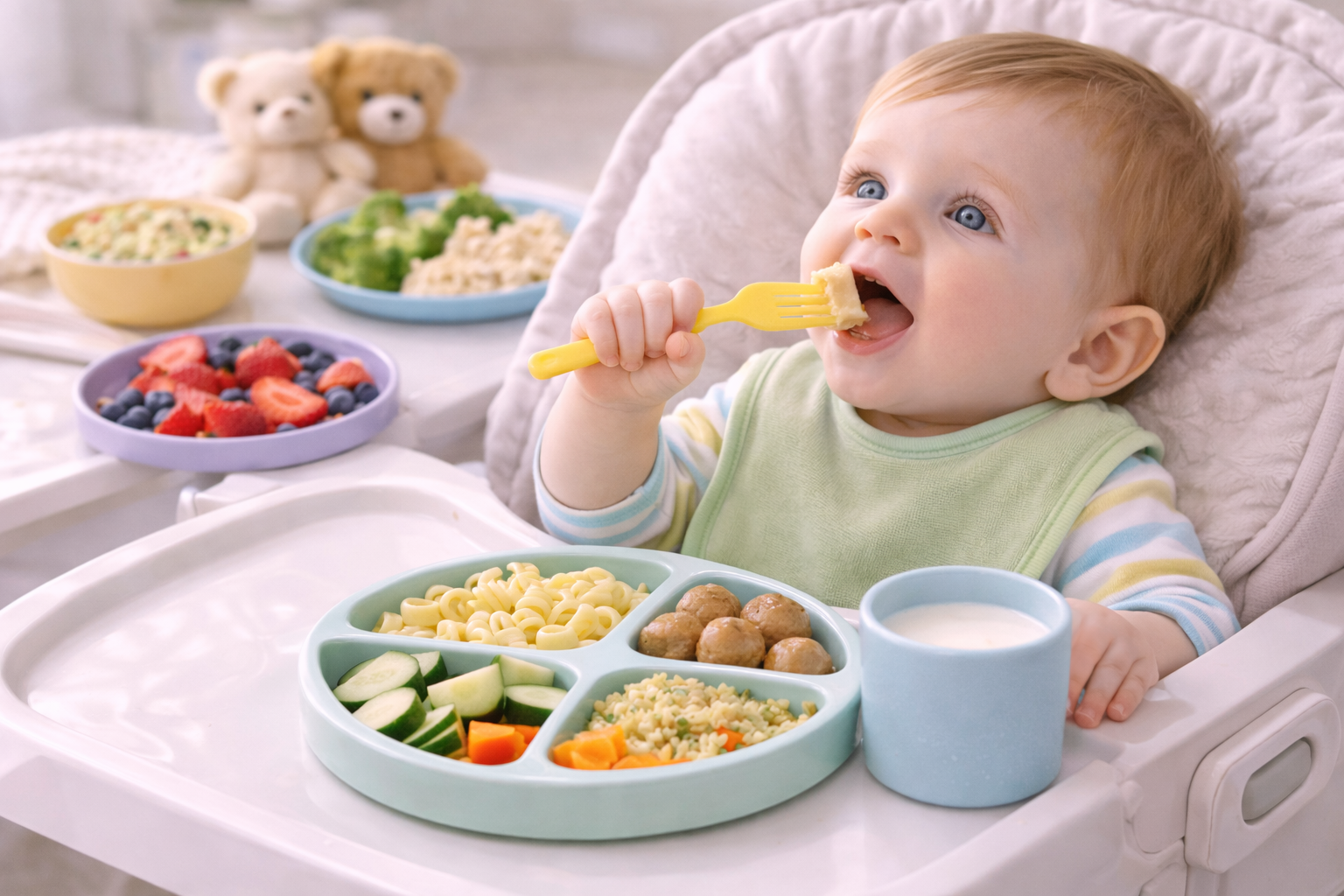
At 9 months, the number of solid meals becomes clearer. Babies can typically have 3 main solid meals per day.
Recommended Solid Food Plan
- Breakfast (egg yolk, cheese, baby cereals, fruit)
- Lunch (vegetable dishes, minced meat mixtures, yogurt)
- Late afternoon meal (fruit, yogurt, oats, homemade baby food)
In addition to solids, breast milk or formula should still remain an important part of the baby’s daily nutrition.
How Long Can a 9-Month-Old Baby Go Without Feeding at Night?
A 9-month-old baby with healthy weight gain can often sleep 10–12 hours without feeding at night. At this age, many babies naturally reduce night feeds or stop them entirely.
- Baby with good weight gain: can sleep 10–12 hours
- Baby with borderline weight gain: 7–8 hours
- Baby with special conditions: based on pediatric advice
Before dropping night feeds completely, it’s best to consult your pediatrician.
How Many Minutes Does a 9-Month-Old Baby Nurse?
The answer to how many minutes does a 9-month-old baby nurse can vary because babies are very active at this stage. Nursing sessions may be shorter compared to earlier months.
- Average nursing time: 4–7 minutes
- Fast nursers: 3–5 minutes
- Slower nursers: 7–10 minutes
Since babies are easily distracted at this age, short nursing sessions are completely normal.
How Much Formula Does a 9-Month-Old Baby Drink?
For formula-fed 9-month-olds, the amount per feeding depends on solid food intake. On average, a 9-month-old baby may drink 150–240 ml (cc) of formula per feeding.
- Formula per feeding: 150–240 ml
- Total daily formula: 400–700 ml (varies by solid food intake)
As babies eat more solid foods, their need for milk may naturally decrease.
How Can You Tell If a 9-Month-Old Baby Is Full?
- Releasing the breast or bottle
- Slowing down or stopping sucking
- Turning attention elsewhere
- Calming down and relaxing
- Falling asleep
These signs indicate feeding has been sufficient; it’s not appropriate to force the baby to keep eating.
Why Might a 9-Month-Old Baby Get Hungry More Often?
At certain times, a 9-month-old baby’s appetite may increase. Common reasons include:
- Growth spurts (especially around month 9)
- Increased mobility (crawling, pulling up to stand)
- Adjusting to new foods
- Higher energy needs
This appetite increase is usually temporary and often returns to normal within a few days.
Sample Feeding Routine for a 9-Month-Old Baby
- Morning: Breast milk or formula
- Breakfast (solids)
- Midday: Milk feeding
- Lunch solids (vegetables, yogurt, grain-based meals)
- Afternoon: Milk feeding
- Late afternoon snack (optional)
- Before bedtime: Milk feeding
This plan can be adjusted based on the baby’s appetite and sleep routine.
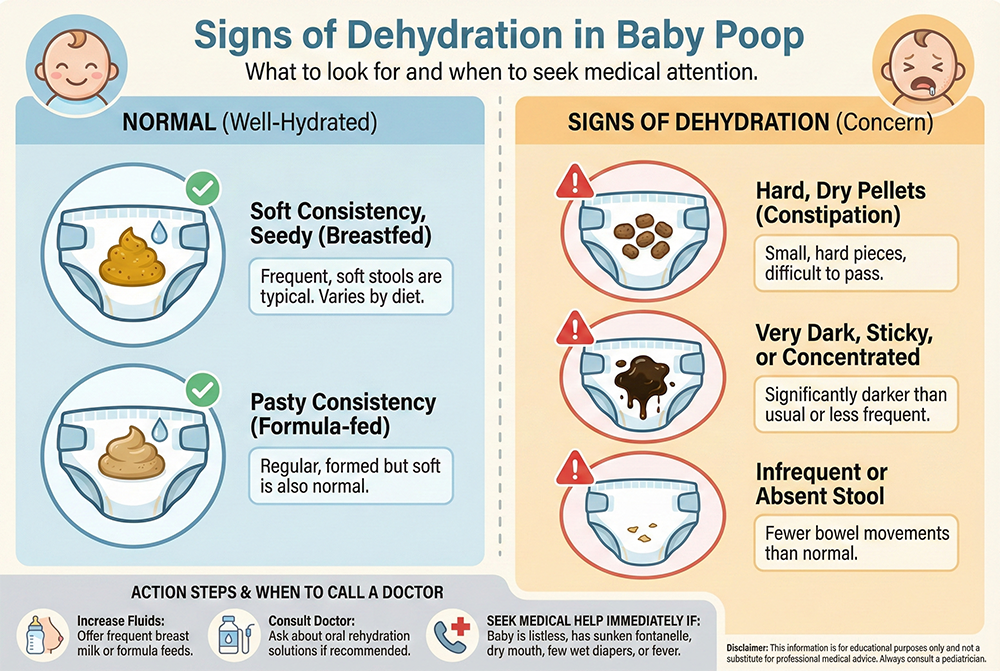
When Should You Call a Doctor?
- If the baby is not gaining enough weight
- If solid foods are consistently refused
- If there are fewer than four wet diapers per day
- If frequent vomiting occurs
- If the baby becomes excessively fussy after feeding
Every baby develops at a different pace, so regular pediatric checkups are important.
Notes for Parents
The answer to how often should a 9-month-old baby be fed depends on the baby’s appetite, activity level, and sleep routine. The goal at this stage is to increase solid foods at an appropriate pace, maintain milk feedings, and create a flexible routine based on hunger and fullness cues. Since every baby is different, each family will naturally find the best routine over time.