
Understanding Newborn Belly Breathing
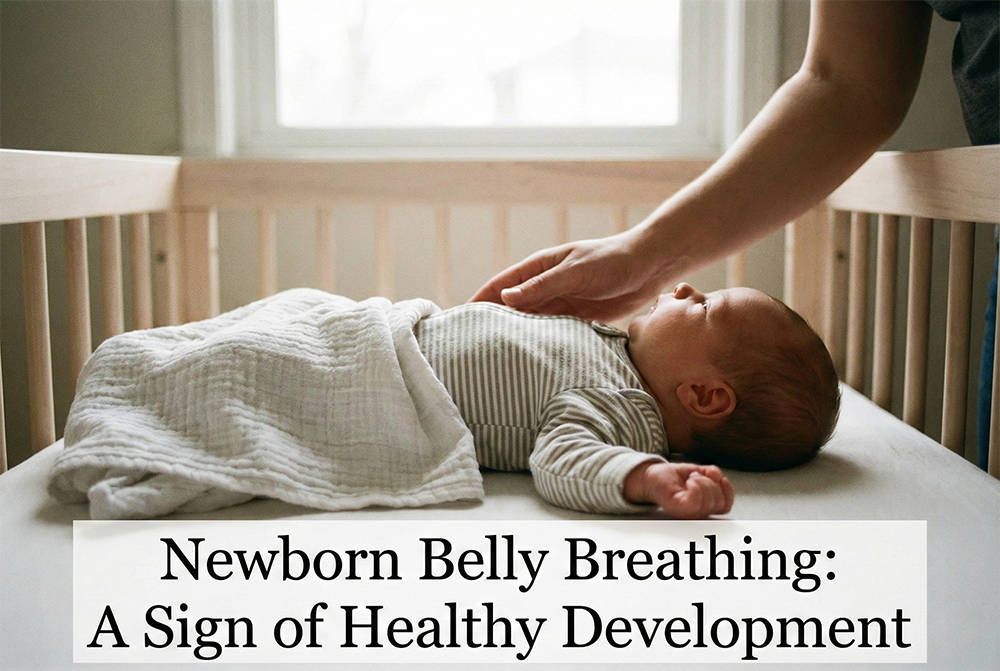
If you’ve watched your newborn sleep, you may have noticed their tummy rising and falling more than their chest. This is called newborn belly breathing, and in most healthy babies it’s a normal part of how infants breathe.
Newborns are not just “small adults.” Their airways, chest wall, and breathing muscles are still developing. As a result, their breathing patterns can look different from what you expect—sometimes noisy, sometimes irregular, and often led by the belly.
This article explains why belly breathing happens, how to tell what’s normal, and the specific warning signs that should prompt a call to your pediatrician or emergency care.
Why Do Newborns Breathe With Their Bellies?
Belly breathing in newborns is largely driven by the diaphragm, the primary muscle of breathing. When the diaphragm contracts, it moves downward, allowing the lungs to expand. In babies, this movement often causes the abdomen to rise more noticeably.
Key reasons belly breathing is common in infants
- More flexible chest wall: A newborn’s ribs and chest wall are softer and more compliant, so the chest may not rise as prominently as an older child’s.
- Diaphragm-dominant breathing: Babies rely more on the diaphragm and have less developed accessory breathing muscles.
- Smaller airways: Narrow nasal passages and airways can create more visible effort or sound even when breathing is normal.
- Immature breathing control: The brain’s regulation of breathing is still maturing, which can lead to variable rhythms during sleep.
What Normal Newborn Breathing Looks Like
Normal newborn breathing can be surprising. Many healthy newborns breathe in a pattern known as periodic breathing: a few faster breaths, a brief pause (often under 10 seconds), then breathing resumes without distress. The important piece is how your baby looks overall—comfortable, pink, feeding well, and easily rousable.
Typical newborn breathing rate
A common normal range for newborn respiratory rate is approximately 30–60 breaths per minute at rest. Rates can be higher when crying and lower during deep sleep.
Common “normal” features parents notice
- Belly rises and falls more than the chest
- Breathing varies in speed during sleep
- Occasional brief pauses (generally under 10 seconds) without color change
- Soft sounds like mild congestion from the nose (newborns are mostly nose breathers)
How to Check Your Baby’s Breathing at Home (Calmly and Safely)
If you’re worried, a quick, gentle check can help you feel more confident. Choose a moment when your baby is calm or sleeping.
Step-by-step: counting breaths
- Look at the belly (or chest) rise and fall.
- Count for 30 seconds and multiply by 2, or count for a full 60 seconds for best accuracy.
- Note your baby’s comfort: Are they relaxed? Any grunting, flaring nostrils, or pulling in of skin?
What matters more than the number alone
A single rate slightly above 60 isn’t always an emergency—especially if your baby was just crying or feeding. What’s more concerning is consistent rapid breathing at rest, signs of struggling, or changes in color, responsiveness, or feeding.
When Belly Breathing Is a Red Flag
While belly breathing by itself is usually normal, it can also occur with breathing difficulty. The difference is whether the baby is working hard to breathe. Trust your instincts—if something looks “off,” it’s worth getting checked.
Signs of respiratory distress in a newborn
Seek urgent medical advice if you notice any of the following:
- Retractions: skin pulling in between ribs, above the collarbones, or under the ribcage with each breath
- Nasal flaring: nostrils widening with breathing
- Grunting: a repetitive grunt sound on exhale (often a sign baby is trying to keep air in the lungs)
- Head bobbing with each breath
- Persistent breathing rate over 60 breaths/min at rest (especially with other symptoms)
- Color changes: blue/gray lips or face, or very pale/ashen skin
- Pauses in breathing longer than about 10 seconds, or any pause with color change, limpness, or trouble waking
- Poor feeding or tiring quickly during feeds
- Unusual sleepiness or difficulty waking
Emergency signs (call emergency services)
- Blue lips/face or severe trouble breathing
- Baby is limp, unresponsive, or difficult to wake
- Repeated long pauses in breathing or choking with ongoing distress
Common Causes of “Extra Belly Movement” (Most Are Treatable)
If your baby’s belly breathing looks more dramatic than usual, there may be an underlying issue. Some are mild and short-lived; others need prompt evaluation.
1) Nasal congestion
Because newborns primarily breathe through their noses, even mild congestion can make breathing look more effortful. You might hear snuffling or see your baby pause during feeding to catch their breath.
What you can do:
- Use saline drops and gentle suction before feeds and sleep
- Run a cool-mist humidifier in the room
- Keep baby upright briefly after feeds (always place on their back for sleep)
2) Normal newborn reflux or spit-up
Reflux can cause squirming, brief coughing, or noisy breathing after feeds. Most reflux in newborns is physiologic and improves with time.
What you can do:
- Offer smaller, more frequent feeds
- Burp gently during and after feeding
- Keep baby upright for 20–30 minutes after feeds while awake
- Avoid tight waistbands or diapers that press into the belly
3) Respiratory infections (colds, bronchiolitis, RSV, flu)
Viral infections can increase breathing effort, especially in young infants. Watch closely for fast breathing, retractions, reduced wet diapers, or difficulty feeding.
What you can do:
- Monitor feeding and wet diapers
- Clear the nose before feeds
- Seek medical evaluation early for babies under 3 months with fever or breathing concerns
4) Fever, overheating, or dehydration
Fever and dehydration can cause faster breathing. Over-bundling may also make babies breathe faster.
What you can do:
- Dress baby in one more layer than an adult typically needs
- Check for adequate wet diapers and feeding
- Call your pediatrician promptly for any fever in a baby under 3 months (often defined as 100.4°F/38°C or higher rectally, but follow local guidance)
5) Less common but important causes
Occasionally, increased work of breathing may relate to conditions such as pneumonia, congenital heart issues, airway differences (like laryngomalacia), metabolic concerns, or complications of prematurity. These require medical assessment and are not something parents should try to diagnose at home.
Newborn Belly Breathing During Sleep: What to Watch
Many parents notice belly breathing most when the baby is asleep and quiet. Sleep also brings more irregular breathing patterns, which can be normal.
Normal sleep-related patterns
- Periodic breathing (brief pauses under about 10 seconds)
- Faster breathing in REM sleep (lighter sleep)
- Small startles and changes in rhythm
Sleep safety matters more than monitoring gadgets
If you’re concerned about breathing, it’s natural to consider home monitors. However, for most families, the best protection is safe sleep rather than consumer breathing trackers.
Safe sleep basics:
- Always place baby on their back for naps and night
- Use a firm, flat sleep surface (crib/bassinet)
- Keep the sleep space empty: no pillows, loose blankets, bumpers, or stuffed animals
- Consider room-sharing (not bed-sharing) for the early months if possible
- Avoid smoke exposure
Belly Breathing vs. Retractions: How to Tell the Difference
Parents often ask whether they’re seeing normal belly movement or something more concerning. A simple visual check can help.
Normal belly breathing
- Belly rises smoothly
- Baby looks relaxed
- No pulling-in of skin around ribs/neck
- Color is normal (pink lips and face for your baby’s baseline)
Retractions (concerning)
- Skin sucks in between the ribs or under the ribcage
- You may see the outline of ribs with each breath
- Often paired with nasal flaring, grunting, or fast breathing
Practical Ways to Support Healthy Breathing
You can’t (and shouldn’t) try to “train” a newborn’s breathing. But you can reduce common triggers that make breathing look harder and know how to respond when something changes.
Keep the air baby-friendly
- Avoid smoke, vaping aerosols, strong fragrances, and harsh cleaning fumes
- Use a cool-mist humidifier if the air is dry (clean it regularly)
- Keep the room at a comfortable temperature to prevent overheating
Support feeds (feeding is a breathing workout)
- If breastfeeding, ensure a deep latch; if bottle-feeding, consider paced feeding
- Give breaks for burping if baby seems gulping or breathless
- Watch for signs baby is struggling: sweating, panting, falling asleep immediately from exhaustion, or poor weight gain—discuss promptly with your pediatrician
Use positioning safely
While awake and supervised, gentle positioning can help with comfort:
- Upright cuddles after feeds may ease reflux and congestion
- Tummy time helps strengthen neck/shoulder muscles and overall development (start with short sessions and build up)
Important: Even if belly breathing is present, always put your baby on their back to sleep unless a medical professional gives specific instructions for a particular condition.
When to Call the Pediatrician (Same Day vs. Routine)
If you’re unsure, it’s appropriate to call. Newborns can change quickly, and clinicians would rather reassure you early than see a baby late.
Call the same day if
- Your baby has new or worsening belly breathing and seems less comfortable
- Breathing rate is persistently high at rest
- There is reduced feeding, fewer wet diapers, or unusual sleepiness
- Baby has a cough, congestion, or possible illness and is under 3 months
- Any fever in a baby under 3 months (follow local medical advice)
Bring up at the next visit if
- Belly breathing is present but baby is thriving, comfortable, and has no red flags
- You notice occasional noisy breathing without distress
- You want guidance on suctioning, humidifier use, or feeding positions
Reassurance for Parents: Your Observations Matter
Many parents worry they’re “overreacting.” But noticing breathing patterns is part of caring for a newborn, and it’s completely reasonable to seek reassurance. Belly breathing is often normal—especially in a calm, pink, feeding-well baby. The goal is not to watch every breath, but to recognize the difference between normal newborn quirks and signs of distress.
If your baby’s breathing ever makes you feel uneasy, especially with feeding changes, color changes, or visible effort, trust yourself and contact a healthcare professional.
Key Takeaways
- Newborn belly breathing is usually normal because babies rely heavily on the diaphragm and have flexible chest walls.
- Normal breathing can be irregular during sleep, including brief pauses.
- Watch for retractions, nasal flaring, grunting, persistent fast breathing, color change, or poor feeding—these require prompt medical attention.
- Support breathing by managing congestion, practicing safe sleep, and keeping the air clean and comfortably humid.