
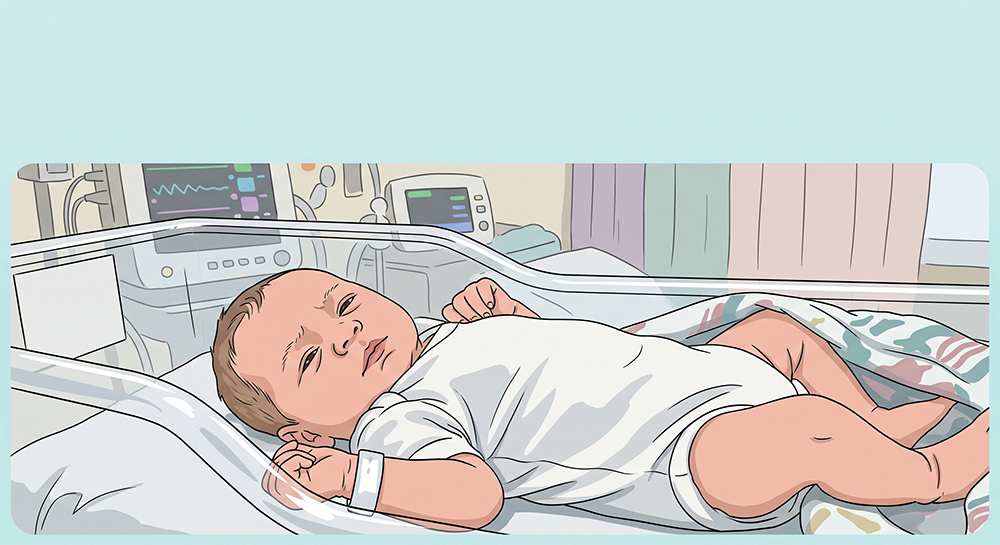
Understanding Newborn Retracting Breathing
Seeing your newborn’s chest or ribs “pull in” with each breath can be scary—especially in the quiet hours when you’re watching every rise and fall. Newborn retracting breathing (often called retractions) happens when a baby uses extra effort to breathe, causing the skin to draw inward around the bones of the chest and neck.
Retracting breathing is not a diagnosis by itself. It’s a sign that your baby may be working harder than expected to move air in and out. Sometimes it’s mild and temporary (for example, during nasal congestion). Other times it signals a condition that needs prompt medical attention.
This guide explains what retractions look like, why they happen, what’s normal in newborn breathing, how to check your baby safely at home, and when to call your pediatrician or seek emergency care.
What Do Retractions Look Like in a Newborn?
Retractions happen because newborns have softer chest walls and smaller airways than older children. When breathing becomes difficult, the muscles between the ribs and around the collarbones pull more strongly, and you can see the skin sink inward.
Common Types of Retractions
- Subcostal retractions: Skin pulls in under the ribcage (below the ribs).
- Intercostal retractions: Skin pulls in between the ribs.
- Suprasternal retractions: Skin pulls in above the breastbone (sternum), at the notch of the neck.
- Supraclavicular retractions: Skin pulls in above the collarbones.
How to Observe Safely
To check for retractions, place your baby on their back on a firm, flat surface and observe the chest and neck in good light. You can also look while your baby is calm or sleeping. Try not to check right after a crying spell, since crying can temporarily change breathing patterns.
Tip: If you’re unsure, record a short video of the breathing pattern to show your pediatrician. It can be very helpful for diagnosis.
Normal Newborn Breathing vs. Concerning Breathing
Newborn breathing can look irregular even when everything is healthy. Knowing what’s typical can reduce anxiety and help you spot true red flags.
What Can Be Normal
- Periodic breathing: Brief pauses (often under 10 seconds), followed by faster breaths. This can be normal in newborns.
- Irregular rhythm: Newborns may alternate between faster and slower breathing.
- Breathing through the nose: Babies are primarily nose breathers, so mild congestion can make breathing sound noisy.
- Occasional sneezing: A common way for newborns to clear nasal passages.
What Is More Concerning
Breathing that looks labored—especially with retractions—deserves attention, particularly if it occurs when your baby is calm and not crying. Other concerning signs include:
- Nasal flaring (nostrils widening with each breath)
- Grunting at the end of each breath
- Rapid breathing that persists
- Color changes (blue/gray lips or face, or very pale/ashen skin)
- Poor feeding due to breathing difficulty
- Unusual sleepiness or difficulty waking
What Causes Newborn Retracting Breathing?
Retractions happen when it takes extra effort to move air. In newborns, that can be due to anything that narrows the airway, stiffens the lungs, increases mucus, or makes breathing more tiring.
1) Nasal Congestion (Very Common)
Because newborns prefer nasal breathing, even a small amount of mucus can make breathing sound loud and look effortful. Congestion may come from dry air, reflux, exposure to irritants, or a viral cold.
What you may notice: Noisy breathing, feeding breaks, mild retractions that improve after clearing the nose.
2) Viral Upper Respiratory Infection (Cold)
Viruses can cause swelling and mucus in the nose and throat. Many newborns have mild symptoms, but very young babies can worsen quickly.
What you may notice: Congestion, cough, poor feeding, mild fever (or sometimes no fever), increased work of breathing.
3) Bronchiolitis (Often RSV)
Bronchiolitis is a viral infection affecting the small airways in the lungs (bronchioles). Respiratory Syncytial Virus (RSV) is a common cause, especially in fall and winter. Babies may breathe fast, wheeze, and show retractions.
Why it matters: Young infants can become dehydrated or have low oxygen and may need medical monitoring.
4) Pneumonia
Pneumonia is an infection in the lungs that can be viral or bacterial. It can cause fast breathing, retractions, fever (not always), and reduced feeding.
5) Transient Tachypnea of the Newborn (TTN)
TTN is more common shortly after birth, especially in babies born via cesarean delivery or rapid delivery. It happens when fluid clears from the lungs more slowly than usual. Babies may breathe fast and show mild retractions early on, typically improving within 24–72 hours.
6) Meconium Aspiration Syndrome
If a baby inhales meconium-stained fluid around birth, it can irritate and block airways. This is usually recognized early in the hospital setting and requires medical care.
7) Congenital Conditions Affecting the Airway or Lungs
Some babies are born with structural or developmental differences that can affect breathing. Examples include laryngomalacia (floppy tissue above the vocal cords causing noisy breathing), congenital heart disease, or other airway anomalies.
What you may notice: Ongoing noisy breathing, feeding difficulties, poor weight gain, or retractions that don’t resolve.
8) Fever, Overheating, or Metabolic Stress
Babies may breathe faster when they have a fever, are overheated, or are under physiological stress. Faster breathing can sometimes make retractions more noticeable, especially if there is also congestion or another illness.
How to Tell If Retracting Breathing Is an Emergency
If you’re seeing retractions, it’s reasonable to take it seriously and assess for additional warning signs. Trust your instincts—parents are often the first to notice subtle changes.
Seek Emergency Care Now (Call Emergency Services) If You Notice:
- Blue or gray color of the lips, tongue, or face (or very pale/ashen skin)
- Pauses in breathing, choking, or repeated episodes where your baby seems unable to breathe
- Severe retractions (deep pulling in between ribs/under ribs/at the neck) or the chest looks like it’s “caving in”
- Grunting with each breath or persistent nasal flaring
- Extreme sleepiness, limpness, or difficulty waking
- Unable to feed or keeps stopping due to breathing trouble
- High-pitched noise when breathing in (stridor) with distress
Call Your Pediatrician Urgently (Same Day) If:
- Retractions are mild but persistent when your baby is calm
- Your baby is breathing faster than usual for more than a short period
- There is new cough, worsening congestion, or reduced wet diapers
- Your baby is under 3 months and seems unwell (even without fever)
- You suspect your baby is working harder to breathe than earlier in the day
How to Check Your Newborn’s Breathing at Home
You don’t need special equipment to gather useful information for your clinician. These simple observations can help you decide what to do next.
1) Watch the Chest and Belly
Newborns use their diaphragm a lot, so the belly may rise and fall more than the chest. That’s often normal. What’s more concerning is skin pulling in sharply under the ribs, between the ribs, or at the base of the neck.
2) Count Breaths (When Calm or Sleeping)
Count breaths for 30 seconds and multiply by 2. A breath is one rise and fall. Newborn breathing rates vary, but persistently very fast breathing—especially with retractions—should be assessed.
If you’re unsure what’s “too fast,” report the number to your pediatrician and describe what you’re seeing. The combination of symptoms matters.
3) Listen for Sounds
- Wheeze: A musical, whistling sound, often on exhale.
- Stridor: A harsher, higher-pitched sound often on inhale, suggesting upper-airway narrowing.
- Grunting: A soft “uh” sound at the end of breaths—often a sign of respiratory distress.
4) Check Feeding and Diapers
Breathing difficulty often shows up as feeding changes. Babies may take shorter feeds, sweat during feeding, or tire easily. Track wet diapers; fewer wet diapers can be an early sign of dehydration during illness.
Practical, Parent-Friendly Tips to Help a Congested Newborn Breathe Easier
If your baby is otherwise alert, feeding, and not in distress, mild congestion is a common cause of noisy breathing and can make retractions look worse. These steps are generally safe and widely recommended for newborn comfort.
Use Saline Drops and Gentle Suction
- Place 1–2 saline drops in each nostril, then wait 30–60 seconds.
- Use a bulb syringe or nasal aspirator gently, especially before feeds and sleep.
- Stop if the nose becomes irritated or starts bleeding, and discuss with your pediatrician.
Run a Cool-Mist Humidifier
Dry air thickens mucus. A cool-mist humidifier can make breathing more comfortable. Clean it as directed to prevent mold or bacterial growth.
Keep Baby Upright Briefly After Feeds
Some babies have reflux that can worsen congestion and breathing noise. Holding your baby upright for 15–20 minutes after feeding may help reduce spit-up and irritation.
Offer Smaller, More Frequent Feeds
If congestion makes feeding tiring, smaller feeds more often can help maintain hydration and calorie intake. If breastfeeding, offering the breast more frequently can be helpful; if bottle-feeding, pace feeds and allow breaks.
Avoid Irritants
Secondhand smoke, vaping aerosols, strong fragrances, and harsh cleaning products can irritate newborn airways. Keeping the environment low-irritant supports easier breathing.
What to Avoid
- Over-the-counter cold medicines for newborns (not recommended).
- Honey (unsafe under 12 months).
- Essential oils applied to skin or diffused near a young infant (may irritate airways and is not recommended without clinician guidance).
- Steam showers that risk overheating or burns.
What Your Pediatrician May Evaluate
If you contact your baby’s clinician about retracting breathing, they’ll likely ask specific questions and may check your baby’s oxygen level, breathing rate, and hydration status.
Common Questions You May Be Asked
- When did the retractions start, and are they getting worse?
- Is your baby feeding normally? Any vomiting?
- How many wet diapers in the last 24 hours?
- Any fever or known sick contacts?
- Any color change around the lips?
- Was your baby born early or had any NICU stay?
Possible Tests or Treatments
Depending on the exam, clinicians may use:
- Pulse oximetry to measure oxygen saturation
- Testing for viruses such as RSV, influenza, or COVID-19 (varies by setting)
- Chest imaging or blood tests in specific cases
- Supportive care (hydration plan, suctioning guidance)
- Oxygen or hospital observation if breathing effort is significant
Special Considerations for Newborns Under 2–3 Months
Very young infants can change quickly, and their symptoms may be subtle. Even a “simple cold” can interfere with feeding and hydration because newborns have small reserves. For babies under 2–3 months, clinicians often have a lower threshold for evaluation when breathing looks labored or feeding drops off.
If your newborn is in this age group and you’re seeing retractions—especially with poor feeding, sleepiness, or fewer wet diapers—reach out promptly.
Can Retracting Breathing Happen While Sleeping?
Yes. Some parents notice retractions most clearly when their baby is asleep because the room is quiet and the baby is calm. Retractions during sleep can still be a sign of increased work of breathing. If the pulling-in is mild and improves after clearing nasal congestion, it may be related to a stuffy nose. But if it’s persistent, worsening, or paired with other warning signs (color change, grunting, poor feeding), it needs medical assessment.
How to Support Yourself While Monitoring Your Baby
Watching your newborn breathe can be emotionally exhausting. If you’re worried, it’s okay to ask for help and reassurance. Practical steps that can make this easier:
- Write down feeding times, wet diapers, and any symptoms.
- Record a short video of the breathing pattern before you suction the nose (and another after).
- Share overnight monitoring with a partner or trusted adult so you can rest.
- Use a simple checklist: color normal, feeding okay, wet diapers adequate, breathing effort mild/unchanged.
Key Takeaways
Newborn retracting breathing means your baby is using extra muscles to breathe, and it can look like the skin pulling in under the ribs, between ribs, or at the neck. Mild retractions can occur with congestion, but retractions can also signal serious illness—especially when paired with grunting, nasal flaring, poor feeding, sleepiness, or any blue/gray color.
If you ever feel unsure, it’s appropriate to call your pediatrician. And if your baby shows signs of severe distress or color change, seek emergency care immediately.