Why Parents Worry When Baby Rolls Onto Their Stomach
Few moments spike parental anxiety like checking the monitor and seeing your baby sleeping on their stomach. You may have heard the “Back to Sleep” message (place babies on their backs to sleep) and worry that any tummy sleeping is dangerous.
Your concern makes sense. Evidence shows that placing a baby down on their back for sleep reduces the risk of Sudden Infant Death Syndrome (SIDS) and other sleep-related infant deaths. But many babies eventually learn to roll, and once they do, they may change positions during sleep—sometimes ending up on their stomach.
The reassuring news: when a baby can roll from back to stomach and stomach to back on their own, most pediatric and safe-sleep guidance agrees you should continue placing them on their back at the start of sleep, but you typically do not need to flip them back every time they roll—as long as their sleep space is set up safely.
Back Sleeping Still Matters: What “Back to Sleep” Really Means
“Back to Sleep” (sometimes called “Safe to Sleep”) means:
- Always place your baby on their back for every sleep—naps and nighttime—until their first birthday.
- Use a firm, flat sleep surface with a fitted sheet only.
- Keep the sleep space free of loose items (blankets, pillows, stuffed animals, bumpers).
This recommendation is strongest for newborns and young infants because they have less head and neck control, are less able to move away from hazards, and may not reposition themselves if their breathing becomes compromised.
Once babies develop the ability to roll both ways, they often prefer to sleep in the position they choose. Your job is to make sure the environment remains safe regardless of the position they end up in.
When Is It “Okay” If Baby Rolls Onto Their Tummy During Sleep?
The key milestone: rolling both ways
In general, it becomes less concerning when your baby can:
- Roll from back to stomach and
- Roll from stomach to back
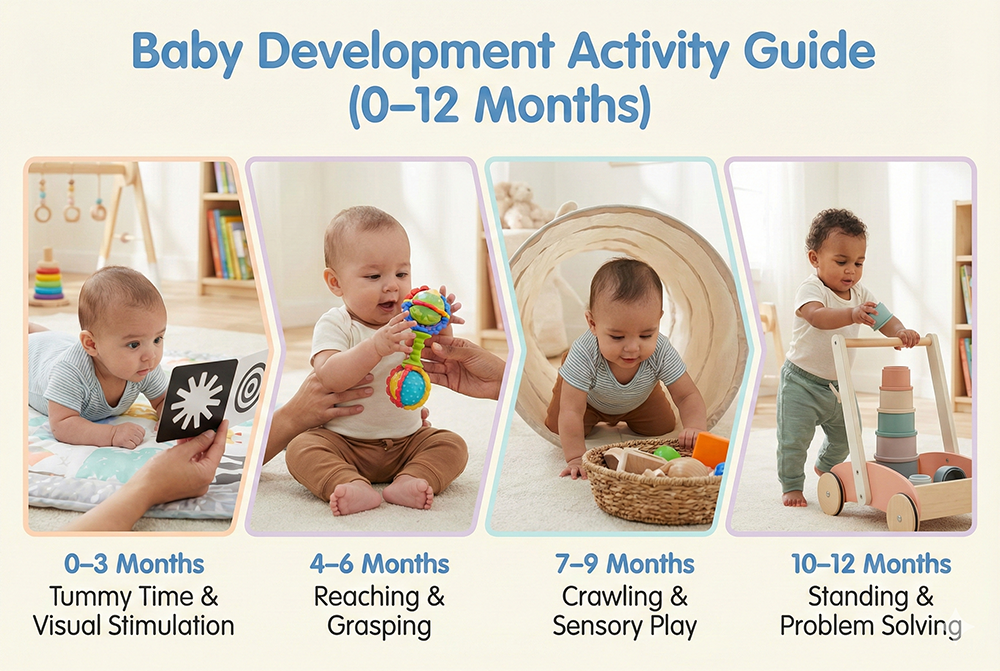
…consistently and on their own. Many babies develop rolling skills between about 4–6 months, though it varies.
What most experts advise
If your baby rolls onto their stomach while sleeping:
- Continue to place them on their back at the beginning of sleep.
- If they roll over on their own, it’s typically acceptable to allow them to remain in that position—provided the sleep environment follows safe-sleep guidelines.
If your baby can’t roll both ways yet, or is very young, tummy sleep raises more concern and you should focus on prevention (see below) and speak with your pediatrician for individualized guidance.
Should You Flip Baby Back Over If They Roll Onto Their Stomach?
Many parents feel compelled to keep turning baby back over. This can quickly become exhausting, especially if your baby rolls repeatedly.
A practical, evidence-aligned approach:
- If your baby is not yet rolling both ways or seems “stuck” face-down, gently reposition them onto their back and reassess the sleep setup.
- If your baby rolls both ways reliably and their sleep space is safe, you typically do not need to flip them every time they roll.
Regardless of age or skill, always ensure baby’s face and head are not pressed into soft bedding and that there are no loose items near their mouth or nose.
How to Create a Safe Sleep Space (So Rolling Is Less Stressful)
If your baby is rolling, the sleep environment matters even more because movement can bring them into contact with hazards. Use this checklist to reduce risk.
1) Use a firm, flat mattress designed for infants
Choose a crib, bassinet, or play yard that meets current safety standards. The surface should be firm and flat. Avoid inclined sleepers and any product that positions baby at an angle for sleep.
2) Keep the sleep space empty
A safe sleep space is surprisingly minimal. In the crib/bassinet/play yard:
- No pillows
- No blankets
- No stuffed animals
- No crib bumpers (including mesh bumpers)
- No positioning devices or wedges
When babies roll, loose items can end up near their face. A bare sleep space lowers the chance of suffocation or rebreathing exhaled air.
3) Dress for warmth instead of using blankets
To keep baby comfortable without loose bedding:
- Use a wearable blanket (sleep sack) in an appropriate size.
- Pick sleepwear that fits well and doesn’t ride up near the face.
Overheating is associated with increased SIDS risk, so aim for a comfortable room temperature and avoid overdressing. A common rule of thumb is one more layer than an adult would wear for the same environment, but every baby and home differs.
4) Stop swaddling as soon as rolling begins (or earlier)
Swaddling can limit a baby’s ability to use their arms to reposition their head and body. Once a baby shows any signs of attempting to roll (often around 2–4 months, sometimes earlier), it’s time to transition out of the swaddle. Many parents move to:
- A sleeveless sleep sack
- A transitional sleep garment that allows arms free movement (follow product guidance and pediatrician advice)
If you’re unsure whether your baby is “close to rolling,” err on the side of caution and stop swaddling.
5) Ensure a safe crib setup and fit
- Use only a tight-fitting fitted sheet.
- Make sure the mattress fits snugly with no gaps at the sides.
- Lower the crib mattress as baby grows and becomes more mobile.
6) Consider room-sharing (not bed-sharing)
Many health authorities recommend room-sharing—baby sleeping in the same room as caregivers on a separate surface—for at least the first 6 months (and up to 12 months) to reduce sleep-related risks.
Why Babies Roll Onto Their Stomach to Sleep
Once babies gain core strength and coordination, rolling is a normal developmental milestone. Some babies sleep better on their tummy because:
- They feel more “secure” with pressure on the front of the body.
- They startle less as the Moro (startle) reflex fades.
- They can self-soothe by shifting their body and head.
Even if your baby prefers tummy sleeping, the safest routine remains: back to sleep at the start, then let them find their preferred position when developmentally ready and in a safe setup.
Practical Tips for Parents When Baby Starts Rolling at Night
Do a “roll readiness” check during awake time
During the day, watch how your baby moves:
- Can they roll in both directions?
- Can they lift and turn their head easily when on their tummy?
- Do they get “stuck” with their face pressed down?
These observations can guide how vigilant you need to be at night and help you decide when to stop swaddling.
Increase supervised tummy time during the day
Tummy time helps build the neck, shoulder, and core strength that supports safer movement and positioning. Aim for frequent short sessions, gradually increasing total time as tolerated. Always keep tummy time supervised and awake.
Don’t use sleep positioners or “anti-roll” products
Products marketed to keep babies on their backs can introduce serious risks, including suffocation. If your baby is rolling, a bare, safe sleep space is safer than adding devices.
Use a consistent bedtime routine and give it time
When rolling first appears, sleep can be disrupted—your baby may roll and then fuss because the new position feels unfamiliar or they can’t roll back yet. A calm routine, a safe sleep environment, and time to practice during the day usually help.
Know when to intervene at night
It’s reasonable to intervene if:
- Your baby is swaddled and has rolled (stop swaddling immediately and consult your pediatrician for transition tips).
- Your baby’s face is pressed into soft bedding or an unsafe surface (remove hazards and reposition).
- Your baby seems unable to lift/turn their head or is not yet rolling both ways.
If your baby is rolling freely, arms are unswaddled, and the sleep space is empty and firm, repeated flipping is usually unnecessary and can lead to more awakenings for everyone.
Special Situations: Premature Babies, Reflux, and Respiratory Concerns
Premature or medically complex infants
Preterm infants can have different developmental timelines and medical considerations. Always follow your NICU team or pediatrician’s safe-sleep instructions. Generally, the recommendation to place babies on their backs still applies, but your clinician may give guidance tailored to your baby’s condition and corrected age.
Reflux (GER/GERD)
Spit-up is common, and many parents worry that back sleeping increases choking risk. Evidence indicates that healthy babies have protective airway reflexes, and back sleeping remains the recommended position even for most reflux. Avoid positioning devices and inclined sleep surfaces, which can increase risk. If reflux is severe, painful, or affecting growth, discuss treatment and sleep guidance with your pediatrician.
Congestion or mild colds
Babies often sound congested. Continue back sleeping and use pediatrician-approved comfort measures (like saline drops and gentle suction if recommended). Avoid elevating the mattress with pillows or wedges.
Signs Your Baby’s Sleep Position or Breathing Needs Medical Advice
Trust your instincts and seek urgent medical care if your baby shows any signs of breathing distress or illness. Contact your pediatrician promptly if you notice:
- Persistent difficulty breathing, rapid breathing, grunting, or pulling in at the ribs
- Color changes (blue/gray lips or face) or poor responsiveness
- Repeated vomiting with poor feeding, dehydration signs, or poor weight gain
- Unusual sleepiness or difficulty waking
- Periods where breathing seems to pause and your baby appears unwell
If you ever think your baby is in immediate danger, seek emergency care.
Common Myths About Babies Rolling Onto Their Stomach
Myth: “If my baby can roll, it’s safe to use blankets now.”
Reality: Loose blankets remain a hazard throughout infancy. Use a sleep sack instead.
Myth: “A pillow will keep my baby’s head in a safer position.”
Reality: Pillows are not recommended for infants in the sleep space. They can increase suffocation risk.
Myth: “Sleep positioners are helpful for babies who roll.”
Reality: Positioners can be dangerous and are not recommended for routine infant sleep.
Myth: “Tummy sleeping is always unsafe.”
Reality: Placing baby on the tummy to sleep is not recommended, especially for young infants. But if a baby independently rolls onto their tummy and the sleep environment is safe, many experts advise you can allow them to remain there.
A Simple Action Plan for Tonight
If your baby rolled onto their stomach while sleeping and you’re not sure what to do, use this step-by-step plan:
- Step 1: Put baby on their back at the start of sleep.
- Step 2: Confirm baby is not swaddled if they are rolling or attempting to roll.
- Step 3: Check the crib: firm mattress, fitted sheet, nothing else.
- Step 4: If baby rolls over and can roll both ways, you can usually let them sleep.
- Step 5: If baby seems stuck, is very young, or the environment isn’t safe, gently reposition and adjust the setup.
Most importantly: you’re not alone in worrying about this milestone. Rolling is a sign your baby is growing stronger, and with a safe sleep environment, you can feel more confident as they learn to move.
Key Takeaways (For Peace of Mind)
- Always place baby on their back to start every sleep.
- If baby rolls onto their stomach on their own and can roll both ways, you generally don’t need to flip them back.
- Make the sleep space firm, flat, and empty—no blankets, pillows, bumpers, or toys.
- Stop swaddling at the first signs of rolling.
- Use supervised tummy time during the day to build strength and skills.