The spine is one of the most important structures in the human body, supporting posture, protecting the spinal cord, and enabling movement. Many parents ask when does a baby’s spine develop and how early this essential structure begins forming. Spine development starts very early in pregnancy and continues through infancy, childhood, and even adolescence. Understanding the timeline of baby spine development helps parents appreciate how growth unfolds both before and after birth.
Spine Development Begins in Early Pregnancy
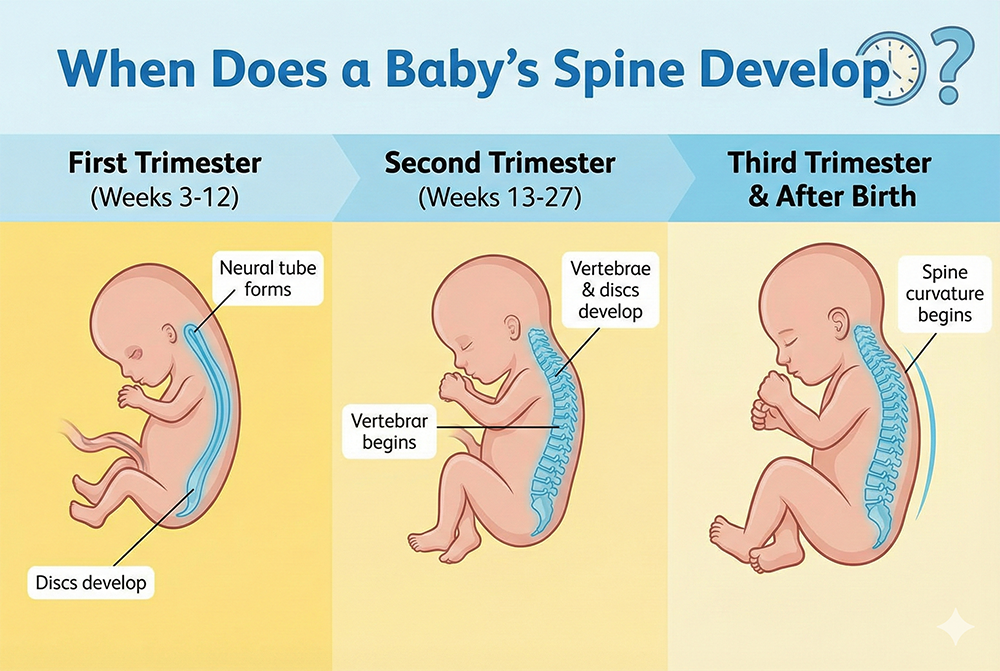
A baby’s spine begins forming around 3 to 4 weeks after conception. At this stage, the embryo develops a structure called the neural tube, which later becomes the brain and spinal cord.
The Importance of Neural Tube Formation
The neural tube must close properly in early pregnancy for healthy spinal development. This is why adequate folic acid intake before and during early pregnancy is so important. Proper closure reduces the risk of neural tube defects such as spina bifida.
How the Spine Forms in the Womb
After the neural tube forms, the surrounding tissues begin developing into vertebrae—the small bones that make up the spinal column. This process continues throughout pregnancy in structured stages.
First Trimester: Basic Framework
During the first trimester, the vertebral segments start forming from mesodermal cells. By the end of this stage, the early spinal structure is visible, though still soft and flexible.
Second Trimester: Bone Development
In the second trimester, the vertebrae begin to harden through ossification. While the spine becomes stronger, it remains flexible to accommodate growth and the birth process.
Third Trimester: Alignment and Growth
During the final months of pregnancy, the spine continues refining its alignment. By birth, the spinal column is fully formed but not yet fully mature.
What Does a Baby’s Spine Look Like at Birth?
At birth, a baby’s spine has a single C-shaped curve. This shape reflects the curled fetal position maintained in the womb. Unlike adults, newborns do not yet have the natural S-shaped spinal curvature.
Why the Spine Is Flexible in Newborns
A newborn’s spine contains more cartilage than hardened bone. This flexibility allows easier passage during delivery and supports rapid growth during infancy.
Spine Development After Birth
Although the spine is structurally complete at birth, important changes happen during the first two years of life.
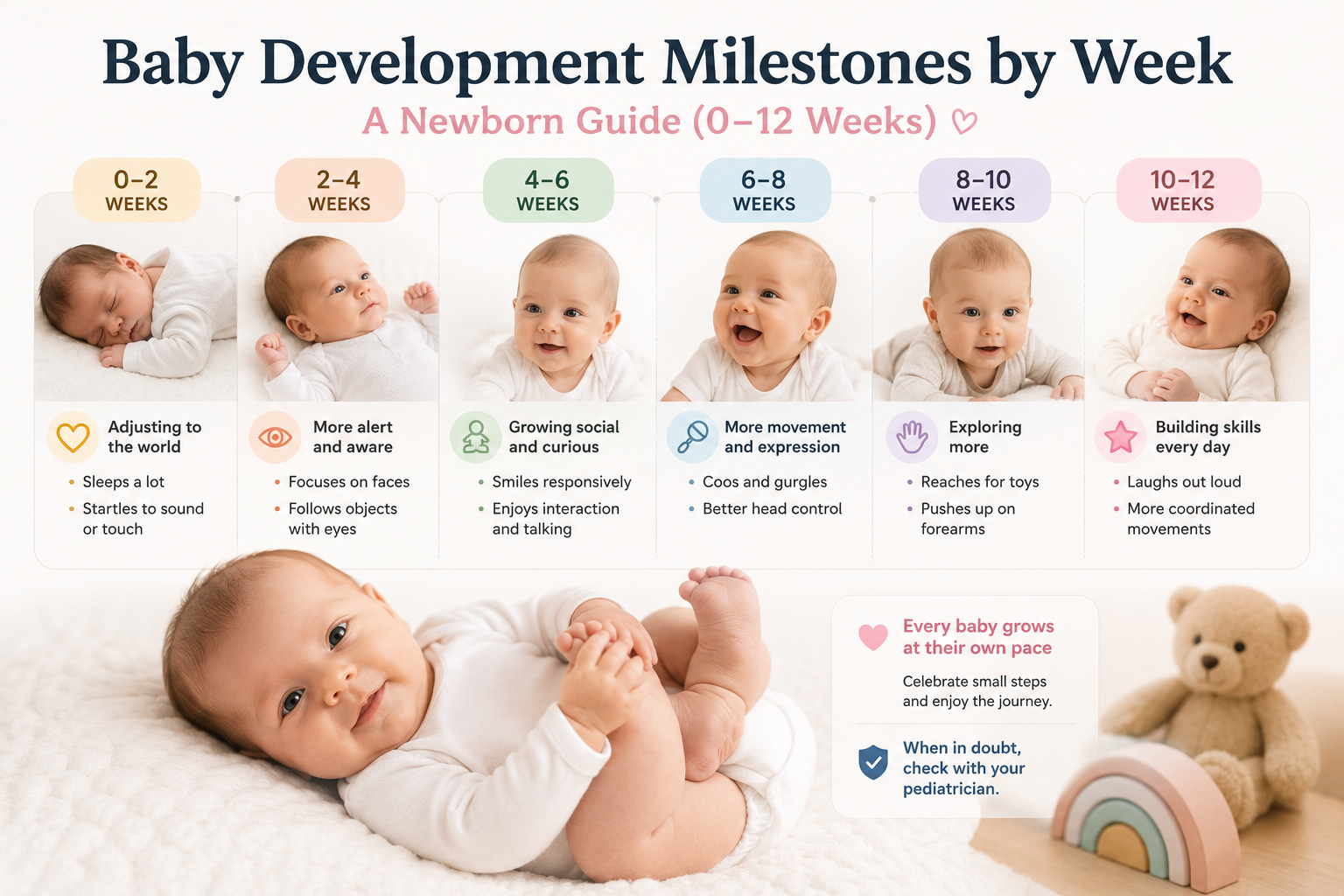
Neck Curve Development (2–4 Months)
When babies begin lifting and holding their heads up, the first spinal curve—called cervical lordosis—forms in the neck.
Lower Back Curve Development (9–18 Months)
As babies start standing and walking, the lower back curve—known as lumbar lordosis—develops. This transforms the spine into the adult-like S shape.
When Is the Spine Fully Developed?
Major spinal curves form within the first two years of life, but spinal growth continues throughout childhood and adolescence. Growth plates in the vertebrae remain active until the late teenage years.
Factors That Support Healthy Spine Development
Several factors contribute to proper spinal growth both before and after birth.
Maternal Nutrition During Pregnancy
Folic acid, calcium, vitamin D, and protein all support bone and spinal development in the womb.
Tummy Time and Movement
After birth, tummy time strengthens neck and back muscles. This supports proper spinal alignment and curve formation.
Safe Positioning
Allowing babies to move freely and avoiding prolonged restriction in carriers or seats supports natural muscular development.
Common Questions About Baby Spine Growth
Some parents worry about posture, curvature, or asymmetry. Mild variations are often normal, but persistent concerns should be discussed with a pediatrician.
Understanding the Full Timeline of Spine Development
A baby’s spine begins forming just weeks after conception and continues developing well into adolescence. From neural tube formation to the development of spinal curves during walking, baby spine development is a gradual and dynamic process shaped by growth, movement, and overall health.