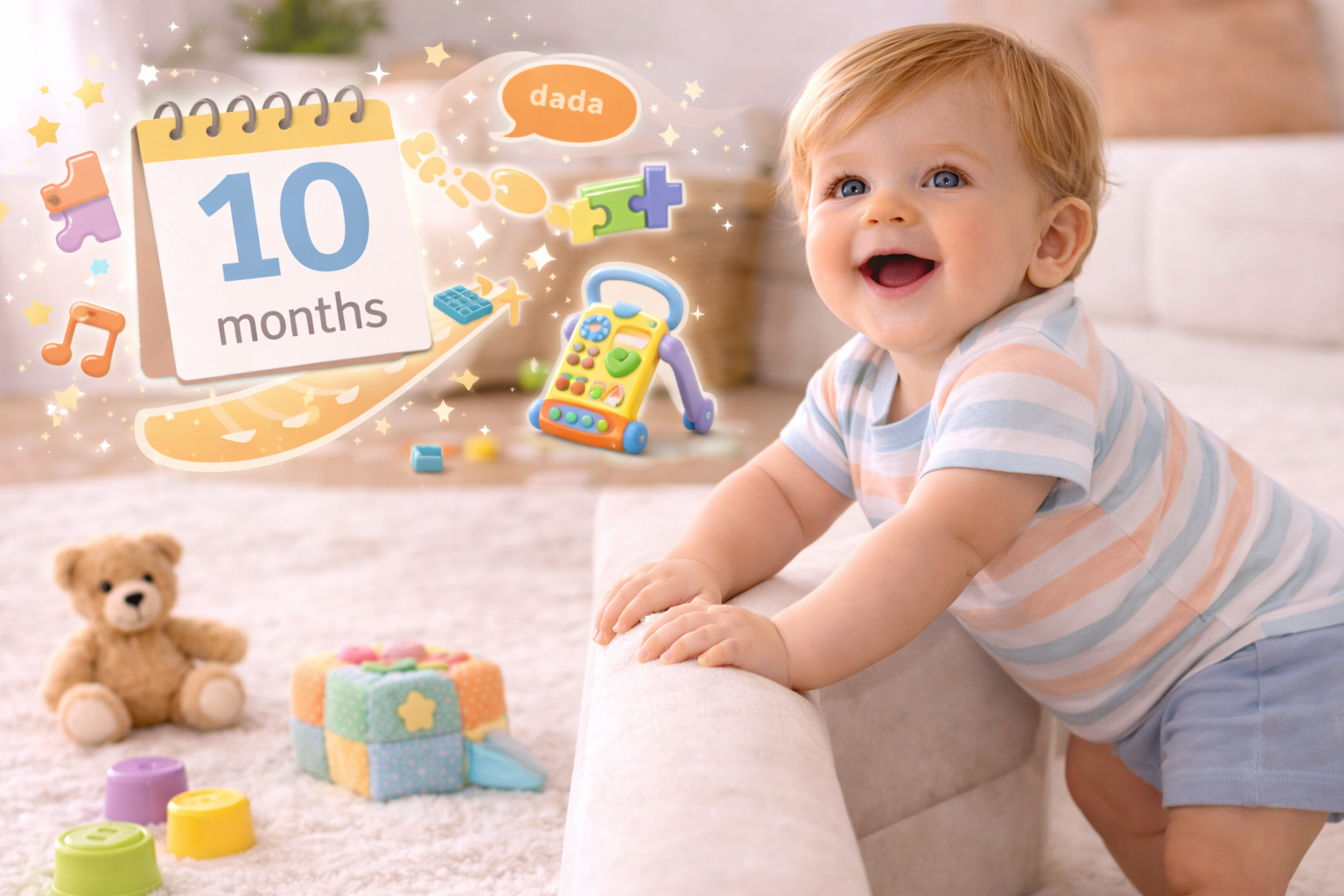
The 10-month-old baby development stage represents a time when babies become more active, curious, and independent in their movements. During this month, many babies crawl quickly, pull themselves up using furniture, and some even begin attempting their first steps. While cognitive and social development shows visible progress, language skills also become more noticeable.
Physical Development in a 10-Month-Old Baby
Crawling and Early Walking Attempts
A 10-month-old baby is usually very mobile. Most babies crawl actively, pull themselves up on sofas or tables, and may take sideways steps while holding onto furniture (cruising). Some babies may begin early walking attempts, although independent walking typically develops between 12–15 months.
- Stands while holding onto furniture.
- Takes sideways steps while supported (cruising).
- Crawling speed increases, with different crawling styles emerging.
- Moves easily into a sitting position.
Improved Fine Motor Skills
Finger coordination improves significantly at this stage. Babies can grasp small objects using a pincer grasp and begin using toys more purposefully.
- Attempts to stack blocks.
- Comfortably picks up small objects with fingertips.
- May try eating with a spoon.
Sensory and Language Development in a 10-Month-Old Baby
Sounds and Babbling
A 10-month-old baby produces more meaningful sounds. Repeated syllables such as “ba-ba,” “ma-ma,” and “da-da” become more frequent and may sometimes seem intentional. Babies respond emotionally to tone of voice, showing happiness, curiosity, or frustration.
- Begins to understand some words.
- Follows simple commands such as “give,” “come,” and “take.”
- Uses pointing as a form of communication.
Social and Emotional Development in a 10-Month-Old Baby
Ongoing Separation Anxiety
Strong attachment to the primary caregiver, especially the mother, is common during month ten. Separation anxiety may continue and is completely normal as part of emotional development.
Increased Imitation Skills
Babies imitate sounds and actions more frequently at this age. Waving, clapping, and pointing strengthen social communication and interaction.
Cognitive Development in a 10-Month-Old Baby
Babies actively experiment to understand their environment. They form connections between objects and try different approaches to solve problems.
- Object permanence is fully developed.
- Uses toys in a more purposeful way.
- Finds creative solutions to simple problems (such as changing position to reach an object).
Feeding Routine of a 10-Month-Old Baby
Solid Food Schedule
A 10-month-old baby typically eats 3 main solid meals per day in addition to breast milk or formula. Babies can now be introduced to a wider variety of flavors and textures.
Recommended Foods
- Soft vegetables,
- Fruit slices,
- Yogurt and cheese varieties,
- Well-cooked whole eggs,
- Chicken, fish, or minced meat purees,
- Boiled pasta and soft meatballs,
- BLW-friendly soft finger foods.
Safety comes first—avoid hard, small, or choking-hazard foods.
Sleep Patterns of a 10-Month-Old Baby
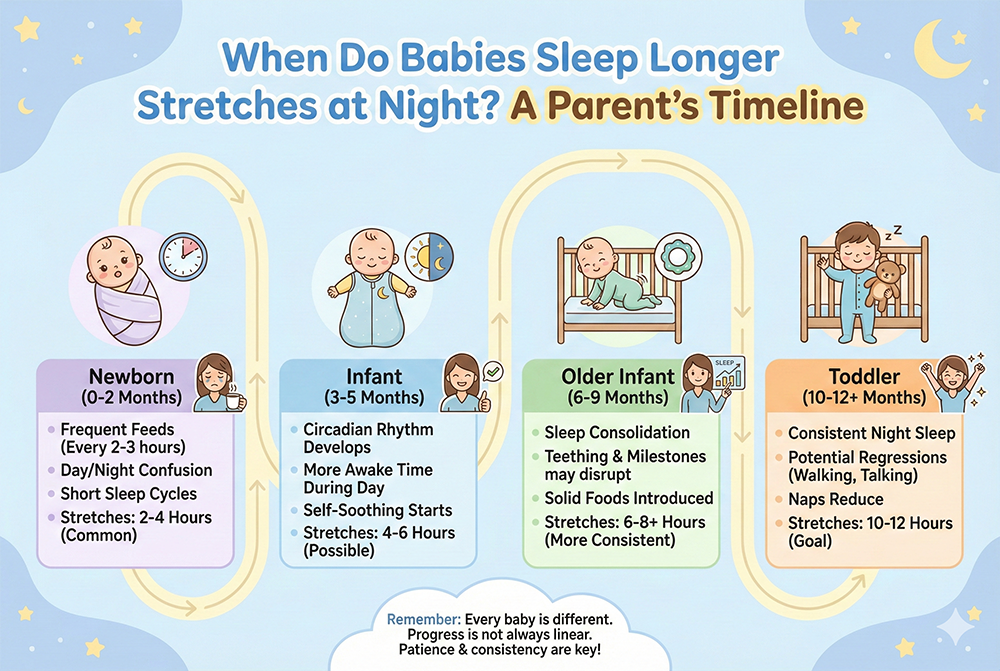
A 10-month-old baby sleeps an average of 12–14 hours per day. Daytime sleep usually continues with two naps (morning and afternoon).
- Some babies may experience a 10-month sleep regression.
- Maintaining a consistent sleep routine is important.
- Separation anxiety may increase night awakenings.
Activities for a 10-Month-Old Baby
1. Hide-and-Find Games
These games reinforce object permanence and improve attention skills.
2. Block and Ring Play
Supports hand–eye coordination and fine motor development.
3. Crawling and Walking Courses
Safe obstacle courses can be created using soft cushions, pillows, and toys.
4. Songs and Rhythm Activities
Music accelerates both language and emotional development. Clapping games are especially effective at this age.
When Should You See a Doctor?
- If the baby is not crawling or attempting to move,
- If there is no response to sounds or their name,
- If grasping small objects is difficult,
- If feeding or weight gain is very slow,
- If independent sitting has not developed sufficiently,
consult a pediatrician.
Tips for Parents
The 10-month-old baby development stage is a critical period when babies explore their limits and take steps toward independence. Creating a safe play environment, communicating frequently, and offering supportive activities are essential. Every baby develops at a different pace—focus on your baby’s individual progress rather than comparisons.