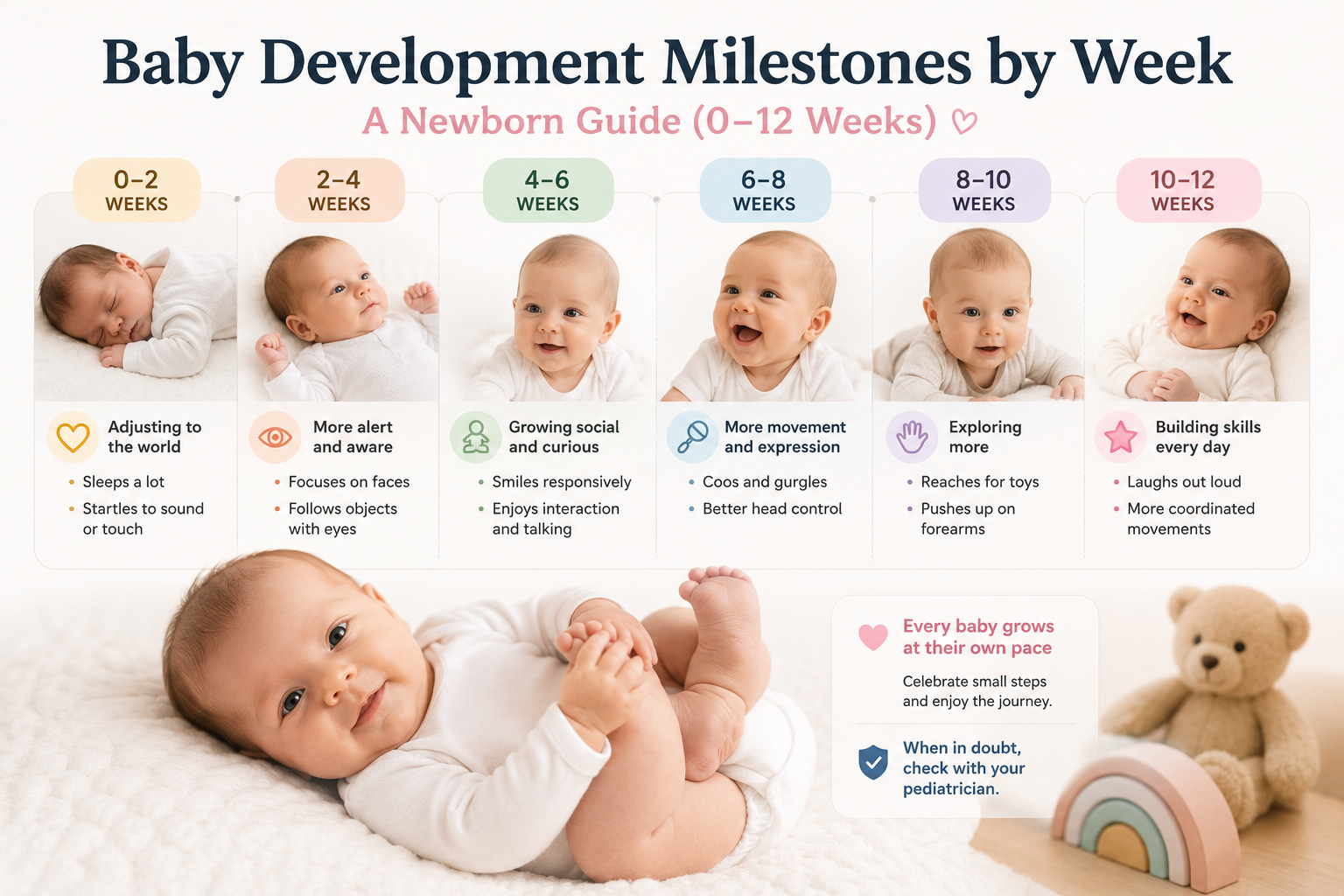
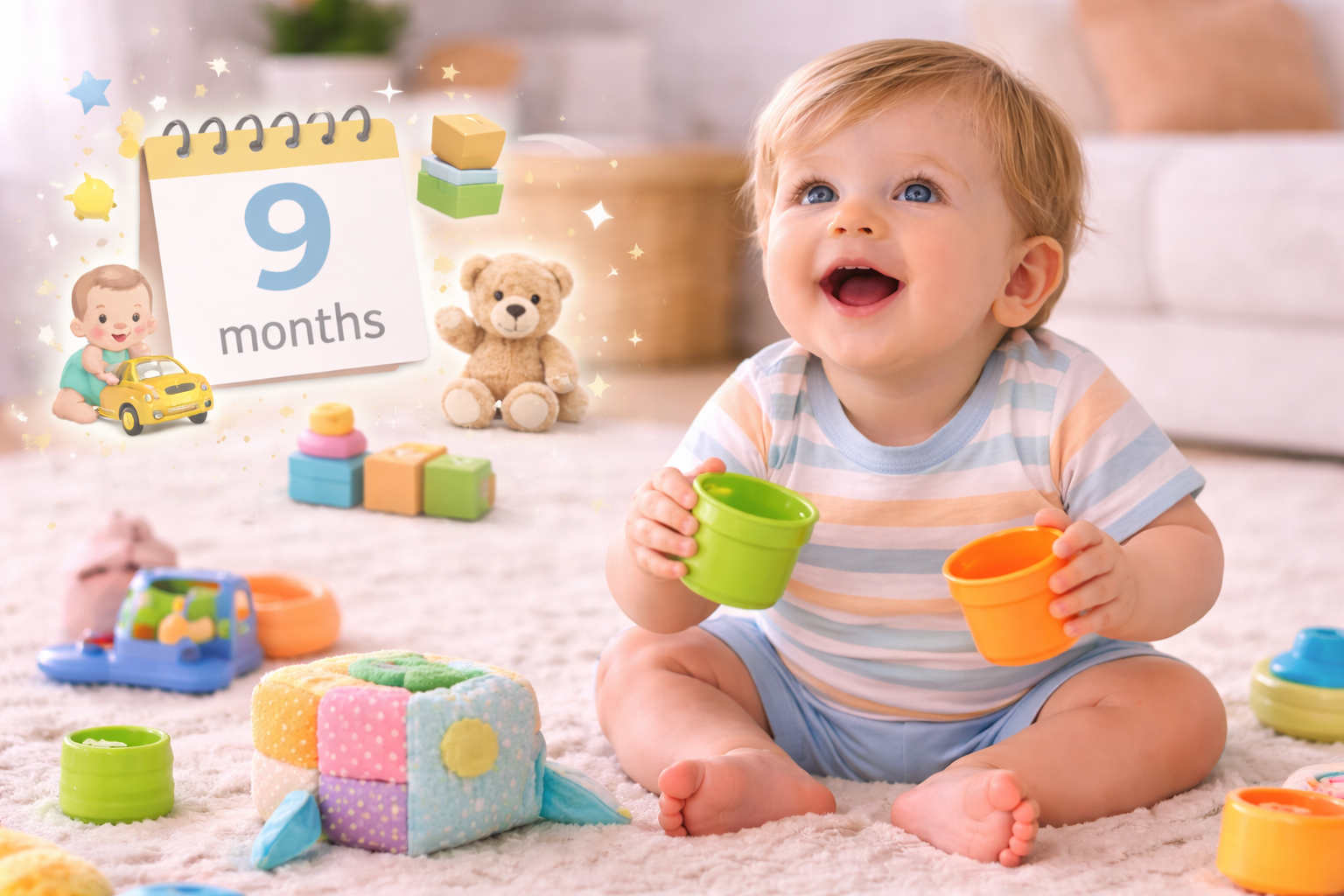
The 9-month-old baby development stage is a period of rapid progress in physical, cognitive, and social skills. During this month, many babies crawl actively, pull themselves up using furniture, begin understanding simple commands, and respond to their environment more intentionally. Month nine is a joyful time when exploration and learning behaviors reach a peak.
Physical Development in a 9-Month-Old Baby
Crawling and Pulling to Stand
A 9-month-old baby is usually very active with crawling. Some babies crawl quickly, while others continue scooting or moving sideways. Many babies try to pull themselves up to stand by holding onto furniture.
- They attempt to stand while holding onto furniture.
- They can move easily from a crawling position to a sitting position.
- They grasp objects with better control.
- Hand–eye coordination has improved noticeably.
Growth Indicators
As mobility increases, weight gain may slow down during month nine. This is not a growth setback—it's a normal part of development. Height, weight, and head circumference should be monitored by a pediatrician.
Sensory Development in a 9-Month-Old Baby
Fine Motor Skills
This month, your baby uses the pincer grasp (thumb–index finger grip) more effectively. They can pick up small objects with their fingertips and spend more time examining details.
- They may try stacking blocks.
- They may open and close toy lids.
- They can focus for longer periods when exploring small objects.
Hearing and Language Development
A 9-month-old baby makes more sounds, enjoys repeating syllables, and can distinguish different tones of voice. Language development speeds up, and attempts at meaningful communication become more noticeable.
- They understand simple commands such as “no,” “come,” and “give.”
- They try to imitate sounds.
- They react emotionally to different tones of voice.
Social and Emotional Development in a 9-Month-Old Baby
Increased Separation Anxiety
At this stage, babies recognize parents more clearly, so separation anxiety may increase. It is normal for your baby to cry when you leave the room. This is a natural part of healthy attachment development.
Play and Interaction
Your baby can now communicate with you in more complex ways. They enjoy hide-and-seek style games, understand peek-a-boo, and may start interactions by offering you toys.
Cognitive Development in a 9-Month-Old Baby
At 9 months, babies understand cause-and-effect much better. Behaviors such as dropping objects, opening lids, and closing them are important learning steps.
- They attempt simple problem-solving.
- They search for hidden objects.
- They recognize routines and may anticipate what happens next.
- They begin using toys in more purposeful ways.
Feeding Routine of a 9-Month-Old Baby
More Solid Foods
By month nine, babies can usually eat 3 main solid meals per day. Breast milk or formula should still be offered regularly throughout the day.
Recommended Solid Foods
- Soft vegetables (broccoli, zucchini, potato),
- Fruits (banana, pear, peach),
- Yogurt, cheese, egg yolk,
- Grain cereals and oats,
- Purees with minced meat (with pediatric approval),
- Soft finger foods for BLW.
Babies are often more eager to self-feed during this stage. Allowing hand-feeding supports fine motor development.
Sleep Patterns of a 9-Month-Old Baby
A 9-month-old baby sleeps about 12–14 hours per day. Daytime sleep usually remains at two naps. Night awakenings may increase due to separation anxiety.
- Evening routines make it easier to fall asleep.
- Sleep regressions are usually temporary.
- A reassuring sleep environment is important.
Activities for a 9-Month-Old Baby
1. Take-Out and Put-In Box Game
This activity is great for fine motor skills and understanding cause-and-effect.
2. Hide-and-Find Games
These games strengthen object permanence and support cognitive development.
3. Crawling Obstacle Courses
They support motor skills—create safe courses using pillows and cushions.
4. Music and Rhythm Games
Clapping and rhythm activities with simple instruments such as tambourines and rattles boost auditory development.
When Should You See a Doctor?
- If the baby is not crawling or making any movement attempts,
- If there is no response to sounds,
- If the baby cannot grasp small objects,
- If there is extreme fussiness or poor appetite,
- If independent sitting has not developed,
consult a pediatrician.
Tips for Parents
The 9-month-old baby development stage is a joyful time when your baby becomes more independent and starts moving more confidently. Provide a safe play area, talk often, play together, and let your baby explore. Every baby develops in a unique way—focus on steady progress rather than comparisons.