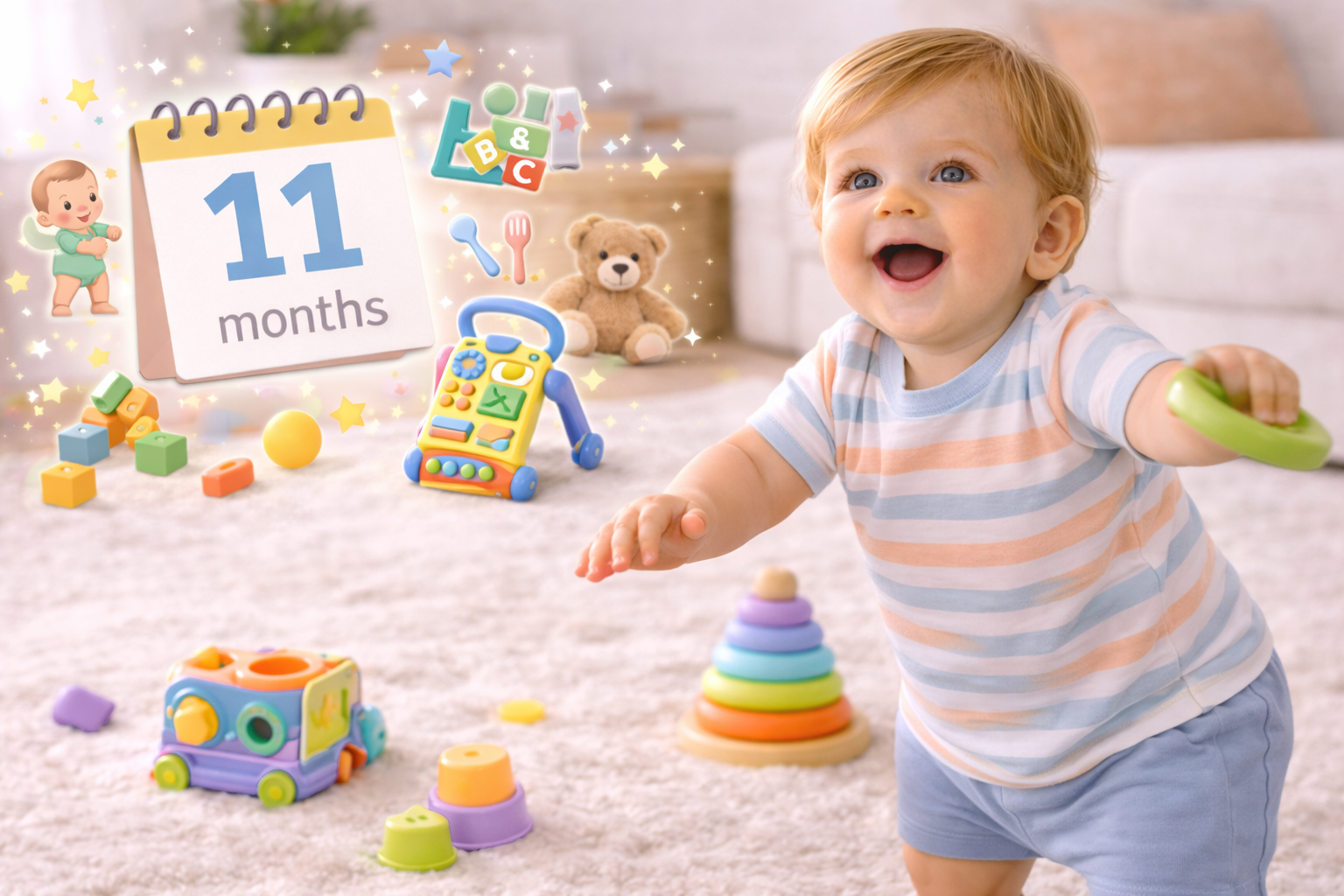
11-month-old baby development represents a stage where your baby is one step closer to independence, preparing to walk, and rapidly developing cognitive skills. During this month, babies can stand actively, walk with support, produce more meaningful sounds, and show great energy in exploring their surroundings. The 11th month is an exciting period marked by visible progress across all areas of development.
Physical Development in an 11-Month-Old Baby
Walking Attempts
An 11-month-old baby can often stand independently for short periods and take side steps while holding onto furniture. While some babies may take a few independent steps, most begin walking between 12 and 15 months. Balance development accelerates significantly during this month.
- Can stand independently for short periods.
- May walk while holding onto furniture (cruising).
- Crawling may still be the primary mode of movement.
- Attempts to stand up from a kneeling position.
Improvement in Fine Motor Skills
Fine motor skills strengthen noticeably during this month. Babies use toys more purposefully, grasp small objects easily, and can make choices between items.
- Pincer grasp is fully developed.
- Attempts self-feeding with a spoon increase.
- Can place objects into a container and remove them.
Sensory and Language Development in an 11-Month-Old Baby
Sounds and First Meaningful Words
An 11-month-old baby produces more meaningful sounds. Expressions resembling words like “mom,” “dad,” “grandpa,” or “food” may be heard. Some babies may say their first real word during this period.
- Understands simple commands better (“give the ball,” “come,” “good job”).
- Communicates by pointing.
- Attempts to imitate sounds such as birds, cars, or animals.
Visual and Auditory Sensitivity
Babies focus attentively on moving objects. They turn toward new sounds and respond emotionally to changes in a caregiver’s tone of voice.
Social and Emotional Development in an 11-Month-Old Baby
Attachment and Communication
At 11 months, babies express emotional bonds more strongly. They hug their caregivers, make sounds to initiate play, and are very animated around familiar faces.
Separation Anxiety and Social Responses
Separation anxiety may still be present; it is normal for babies to become upset when a caregiver leaves the room. During this period, babies may approach unfamiliar people more cautiously.
Cognitive Development in an 11-Month-Old Baby
Cognitive development accelerates during the 11th month. Babies better understand cause-and-effect relationships, try to figure out how toys work, and can make simple comparisons.
- Object permanence is fully developed.
- Purposeful toy use increases.
- Can solve simple problems (such as changing direction to reach an object).
- Begins to remember events.
Feeding Routine of an 11-Month-Old Baby
Variety in Solid Foods
At 11 months, babies can almost fully join family meals. However, foods should be unsalted, unseasoned, and soft. Breast milk or formula should still continue daily.
Foods That Can Be Offered
- Boiled vegetables and vegetable-based dishes,
- Fruit slices,
- Yogurt, cheese, eggs,
- Grilled or boiled fish and chicken pieces,
- Well-cooked legumes,
- Pasta and soft meatball pieces,
- Soft finger foods suitable for BLW.
Babies are often eager to feed themselves during this month. Offering soft finger foods supports fine motor development.
Sleep Routine of an 11-Month-Old Baby
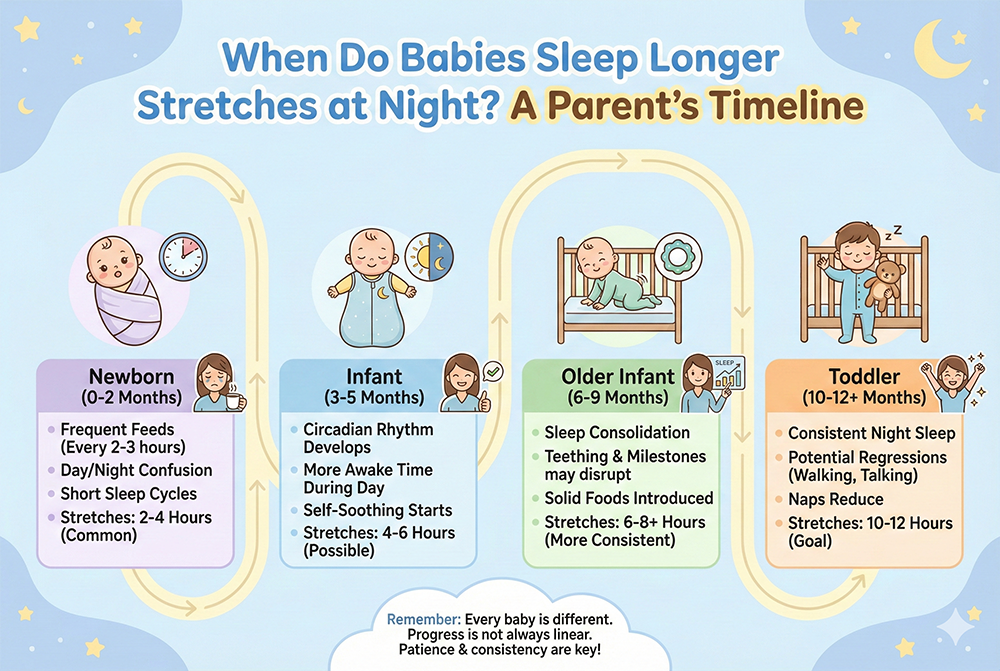
An 11-month-old baby sleeps approximately 12–14 hours per day. Daytime naps usually occur twice, though some babies may begin showing signs of transitioning to one nap.
- Night awakenings may decrease but can still be influenced by separation anxiety.
- Maintaining a consistent sleep routine is important.
- A calm, dim, and quiet sleep environment should be provided.
Activities for an 11-Month-Old Baby
1. Walking Encouragement Games
Guiding your baby with toys on a soft surface can help improve balance.
2. Block Stacking and Container Games
Stacking blocks and placing objects in and out of containers strengthen motor skills.
3. Sound Imitation Games
Imitating animal sounds, vehicle noises, and simple syllables supports language development.
4. Book Exploration
Picture books are highly beneficial for attention span and vocabulary development.
When Should You See a Doctor?
- If the baby does not attempt to stand,
- If they do not reach for objects,
- If they do not understand simple commands,
- If they do not respond to sounds or facial expressions,
- If weight gain has slowed significantly,
a pediatrician should be consulted.
Recommendations for Parents
11-month-old baby development is an exciting phase in which your baby gains new skills and moves closer to independence. Provide safe exploration areas, play together often, and support development through frequent communication. Every baby develops at their own pace, so instead of comparing, focus on your baby’s unique developmental journey.