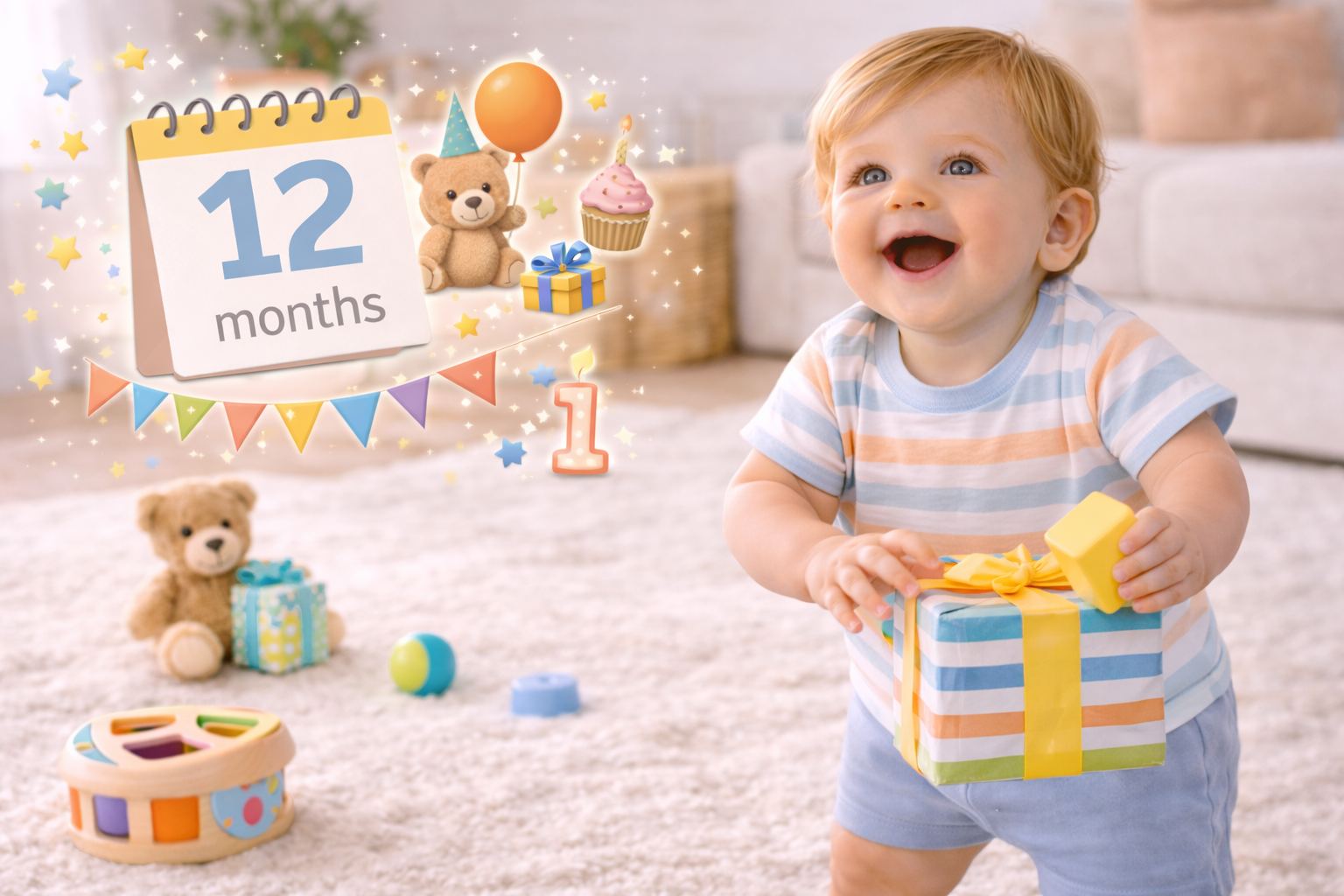
12-month-old baby development marks a special milestone as your baby reaches one year of age, gains greater independence, and shows major progress in both physical and cognitive skills. During this month, many babies take their first steps, say meaningful words, and develop much stronger social interactions. The 12th month is an exciting and joyful period when a brand-new chapter of development begins.
Physical Development in a 12-Month-Old Baby
Walking and Balance Skills
A 12-month-old baby can usually take a few steps with support or independently. While some babies walk confidently during this month, others may wait until 13–15 months. Balance skills improve rapidly during this period.
- Can pull up to stand using furniture.
- May take short independent steps.
- Shows better control when sitting down and standing up.
- Crawling may still be a preferred form of movement.
Fine Motor Development
Fine motor skills are noticeably stronger at 12 months. Babies move more intentionally during play and enjoy experimenting with placing and removing objects.
- Uses the pincer grasp effectively.
- Can put objects into containers and take them out.
- Attempts to feed independently using a spoon.
Language Development in a 12-Month-Old Baby
First Words
A 12-month-old baby typically says 1–3 meaningful words. Common first words include “mama,” “dada,” “bye,” or “come.” Some babies may begin using words slightly later, which can still be normal.
Improved Understanding
Babies at this age understand much more of what is said to them. They enjoy communicating by pointing and responding to simple instructions.
- Understands simple commands such as “give the ball” or “come here.”
- Points to desired objects.
- Responds emotionally to different tones of voice.
Social and Emotional Development in a 12-Month-Old Baby
Attachment and Emotional Expression
Babies express their emotions more clearly during this period. They may show excitement, happiness, frustration, or shyness. Familiar faces bring comfort, while strangers may be met with caution.
Increased Imitation
Imitation becomes more frequent at 12 months. Babies may wave goodbye, clap, pretend to talk on the phone, or mimic household activities.
Cognitive Development in a 12-Month-Old Baby
Babies now have a stronger understanding of cause-and-effect relationships, and problem-solving behaviors become more noticeable during play. Object permanence is fully developed.
- Tries to understand how toys work.
- Can choose between two objects.
- Enjoys opening and closing lids or placing objects into boxes.
- Short-term memory skills improve.
Feeding Routine of a 12-Month-Old Baby
Transition to Family Meals
A 12-month-old baby can eat many of the same foods as the family. Meals should be soft, unsalted, mildly seasoned, and cut into small pieces. Breast milk or formula may continue based on pediatric guidance.
Foods a 12-Month-Old Baby Can Eat
- Soft cooked vegetables and vegetable dishes,
- Fresh fruits,
- Yogurt, cheese, kefir,
- Well-cooked chicken, fish, and red meat,
- Legumes such as lentils and chickpeas,
- Eggs,
- Pasta and soft bread pieces.
Using a Spoon and Cup
Babies may attempt to drink from a cup and use a spoon more intentionally. Encouraging self-feeding supports independence and confidence.
Sleep Routine of a 12-Month-Old Baby
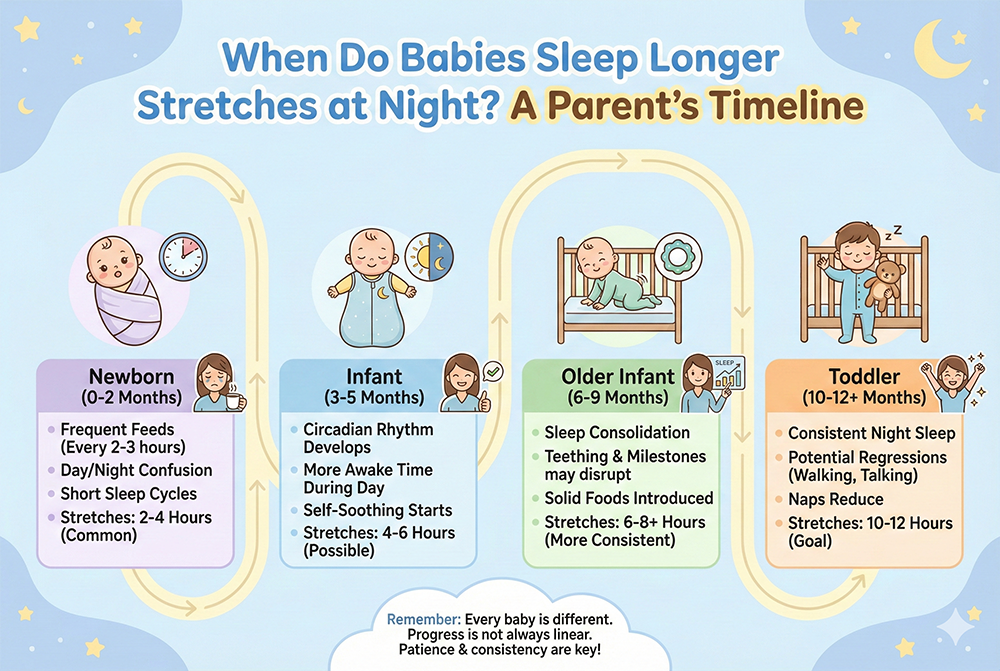
A 12-month-old baby typically sleeps 12–14 hours per day. Most babies still take two daytime naps, though some begin showing signs of transitioning to one nap.
- Night awakenings may decrease.
- A consistent bedtime routine becomes even more important.
- The sleep environment should be calm, quiet, and dim.
Activities for a 12-Month-Old Baby
1. Simple Task Games
Games like “bring me the ball” or “put the toy in the box” support cognitive development.
2. Block and Ring Play
Stacking blocks and placing rings strengthen fine motor skills and coordination.
3. Looking at Books
Board books with pictures help develop language skills and attention span.
4. Rhythm and Dancing
Music and rhythm support coordination and language development. Babies at this age often enjoy moving and dancing to music.
When Should You See a Doctor?
- If the baby does not respond to sounds,
- If the baby cannot stand with support,
- If there are no attempts to take steps,
- If grasping small objects is difficult,
- If simple commands are not understood,
- If there is significant fussiness, loss of appetite, or developmental concern,
a pediatrician should be consulted.
Tips for Parents
12-month-old baby development is an exciting phase filled with first steps, growing independence, and rapid learning. Play together often, communicate frequently, and offer new experiences in a safe environment. Every baby follows a unique developmental path, and even small achievements build the foundation for future growth.