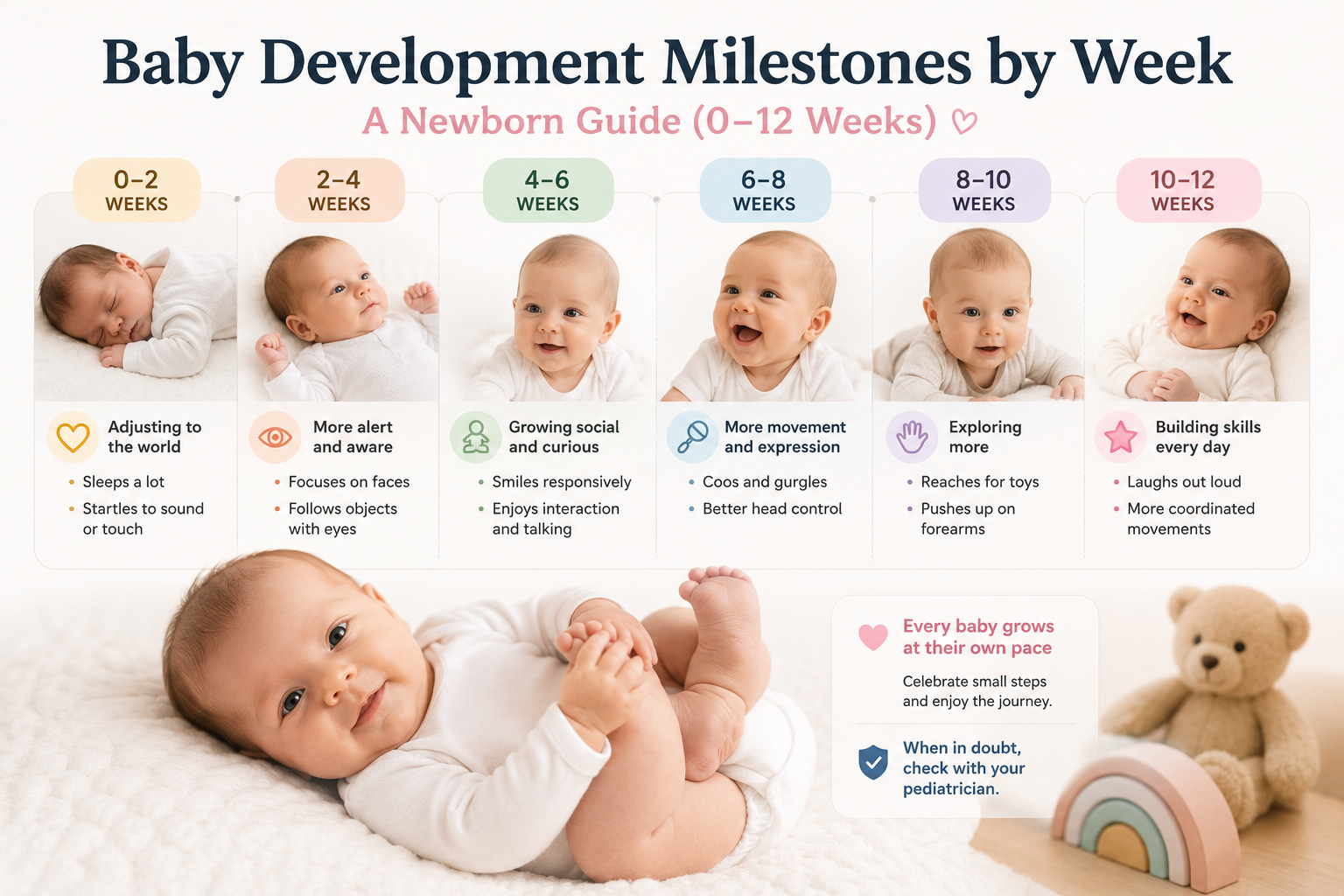
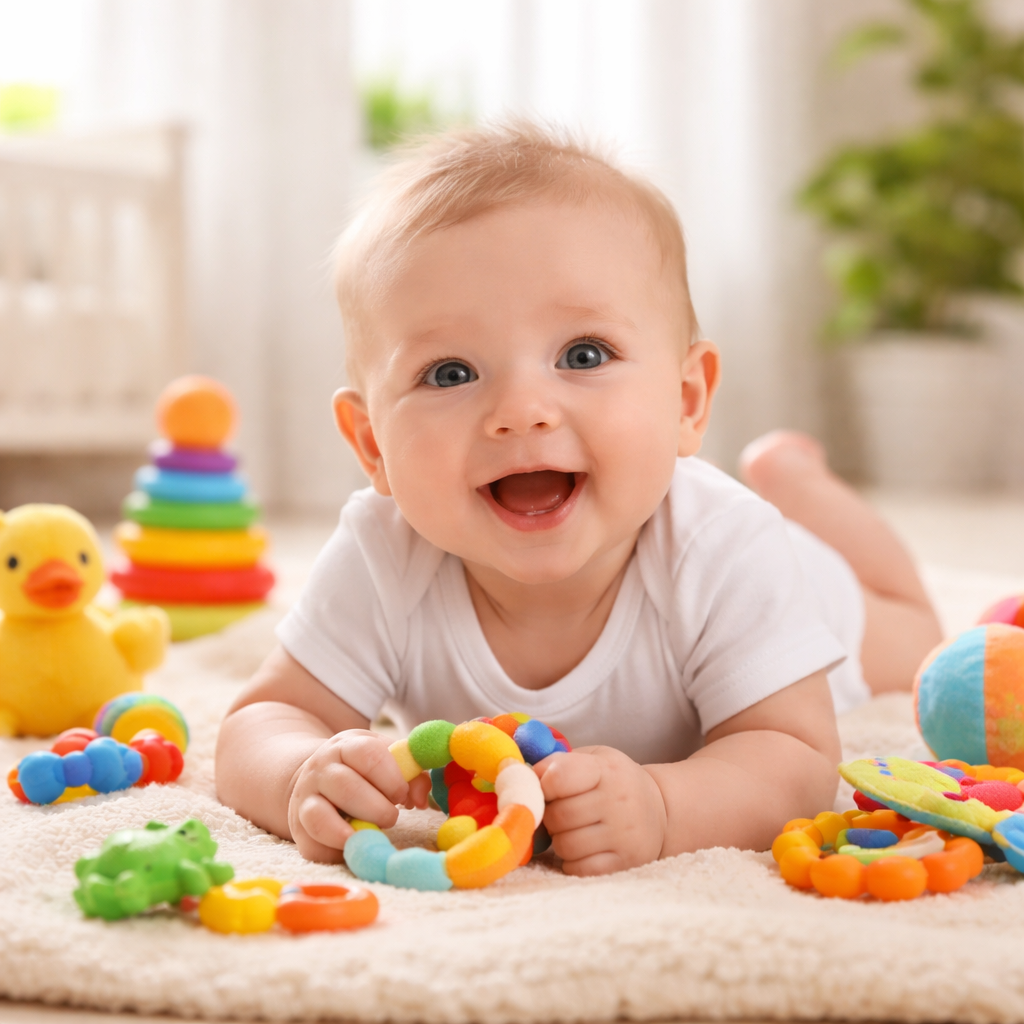
The 4-month-old baby development stage is a period when babies interact more with their surroundings, motor skills develop rapidly, and social communication becomes stronger. During this month, babies respond more consciously to sounds, colors, and human faces. They begin exploring not only their basic needs but also the world that captures their interest. Below are all the essential details you need to know about 4-month-old baby development.
Physical Development in a 4-Month-Old Baby
Muscle Strength and Movement Skills
A 4-month-old baby can hold their head upright, remain on their back for longer periods, and lift their upper body while lying on their tummy. Arm and leg movements become more coordinated. Babies reach for toys, try to grasp them, and attempt to hold objects with their hands. These behaviors indicate improving hand–eye coordination.
- Head control is largely established.
- Babies may stay briefly in a side-lying position while attempting to roll.
- They frequently bring their hands to their mouth and learn through touch.
Growth Indicators
On average, a 4-month-old baby reaches about twice their birth weight and grows approximately 2–3 cm (0.8–1.2 inches). Pediatric checkups are especially important during this month, as combination vaccines are often administered. Head circumference, weight, and length should be monitored regularly.
Sensory Development in a 4-Month-Old Baby
Vision
At 4 months, babies see more clearly and can distinguish color contrasts. Bright colors are particularly engaging. Babies easily track moving objects with their eyes and can focus on their parents’ faces for longer periods. When placed in front of a mirror, they may notice their reflection and respond with smiles.
Hearing and Sound Responses
A 4-month-old baby is very responsive to sounds. They enjoy the sounds they make and may try to imitate your tone of voice. Syllables such as “ah-goo” are early steps in language development. Talking, singing, and using gestures help support language skills.
Social and Emotional Development in a 4-Month-Old Baby
Smiles and Reactions
Smiling is one of the most noticeable social behaviors of a 4-month-old baby. Babies giggle, squeal with excitement, and show joy when making eye contact. They begin noticing unfamiliar faces, although fear of strangers has not usually developed yet.
As emotional bonding with parents strengthens, babies may calm down when hearing their voices. Loving touch and frequent interaction play a vital role in developing a sense of security.
Cognitive Development in a 4-Month-Old Baby
During this month, babies begin understanding simple cause-and-effect relationships. For example, they may shake a toy to hear the sound again. Memory skills improve, and babies start recognizing familiar routines. They may sense when bath time or bedtime is approaching.
- Babies can distinguish facial expressions and tones of voice.
- Songs and play support learning.
- They enjoy playing with colorful and sound-producing toys.
Feeding Routine of a 4-Month-Old Baby
Breast milk remains the primary source of nutrition. Most 4-month-old babies feed 5–7 times per day. There is no need to give water alongside breast milk at this stage. For formula-fed babies, amounts should be adjusted based on weight and satiety.
This is still an early stage for introducing solid foods. Experts generally recommend waiting until 6 months. Babies are considered ready for solids when they can hold their head upright and show the ability to take food from a spoon.
Sleep Patterns of a 4-Month-Old Baby
A 4-month-old baby sleeps an average of 14–15 hours per day. Nighttime sleep may extend to 6–8 hours. Daytime naps usually occur 3–4 times in shorter periods. Maintaining bedtime routines such as a bath, dim lighting, and lullabies is important.
- Babies should always be placed on their back to sleep, without pillows.
- Room temperature should be kept around 21–23°C (70–73°F).
- The difference between day and night becomes more noticeable.
Activities for a 4-Month-Old Baby
1. Colorful Toys and Rattles
Babies can now reach for and grasp toys. Rattles with different colors and textures support muscle development and help increase attention span.
2. Mirror Play
Place your baby in front of a mirror. Smiling at their reflection marks an early step in self-awareness.
3. Singing and Massage
Baby massage helps relax muscles, promotes comfort, and strengthens bonding. Singing lullabies in a gentle voice also supports emotional and auditory development.
When Should You See a Doctor?
- If the baby still cannot hold their head steadily,
- If there is no response to sounds or faces,
- If muscles seem very floppy or extremely stiff,
- If weight gain is slow or feeding is difficult,
- If eye misalignment or focusing problems are noticed,
consultation with a pediatrician is recommended. Early detection helps ensure timely support for developmental differences.
Tips for Parents
During the 4-month-old baby development stage, frequent physical contact, patient communication, and loving interaction are essential. Your baby’s smiles are now intentional responses—talk, sing, and maintain eye contact. Every small reaction is part of their journey to understanding the world.