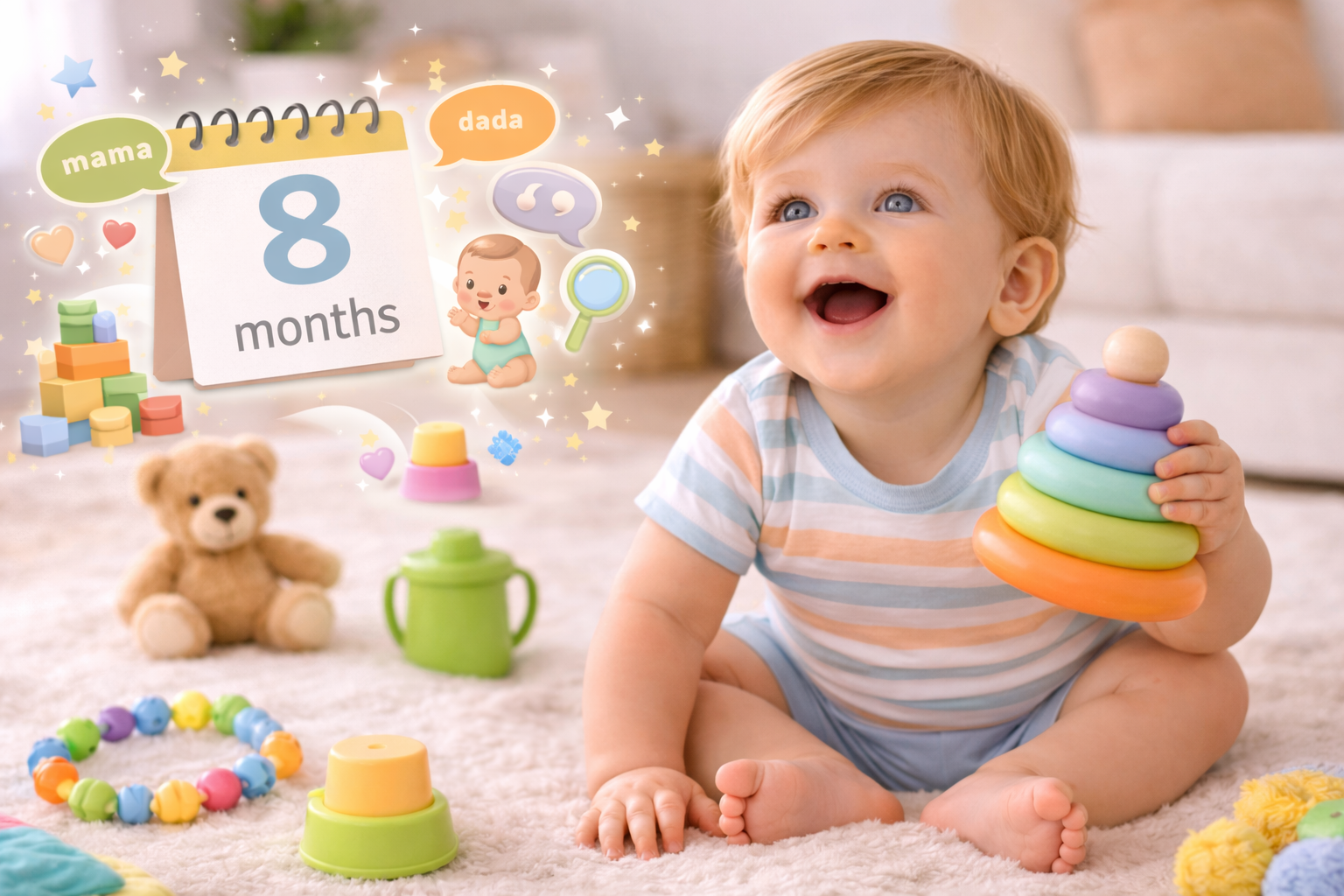
The 8-month-old baby development stage is a time when babies become more independent in their movements, show increased curiosity, and demonstrate a stronger desire to communicate. During this month, many babies crawl actively, pull themselves up using furniture, and stay in constant interaction with their surroundings. Noticeable progress is seen in language, motor, and social skills.
Physical Development in an 8-Month-Old Baby
Crawling and Pulling to Stand
An 8-month-old baby usually crawls actively or moves forward by scooting. Some babies can pull themselves up onto their knees or even attempt to stand while holding onto furniture. Muscle strength increases significantly during this period.
- Crawling movements become more coordinated (forward, sideways, or backward).
- Pulling up using furniture may begin.
- Babies can easily transition from sitting to a crawling position.
- They can grasp smaller objects more effectively with their fingers.
Growth Indicators
Growth continues at month eight, though weight gain may slow slightly due to increased activity. This is completely normal. Length and head circumference should be monitored during regular pediatric checkups.
Sensory Development in an 8-Month-Old Baby
Vision and Fine Motor Skills
Babies can distinguish colors much more clearly and notice small objects in detail. The pincer grasp (using the thumb and index finger) begins to develop during this month.
- Small toys can be picked up using fingertips.
- Attention to fine details increases.
- Objects are transferred from one hand to the other with better control.
Hearing and Language Skills
An 8-month-old baby babbles more frequently and imitates sounds. Repeated syllables such as “ba-ba,” “da-da,” and “ma-ma” become more meaningful. Language development accelerates significantly at this stage.
- Babies respond when their name is called.
- They imitate simple sounds.
- They begin to understand simple commands such as “no,” “come,” and “give.”
Social and Emotional Development in an 8-Month-Old Baby
Attachment Behaviors
Babies become more attached to their caregivers during this period. Separation anxiety may appear, and it is normal for babies to become upset when a parent leaves the room. This behavior is a natural part of emotional development.
Communication Skills
Babies carefully analyze facial expressions, gestures, and tone of voice. They respond to smiles, make sounds to initiate play, and maintain eye contact. These behaviors form the foundation of social development.
Cognitive Development in an 8-Month-Old Baby
Babies now understand cause-and-effect relationships more clearly. Dropping, banging, opening, and closing objects become learning experiences.
- Object permanence is well developed, and babies actively search for hidden objects.
- Simple problem-solving behaviors emerge.
- Babies examine toys carefully and explore how they work.
Feeding Routine of an 8-Month-Old Baby
Increasing Solid Foods
By month eight, solid food routines become more established. Babies usually eat solid foods 2–3 times per day. Breast milk or formula continues to be the primary source of nutrition.
Recommended Solid Foods
- Soft vegetables (broccoli, potato, zucchini),
- Fruit purees or small soft pieces,
- Egg yolk (with pediatric approval),
- Yogurt and cheese,
- Grain cereals and oats,
- Boiled pasta spirals,
- BLW-friendly finger foods.
Babies are often eager to self-feed during this stage. Allowing independent eating supports fine motor development.
Sleep Patterns of an 8-Month-Old Baby
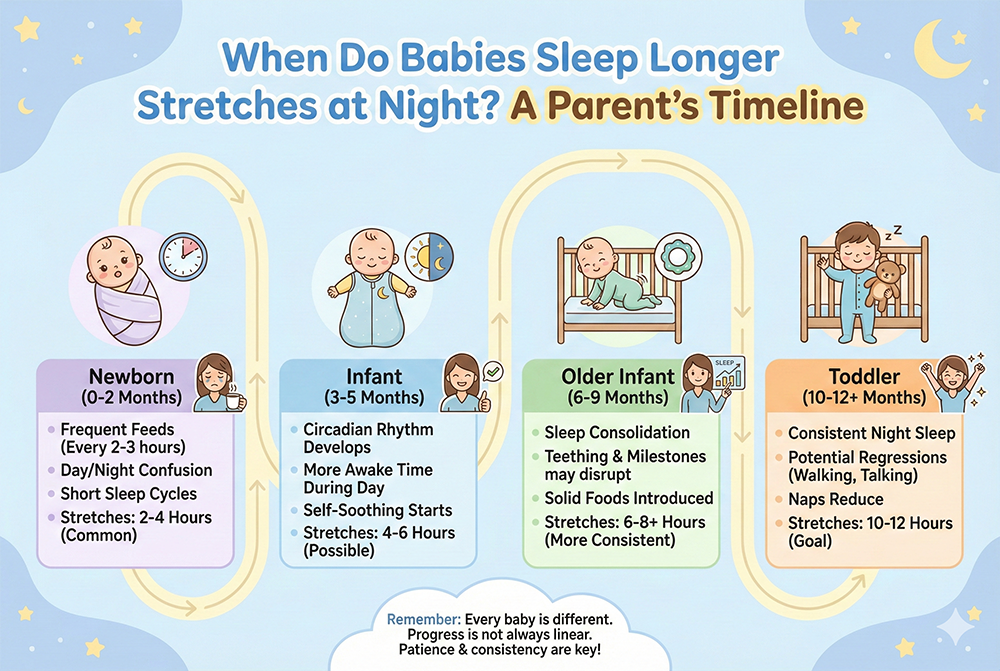
An 8-month-old baby sleeps an average of 12–14 hours per day. Daytime naps usually occur twice. Some babies experience an “8-month sleep regression,” which is temporary.
- Night awakenings may increase due to separation anxiety.
- A calming bedtime routine is helpful.
- The sleep environment should be dark and quiet.
Activities for an 8-Month-Old Baby
1. Hide-and-Find Games
Peek-a-boo games help strengthen object permanence. Hide toys under a cloth and encourage your baby to find them.
2. Crawling Obstacle Course
Creating a safe mini obstacle course with pillows and toys can boost crawling motivation.
3. Block and Ring Games
Stacking blocks and placing rings support fine motor skill development.
4. Music and Rhythm Activities
Clapping, singing, and using simple musical instruments improve auditory skills and rhythm awareness.
When Should You See a Doctor?
- If the baby does not respond to sounds or faces,
- If independent sitting has not developed,
- If there are no attempts at crawling,
- If grasping small objects is difficult,
- If the baby has been unusually fussy or has a poor appetite for several days,
consultation with a pediatrician is recommended.
Tips for Parents
During the 8-month-old baby development stage, your baby continues to move, explore, and learn rapidly. Creating a safe home environment, supporting exploration, and engaging in frequent play are essential. Every baby develops at their own pace—encouraging small steps and maintaining close communication greatly supports healthy development.