6-month-old baby development is a period of major changes in physical, cognitive, and social growth. This month, your baby becomes more active, more curious, and much more interactive with their surroundings. Month 6 is also the time when many babies begin the transition to solid foods. In this guide, we cover your 6-month-old baby’s development from every angle.
Physical Development in a 6-Month-Old Baby
Sitting and Mobility
A 6-month-old baby starts performing many movements more intentionally. They may sit unsupported for short periods and stay upright longer with minimal support. They can roll easily during tummy time, and some babies begin early attempts at crawling this month.
- Attempts to sit without support become more frequent.
- While on their tummy, they can push up with their hands.
- Rolling from back to tummy is mostly completed.
- They may bounce with their legs when held upright.
Growth Indicators
On average, a 6-month-old baby reaches more than double their birth weight. Length and head circumference should be monitored regularly by a pediatrician. This month often includes 6-month vaccinations, so routine checkups become even more important.
Sensory Development in a 6-Month-Old Baby
Vision
At 6 months, babies can see much more clearly. They can distinguish colors, focus for longer periods, and track moving objects with ease. Watching themselves in a mirror can support cognitive development.
Hearing and Sound Responses
This month, babies respond to their name and may turn quickly toward familiar voices. They produce a variety of syllables and often repeat sounds like “ba,” “ma,” and “da.” They enjoy imitating sounds—parents’ facial expressions and tone of voice are very educational for them.
Social and Emotional Development in a 6-Month-Old Baby
Communication and Attachment
A 6-month-old baby becomes much more social. They smile, giggle, get excited when they see loved ones, and may start acting shy around some unfamiliar people. This behavior is one of the first signs of stranger anxiety and is completely normal.
Your baby closely watches your facial expressions and emotions. Talking to them often, playing together, and making eye contact strengthens emotional development.
Cognitive Development in a 6-Month-Old Baby
This month often brings major cognitive leaps. Your baby explores objects, begins noticing cause-and-effect, and may study items in their hands for longer periods.
- They can pass objects from one hand to the other.
- They may drop toys repeatedly to “test” the sound and reaction.
- They begin searching for hidden objects (object permanence develops).
- They recognize routines and may start anticipating what happens next.
Feeding Routine in a 6-Month-Old Baby
Breast Milk and Formula Routine
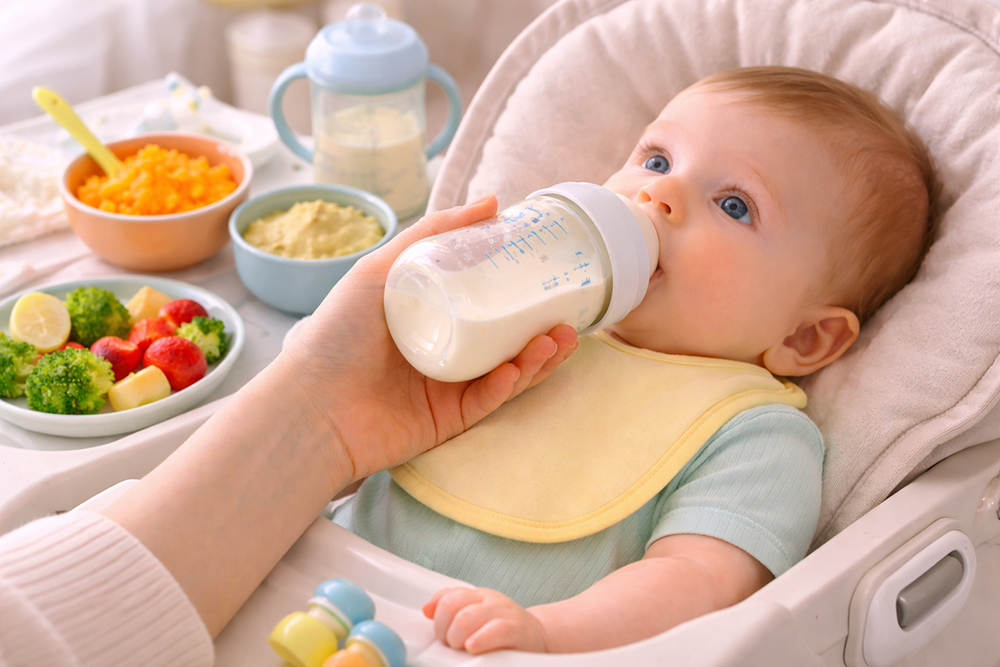
During this period, breast milk or formula remains the baby’s primary nutrition source. Babies are typically fed 4–6 times per day.
Starting Solid Foods
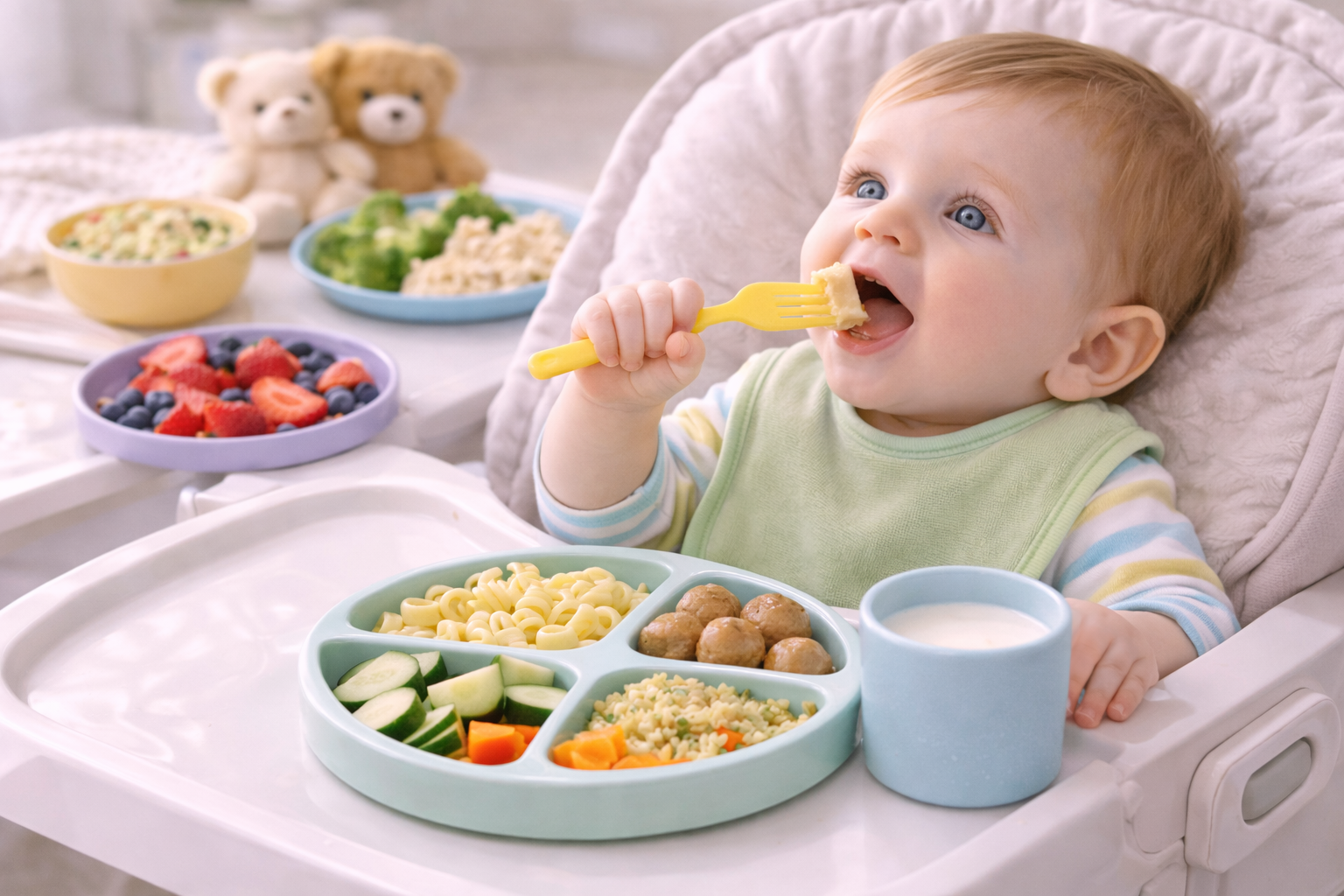
Month 6 is commonly considered an ideal time to begin solid foods. However, the final decision should be made with your pediatrician.
Signs of Readiness for Solid Foods
- Sitting with minimal support or briefly sitting unaided,
- Strong head and neck control,
- Reaching for food and showing interest in a spoon,
- Reduced tongue-thrust reflex (pushing food out with the tongue).
Best First Foods for Solids
- Vegetable purees (zucchini, carrot, sweet potato),
- Fruit purees (pear, apple, banana),
- Grains like rice and oats,
- Yogurt with doctor approval.
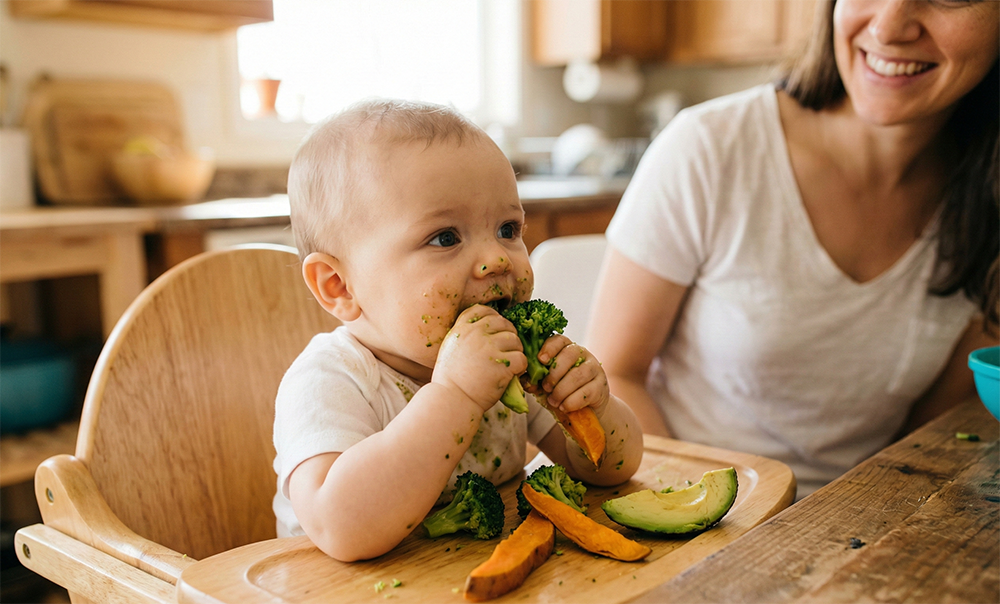
If using the BLW method, foods should be offered in stick shapes, and the baby should never be left alone while eating.
Sleep Routine in a 6-Month-Old Baby
A 6-month-old baby sleeps about 13–15 hours per day. They may nap 2–3 times during the day. Night sleep becomes more consistent; some babies may sleep through the night.
- 8–10 hours of night sleep may be possible.
- The baby should be placed on their back to sleep.
- A bedtime routine (lullaby, dim lights) supports better sleep.
Activities for a 6-Month-Old Baby
1. Block and Ring Toys
Colorful blocks, rings, and stacking toys help strengthen hand-eye coordination.
2. Peekaboo (Object Hiding Game)
This age is ideal for building object permanence. Hiding and finding objects supports cognitive growth.
3. Exploring Different Textures
Fabrics like felt, cotton, and plush materials help develop sensory awareness.
4. Music and Rhythm Activities
Simple rhythms, clapping games, and musical play support auditory development.
When Should You Call a Doctor?
- If your baby does not reach for or grasp objects,
- If they do not respond to sounds or faces,
- If head control is still weak,
- If there are no attempts to crawl or move around,
- If weight gain is insufficient,
you should consult a pediatrician.
Notes for Parents
6-month-old baby development is a special phase when your baby explores the world more consciously. Talking often, playing together, and creating safe spaces to explore all support healthy growth. Every baby develops at their own pace—rather than comparing, it’s best to track your baby’s small steps and progress.